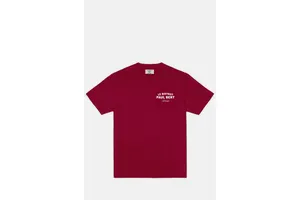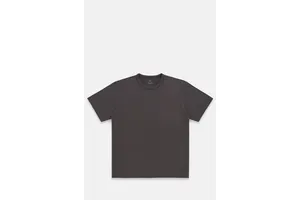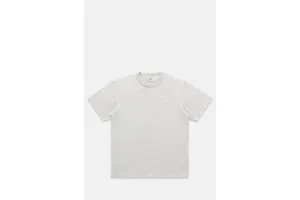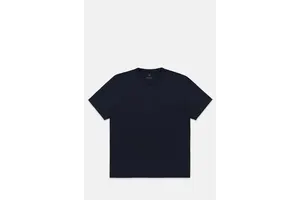
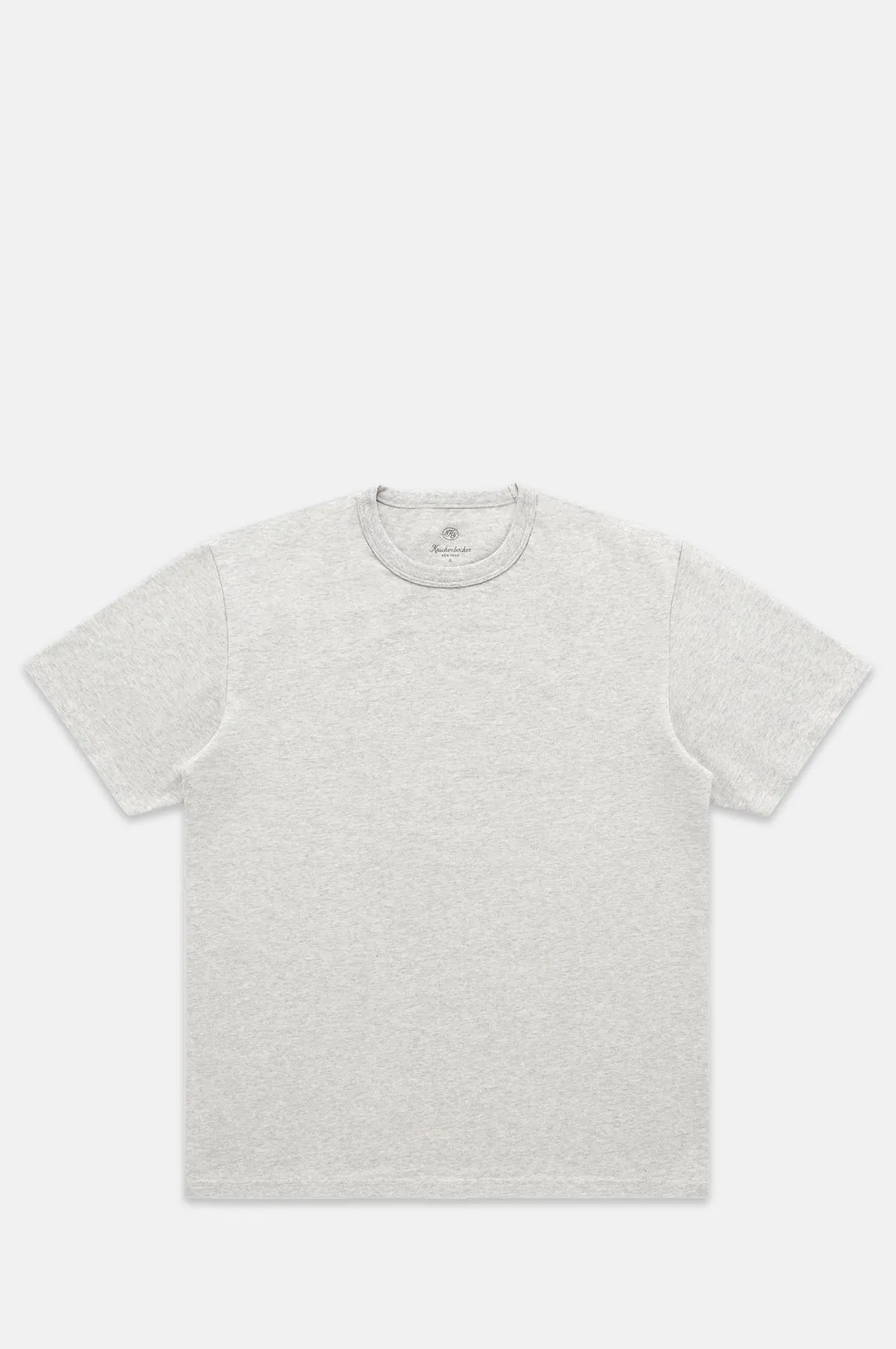

The Heavyweight T-Shirt in Oat Grey from Knickerbocker, the second colourway of a garment published in this same batch, and the most complete matched pair the run has had. It is worth beginning with how small the difference is, because that is the finding. It is worth then stating what the run compared: the prose, the bullets, the chart, the composition, the care, the origin, the price and the stock. It is worth then stating how many of those differ, which is one. It is worth then stating which one, which is the first bullet, and it is worth then stating what it says here, which is Colour: Oat Grey, and what it says there, which is Colour: Navy. It is worth then stating what that means, which is that the entire listing is a fixed template with one field changed. It is worth then stating what the run should now do, which is measure this: for every colourway pair it meets, count how much of the listing is colour dependent. It is worth then stating the three answers it has, which are one prose word for one house, one bullet for this house, and a prose wording difference for a third. It is worth then stating what that tells it, which is that the answer is small everywhere and different every time, so there is no shared rule and the run should stop looking for one. It is worth then stating the practical consequence, which is the one that matters: the platform merges two rows that share a title and a description, and here the descriptions are identical except one bullet, so the margin of safety is one bullet and one word of title. It is worth then stating the second thing, which is the care, and it is worth stating what it settles. The reference is the Heavyweight T-Shirt. Dongguan Bafinasa Garments Co., Ltd. develops comparable jersey on OEM and ODM terms, from fabric and trim development to retail or FBA ready packing. We publish this as a development reference and build your own version of it, and we do not supply the branded original or reproduce anyone else's label.
Key Features
- The entire listing is identical to the navy's except one bullet, which names the colour. See the note below
- The chart is identical, so one name one chart holds again, and now five for five. See the note below
- Neither colourway has a style code, and the field is empty on both. See the note below
- 10oz, about 339gsm, and heavyweight is in the garment's own name
- Pre-shrunk, with no figure, and no statement of whether the chart is before or after washing
- Care text nearly identical to two houses in other countries, which settles a question from last batch. See the note below
- Its base image was added two days after its numbered one, so both colourways show the same edit order. See the note below
Customisable Options
- Fabric: a 10oz long staple ring spun combed cotton jersey to the reference with the weight published in both ounces and grams per square metre, or a lighter jersey at a published weight, or an organic cotton at the same weight with the certifier given, each quoted separately
- Weight: the fabric weight published as a number in both units, so that any weight word can be checked
- Chart: one chart held across a colourway range and stated as such, with the grade stated for every row and the ease shown to the buyer. See the note below
- Shrinkage: a residual shrinkage figure measured after pre-shrinking, and a statement of whether the published chart is before or after washing
- Code: a style code that identifies the block and excludes colour, so that two colourways share one code. See the note below
- Care: a washing temperature as a number with a second cleaning method named, and an ironing temperature as a number
- Composition with every share stated and summing to one hundred and published as its own field, the fabric weight in both ounces and grams per square metre, the yarn count, the staple length and the spinning method, chest with the flat or round method stated, sleeve length with the sleeve type in the row label, the back length with the measurement point stated, shoulder width, the neck width and rib depth, a stated grade per row and the ease shown to the buyer for every size, a chart held across the colourway range and stated, whether the garment is pre shrunk and the residual shrinkage measured after it, whether the published chart is before or after washing, a style code that identifies the block and excludes colour, an order of preference for cleaning with the washing temperature as a number and a second cleaning method named, an ironing temperature as a number, drying and storage guidance, shrinkage figures for both length and width, a pilling grade tested after a stated number of cycles, colour fastness to washing, rubbing, light and perspiration, a stock line for every size, size set, colour development, private label and care labelling
Specifications
| Style | Boxy silhouette heavyweight tee in 10oz long staple ring spun combed cotton with a double needle mounted collar, pre shrunk |
| Reference | Knickerbocker, Heavyweight T-Shirt, colour Oat Grey, sizes S to XL |
| Colourway Pair | The second of two in this batch, and the most complete matched pair in this run. See the note below |
| Colour Dependent Fields | One: the first bullet. See the note below |
| Unit | Inches, stated in every row label, and the centimetre test does not fire |
| Unit Diagnosis | Imperial-native on two agreeing rows |
| Column Count | Four, against four sizes on offer, so they match in both directions |
| Sizes Offered | S, M, L and XL, four sizes, and all four in stock |
| Stock Compared | Four of four here and four of four on the navy, so this pair matches. See the note below |
| Size Conversion | Not stated, the sizes given as letters only |
| Composition | 100% Cotton, as stated in a tab and in the bullets |
| Prose Against Specification | They agree, and there is one fibre |
| Fabric Weight | 10oz, as stated in the bullets, which is about 339gsm |
| Weight Word | Heavyweight, in the garment's own name, and supported by the number |
| Yarn | Long staple, ring spun and combed, as stated, three processes and no count |
| Yarn Count | Not stated |
| Softness Claim | Incredible softness, as stated, and not checkable |
| Certification | None named |
| Pre Shrunk | Yes, as stated in the bullets |
| Shrinkage Figure | Not given |
| Before Or After Washing | Not stated |
| Fit Word | None given, and the silhouette is described as boxy |
| Collar | Double needle mounted, as described, with no width and no depth given |
| Chest | Pit to pit 20.25, 21.5, 22.25 and 23 in, or 40.5, 43, 44.5 and 46 in around |
| Chest Compared | Identical to the navy colourway at every size. See the note below |
| Chest Grading | 1.25, then 0.75, then 0.75 in |
| Ease at the Chest | Plus 3.5, plus 4, plus 3.5 and plus 3 in |
| Ease Direction | It rises and then falls, so the largest sizes are relatively tighter |
| Ease Drift | Plus 0.5, minus 0.5 and minus 0.5, and the formula gives all three |
| Waist | Not measured |
| Shoulder | Not measured |
| Sleeve | 8, 8.25, 8.5 and 8.75 in, and the steps are a uniform quarter inch |
| Sleeve Row Label | Sleeve, with no sleeve type and no measurement point stated |
| Total Length | 26.25, 27, 28 and 28.5 in, and the steps are 0.75, 1 and 0.5 |
| Length Measurement Point | Not stated |
| Ladder Uniformity | Sleeve uniform, chest and length irregular |
| Care | Machine wash 30, do not tumble dry, iron low, as stated |
| Care Compared | Identical to the navy, and nearly identical to two houses in other countries. See the note below |
| Washing Temperature | 30, as a number |
| Drying | Do not tumble dry, a prohibition and not a method |
| Ironing | Low, a temperature word and not a number |
| Storage | Not stated |
| Production | Made in Portugal, as stated in a tab and in the bullets |
| Bullet List | Four, and the first is a colour field, which is the only difference from the navy |
| Prose | Two paragraphs, and both are identical to the navy's. See the note below |
| Measurements Published | Pit to pit, sleeve and total length for all four sizes |
| Photographs | Two files listed against the navy's three, and the run cannot tell how many distinct pictures either has. See the note below |
| Upload Stamps | A base image added about two days after the numbered one. See the note below |
| Cross Listing Gap | Its numbered image was uploaded 23 seconds after the navy's. See the note below |
| Style Number | None given, and the field is empty, the same as the navy. See the note below |
| Reference Retail | 69 GBP as listed, the same as the navy, quoted to show the price band this sits in, not as our price |
| Category | Filed by the reference under t-shirts |
| Occasion | Everyday, weekends, layering, spring and autumn |
| MOQ | 100 pcs per style per colourway, mixed sizes and colourways accepted |
| Sampling | 7-10 days after tech pack or reference sample confirmation |
| Bulk Lead Time | 20-30 days after sample approval and deposit |
| Service | OEM / DDM / private label, cotton jersey sourcing with the weight published in both ounces and grams per square metre and the yarn count stated, long staple, ring spun and combed yarn development, heavyweight jersey development from 200 to 400 grams per square metre, pre-shrinking with the residual shrinkage measured and published and a statement of whether charts are before or after washing, one chart held across a colourway range and stated as such so that a buyer knows a colourway does not change the fit, grading with a stated grade per row and the ease shown to the buyer for every size, double needle and rib collar development with the neck width and rib depth published, boxy and regular silhouette development with the shoulder and hem published so that the shape is not left to a word, style codes that identify the block and exclude colour, shoulder width, chest, sleeve and length each with a measurement point, an order of preference for cleaning with the washing temperature as a number and a second cleaning method named, an ironing temperature as a number, drying and storage guidance, shrinkage measured in both directions and published, a pilling grade tested after a stated number of cycles, colour fastness to washing, rubbing, light and perspiration, a stock line for every size, size set, colour development, private label and care labelling, retail or FBA ready packing |
Size Chart as Published by the Reference
| Size | Pit To Pit (inches) | Sleeve (inches) | Total Length (inches) |
|---|---|---|---|
| S | 20.25 in | 8 in | 26.25 in |
| M | 21.5 in | 8.25 in | 27 in |
| L | 22.25 in | 8.5 in | 28 in |
| XL | 23 in | 8.75 in | 28.5 in |
The chest figures are flat half measures, doubling to 40.5, 43, 44.5 and 46 in around, and they are identical to the navy colourway at every size. Against men's bodies of roughly 37 to 43 in at the chest, the ease is plus 3.5, plus 4, plus 3.5 and plus 3 in. Note that the chart is the navy's chart exactly, and note what that gives a buyer, which is that choosing a colourway here does not change the fit. Note that it does not say so, and note that the run has now seen this five times out of five and should ask whether the rule can ever fail, because a rule that has never failed may be a rule that cannot. Note the sleeve, a perfect quarter inch grade, and note the chest, which is not uniform. Note the drift, which is negative on two of three steps, and note what the run should say about that, which is that the drift is computed against its own body table and a wrong table would produce drift everywhere, so it cannot yet separate a pattern in the clothes from a pattern in its assumption. Our proposal below publishes the weight in both units, the yarn count, the measurement points, a stated grade per row, the shoulder and hem, the residual shrinkage, and whether the chart is before or after washing.
Our Proposed Body Chart
| Size | Body Bust | Sleeve | Body Waist | Body Hips | Length | Source |
|---|---|---|---|---|---|---|
| S | 37 in / 94 cm | 20 cm | 31 in / 79 cm | 37 in / 94 cm | 67 cm / 26.4 in | Our proposal |
| M | 39 in / 99 cm | 21 cm | 33 in / 84 cm | 39 in / 99 cm | 69 cm / 27.2 in | Our proposal |
| L | 41 in / 104 cm | 22 cm | 35 in / 89 cm | 41 in / 104 cm | 71 cm / 28 in | Our proposal |
| XL | 43 in / 109 cm | 23 cm | 37 in / 94 cm | 43 in / 109 cm | 73 cm / 28.7 in | Our proposal |
Occasions and Styling
Suits everyday wear, weekends, layering and spring and autumn. A 10oz jersey in a neutral colour works on its own or under an open shirt, and the weight holds its shape through a long day.
Production and Quality Control
The reference publishes three measurements for all four sizes, states one fibre with a share and states it in two places, gives a fabric weight as a number, gives three yarn processes, says the garment is pre shrunk, describes its collar construction and its silhouette, gives three care instructions including a washing temperature as a number, names its country, carries four bullets including a colour field, and shares its entire chart with its other colourway. It gives no yarn count, no certifier, no shoulder width, no waist, no sleeve measurement point, no length measurement point, no neck width, no rib depth, no measurement of the boxy silhouette it claims, no shrinkage or residual figure, no statement of whether the chart is before or after washing, no second cleaning method, no ironing temperature as a number, no storage guidance, no model, no size conversion, no style code, no pilling grade and no colour fastness figure, no statement of whether any figure is flat or round, and no test behind its softness or durability claims. Three things follow: a listing can be a template with one field changed; a missing field is only readable with a pair; and the run's care question is settled.
One, and that is the first thing, and it is worth saying what the run compared. It is worth then stating the list, which is the prose, the bullets, the chart, the composition, the care, the origin, the price and the stock. It is worth then stating how many differ between this colourway and the navy, which is one. It is worth then stating which, which is the first bullet, and it is worth then stating what it says, which is the colour. It is worth then stating what that makes this listing, which is a fixed template with one field changed. It is worth then stating what the run should now measure for every pair, which is how much of a listing is colour dependent, and it is worth then stating its three answers so far: one prose word for Allevol, one bullet for this house, and a prose wording difference for Atlantic Coastal. It is worth then stating what three different answers mean, which is that there is no shared rule and the run should stop looking for one. It is worth then stating the practical point, which is the one that matters to the run's own work: the platform merges two rows that share a title and a description, and here the descriptions are identical except one bullet, so its margin of safety is one bullet and one word of title. It is worth then stating that it has been treating that margin as comfortable and it is not.
Empty, and that is the second thing, and it is worth saying what the run could not do before. It is worth then stating what it could not do, which is interpret a missing field, because a missing style code could always have been a failure of its own scrape. It is worth then stating what a pair gives, which is that both colourways lack one, and it is worth then stating what that makes it, which is a property of the house and not a gap in the data. It is worth then stating that this is the first time the run has been able to say that about any missing field, and it is worth then stating the general form: absence is only readable with two. It is worth then stating the third thing, which settles a question from last batch. It is worth then stating the question, which was whether identical care text across houses came from a shared template or a shared country, and it is worth then stating the discriminator the run wrote down, which was that a house in a third country carrying the same text would point to a template. It is worth then stating what this house is, which is made in Portugal, and it is worth then stating what its care is, which is machine wash thirty, do not tumble dry, iron low. It is worth then stating what two Japanese houses say, which is the same three instructions. It is worth then stating what that settles, which is that the country explanation is dead and the template stands, and it is worth then stating the correction to what the run said earlier, which is that care travels with the supplier. It is worth then stating the correct version, which is narrower: the base care text is a template fill, and only the extra instructions vary by house.
Optional upgrades include the yarn count, the certifier and licence number for any organic option, the shoulder width and waist, the sleeve measurement point, the length measurement point, the neck width and rib depth, a measurement of the boxy silhouette, a stated grade per row, the ease shown to the buyer for every size, a residual shrinkage figure measured after pre-shrinking, a statement of whether the chart is before or after washing, a style code that excludes colour, a statement that the chart is shared across the colourway range, a second cleaning method, an ironing temperature as a number, storage guidance, shrinkage figures for both length and width, a pilling grade tested after a stated number of cycles, colour fastness to washing, rubbing, light and perspiration, the softness and durability claims tested rather than asserted, further colourways, long sleeve and pocket options, size set, private label and care labelling.
Pre-production sample approval, in-line inspection during cutting and sewing, and a final AQL inspection before packing, with measurement reports and photos shared before shipment.
Send us your tech pack, a photo or a reference garment and we will quote within 24 hours. Contact bafinasa@bafinasa.com or WhatsApp +86 13827222469.