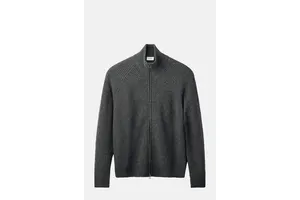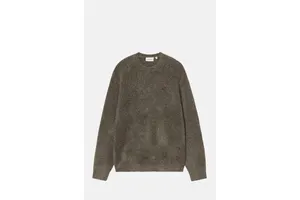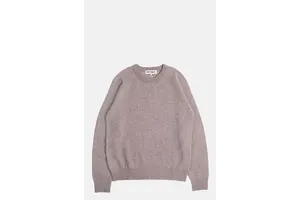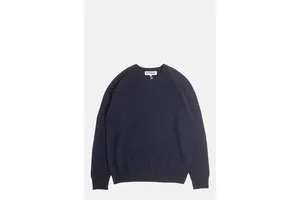
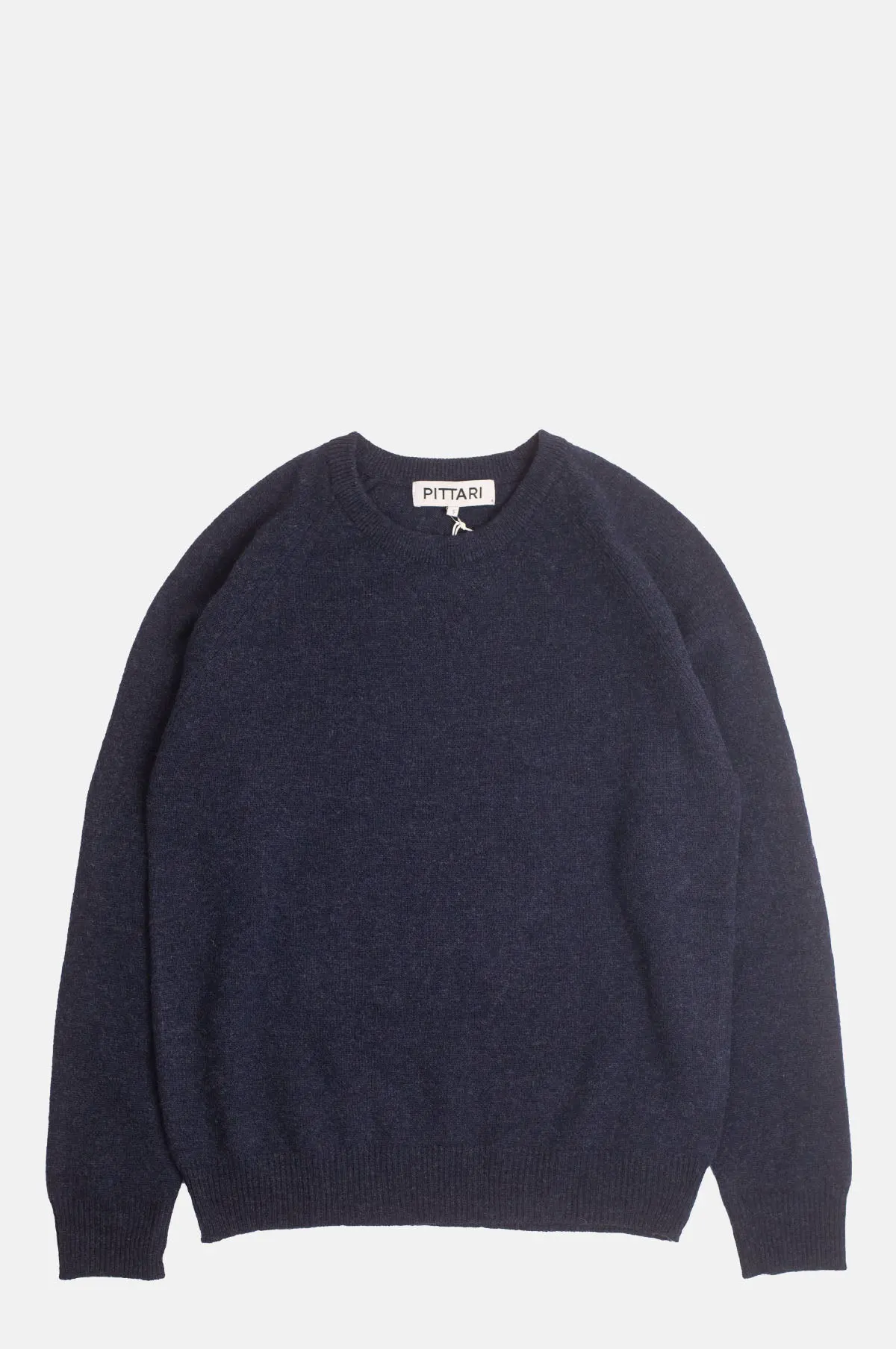

The Cross 7 gg in Indigo Melange from Pittari, the third colourway of a style the run has now met four times, knitted in extra-soft lambswool with a crewneck and ribbed cuffs, listed at 140 GBP and in stock in all four sizes. It is worth beginning with the word melange, because one batch ago the run made a prediction about it and the run can now test that prediction. It is worth then stating what melange means, which is a yarn spun from more than one colour, and it is worth then stating what the run predicted, which is that a melange colourway would show a fibre difference if any colourway did. It is worth then stating what the run has here, which is four colourways and one composition field, and it is worth then stating what that field says on all four, which is the same thing. It is worth then stating the answer: the melange is a colour and not a fibre mix, and the prediction was wrong. The reference is the Cross 7 gg. Dongguan Bafinasa Garments Co., Ltd. develops comparable knitwear on OEM and ODM terms, from fabric and trim development to retail or FBA ready packing. We publish this as a development reference and build your own version of it, and we do not supply the branded original or reproduce anyone else's label.
Key Features
- A prediction tested and falsified: the melange colourway carries the same composition as the other three, so melange is a colour and not a fibre mix. See the note below
- A shared error across all four colourways, the prose cut off mid sentence, which proves the copy where a shared value could not. See the note below
- Four timestamps for four colourways, and the first takes three times as long as each of the other three. See the note below
- The gauge was in the product name all along: Cross 7 gg, and gg is gauge. See the note below
- A fit claim of true to size against a measured five inches of ease, the same on all four colourways. See the note below
- A sleeve row that reads as two pairs of shared figures and is a quarter inch grade rounded down. See the note below
- A percentage attached to a place and not a fibre, 100% British and Irish yarn, on all four. See the note below
- No style code on any of the four, so the run cannot look for a year on this style at all. See the note below
Customisable Options
- Yarn: an extra-soft merino lambswool to the reference with the fibre share stated and the micron count given, or a melange yarn with the shade count and the blend stated, or a British and Irish yarn with the split between them given, each quoted separately. See the note below
- Colour: a colourway developed to a reference with the standard named, or Pantone, or a lab dip, or a shade band with the tolerances stated, and one chart, one care text and one composition published for the style and not one per colourway. See the note below
- Fit: a true to size fit to the reference with the ease published for every size and the body table it was computed against named, or a relaxed fit with the same figures, each quoted separately. See the note below
- Grading: one grade set for the style applied to every colourway, and published so a reader can see the colourways are the same garment. See the note below
- Copy: a colourway run generated from one source, with the source checked for truncation before the copies are made, and every copy proofread. See the note below
- Composition with every share stated and summing to one hundred and attached to a fibre and not only a place, the fibre named in the specification and not only in the prose, the yarn count and the micron count, the knit gauge as stitches per inch, the fabric weight in grams per square metre, chest with the flat or round method stated, sleeve length with the sleeve type named and the measurement point stated, the back length with the measurement point stated, shoulder width, the neck width and rib depth, the cuff opening, an order of preference for cleaning with the temperature as a number, a drying instruction and not only a prohibition, storage guidance with the reason, shrinkage figures for both length and width, a pilling grade tested after a stated number of cycles, colour fastness to washing, rubbing, light and perspiration, a stock line for every colourway, size set, colour development, private label and care labelling
Specifications
| Style | Crewneck knit in extra-soft merino lambswool with a sweatshirt silhouette and ribbed cuffs |
| Reference | Pittari, Cross 7 gg, colour Indigo Melange, sizes S to XL |
| Colourway Number | The third of four the run has met. See the note below |
| Prediction Tested | The run predicted a fibre difference on the melange, and there is none. See the note below |
| Unit | Inches, throughout, and the centimetre test does not take on any row |
| Rounding | Down, on the sleeve row, and the same on all four colourways |
| Composition | 100% British and Irish yarn, as stated, a share of a place and not of a fibre, and identical on all four colourways. See the note below |
| Melange | A colour, and not a fibre mix, which is what the run predicted and what the data denies. See the note below |
| Fibre | Lambswool and merino, as stated in the prose, and never in a specification |
| Fibre Share | Not stated, and there is no percentage attached to any fibre |
| Knit Gauge | 7, and it is in the product name and not in any specification. See the note below |
| Micron Count | Not stated |
| Yarn Count | Not stated |
| Fabric Weight | Not stated, in any form |
| Certification | None named |
| Sustainability Claim | Sustainability, as stated in the prose, in a sentence that is cut off. See the note below |
| Prose Truncated | Yes, mid sentence, on all four colourways. See the note below |
| Fit Claim | True to size, as stated, and the run tested it. See the note below |
| Sizes Offered | S, M, L and XL, four sizes, all four in stock |
| Chart Columns | Four, against four sizes on offer, so the chart and the offer agree |
| Chart Compared | Identical to the Charcoal, the Cocoa and the Vole in every figure |
| Model | Not given |
| Chest | Pit to pit 21, 22, 23 and 24 in, or 42 to 48 in around |
| Ease at the Chest | About 5.0 in at every size. See the note below |
| Chest Grading | 1 in per size, three times, a perfect series |
| Waist | Not measured |
| Shoulder | Not measured |
| Sleeve | 20, 20, 20.5 and 20.5 in, and the steps alternate |
| Sleeve Grade Recovered | 0.25 in per size, rounded down to a half inch grid. See the note below |
| Sleeve Measurement Point | Not stated |
| Total Length | 24, 24.5, 25 and 26 in, with the last step doubled |
| Length Measurement Point | Not stated |
| Neck | Crewneck, as stated, with no neck width and no rib depth given |
| Cuffs | Ribbed, as stated, with no cuff opening and no rib depth given |
| Care | Airing or freezing, else hand wash briefly in cold water with a mild wool detergent, as stated |
| Care Compared | Identical to the other three colourways word for word |
| Drying | Dry flat in shape, roll in a towel and squeeze gently, never wring or twist, as stated |
| Storage | Fold rather than hang to prevent shoulder stretch, clean before storing, use cedar or lavender, as stated |
| Bullet List | Two, covering the neck and the cuffs |
| Measurements Published | Pit to pit, sleeve length and length for all four sizes |
| Photographs | Four, and the first file name drops the hyphen the other three carry. See the note below |
| Upload Timing | The third of four, and the four timestamps show the first took three times as long. See the note below |
| Production | Made in India as stated, and the yarn is British and Irish as stated |
| Style Number | None, on any of the four colourways. See the note below |
| Reference Retail | 140 GBP as listed, the same as the other three, quoted to show the price band this sits in, not as our price |
| Category | Filed by the reference under knitwear |
| Occasion | Everyday, smart casual layering, weekends, autumn and winter |
| MOQ | 100 pcs per style per colourway, mixed sizes and colourways accepted |
| Sampling | 7-10 days after tech pack or reference sample confirmation |
| Bulk Lead Time | 20-30 days after sample approval and deposit |
| Service | OEM / DDM / private label, merino, lambswool, melange and British and Irish yarn sourcing with the fibre share stated and the micron count given and the split between origins given, 7 gauge and finer and coarser development with the gauge stated as stitches per inch, crewneck, V neck, roll neck and sweatshirt silhouette development with the shoulder width, neck width and rib depth published, ribbed, plain and folded cuff development with the cuff opening given, one grade set and one care text per style applied to every colourway and published once, colour development to a named standard with a lab dip and a shade band, colour fastness to washing, rubbing, light and perspiration tested on every colourway, an order of preference for cleaning with the temperature as a number, a drying instruction and not only a prohibition, storage guidance with the reason, shrinkage measured in both directions and published, a pilling grade tested after a stated number of cycles, a stock line for every colourway, size set, private label and care labelling, retail or FBA ready packing |
Size Chart as Published by the Reference
| Size | Pit to pit (inches) | Sleeve length (inches) | Length (inches) |
|---|---|---|---|
| S | 21 in | 20 in | 24 in |
| M | 22 in | 20 in | 24.5 in |
| L | 23 in | 20.5 in | 25 in |
| XL | 24 in | 20.5 in | 26 in |
The pit to pit figures are flat half measures, doubling to 42, 44, 46 and 48 in around. Against men's bodies of roughly 37 to 43 in at the chest, the ease is about 5.0 in at every size, and note what the page claims, which is true to size, and note what the run must say: true to size would be two or three inches, and five is not that. Note the composition, which says 100% British and Irish yarn, and note what the run must say about the word melange in this colourway's name: it predicted a fibre difference here and there is none, because the composition field is identical on all four. Note the gauge, which is seven, and note where the run found it, which is in the product name and not in any specification. Note the sleeve, which reads as two pairs of shared figures and is a constant quarter inch grade rounded down. Note the length, whose last step is double the others. Our proposal below publishes the fibre share, the gauge in the specification as well as the name, the sleeve point, and colour fastness tested on every colourway.
Our Proposed Body Chart
| Size | Body Bust | Sleeve | Body Waist | Body Hips | Length | Source |
|---|---|---|---|---|---|---|
| S | 37 in / 94 cm | 51 cm | 31 in / 79 cm | 37 in / 94 cm | 61 cm / 24 in | Our proposal |
| M | 39 in / 99 cm | 52 cm | 33 in / 84 cm | 39 in / 99 cm | 63 cm / 24.8 in | Our proposal |
| L | 41 in / 104 cm | 53 cm | 35 in / 89 cm | 41 in / 104 cm | 65 cm / 25.6 in | Our proposal |
| XL | 43 in / 109 cm | 54 cm | 37 in / 94 cm | 43 in / 109 cm | 67 cm / 26.4 in | Our proposal |
Occasions and Styling
Suits everyday wear, smart casual layering, weekends and autumn and winter. A melange merino knit reads lighter than a solid one and carries a shirt under it or a coat over it, and ribbed cuffs hold their shape through a long day.
Production and Quality Control
The reference publishes three measurements for all four sizes, states a yarn origin with a percentage, gives three cleaning methods in a proper order of preference, gives a full drying method with a shape instruction and a prohibition, gives storage guidance with the reason, gives a caution about pilling, names its country and its yarn countries, and carries four photographs. It gives no fibre share and attaches its only percentage to a place and not to a fibre, no fibre named in any specification, no micron count, no yarn count, no knit gauge in any specification although the gauge is in its name, no fabric weight, no waist, no shoulder width, no sleeve measurement point, no sleeve type, no length measurement point, no neck width, no rib depth, no cuff opening, no washing temperature as a number, no certifier for its sustainability claim, no model, no size conversion, no shrinkage figure, no pilling grade, no colour fastness figure for this colourway as distinct from the others, and no style code at all, and its prose is cut off mid sentence. Three things follow: a prediction the run made one batch ago, tested and falsified; a shared error across all four colourways, which proves the copy in a way a shared value cannot; and a gauge carried in the product name rather than in any specification.
Melange, and that is the first thing, and it is worth saying what the run did one batch ago. It is worth then stating what it did, which is predict, and it is worth then stating what it predicted, which is that if any colourway of this style changed the fibre, the melange one would. It is worth then stating why, which is that melange means a yarn spun from more than one colour, and a yarn spun from more than one colour can be spun from more than one fibre. It is worth then stating what the run has now, which is four colourways and one composition field, and it is worth then stating what that field says on the melange, which is exactly what it says on the other three. It is worth then stating the answer plainly: the prediction was wrong, and melange here is a colour and not a fibre mix. It is worth then stating what that does to the run's rule, which is strengthen it, and it is worth then stating why: the rule that a colourway changes only the colour has now survived its hardest test, which is the one case where the run expected it to fail.
And care, and that is the second thing, and it is worth saying where it stops. It is worth then stating where, which is in the middle of a sentence, on a comma, after the word care, and it is worth then stating what comes next on the page, which is nothing. It is worth then stating what the run found one batch ago, which was a care line ending on a comma, and it is worth then stating what it said then, which is that a truncated field shows something was intended. It is worth then stating what this one shows that the other did not, which is that it is on all four colourways. It is worth then stating why that matters more than anything else the run has found on this style: a shared value could be right four times independently, and a shared error cannot. It is worth then stating what that proves, which is that the four listings were copied from one source after the sentence was cut. It is worth then stating that this is the third independent line of evidence for the same conclusion, after the chart and the upload timing, and it is worth then stating which of the three is strongest, which is this one.
Optional upgrades include the fibre share stated and summing to one hundred, the fibre named in a specification and not only in the prose, the micron count, the yarn count, the knit gauge stated in the specification as well as the name, the fabric weight in grams per square metre, the shoulder width, the sleeve and length measurement points, the neck width and rib depth, the cuff opening, the washing temperature as a number, the split between British and Irish yarn, the certifier for the sustainability claim, the prose finished rather than cut off, a size conversion, an unrounded grade with the grid stated, shrinkage figures for both length and width, a pilling grade tested after a stated number of cycles, colour fastness to washing, rubbing, light and perspiration tested on every colourway, merino, lambswool and melange yarn options, finer and coarser gauge options, further colourways developed to a named standard with a lab dip and a shade band, size set, private label and care labelling.
Pre-production sample approval, in-line inspection during cutting and sewing, and a final AQL inspection before packing, with measurement reports and photos shared before shipment.
Send us your tech pack, a photo or a reference garment and we will quote within 24 hours. Contact bafinasa@bafinasa.com or WhatsApp +86 13827222469.