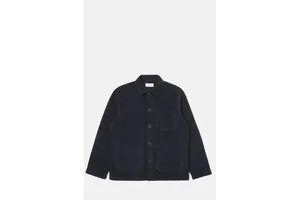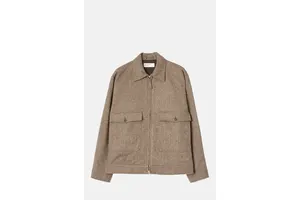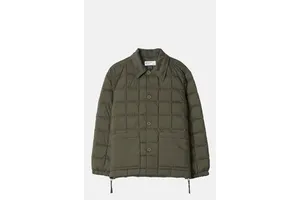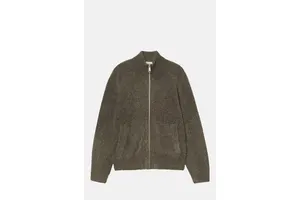
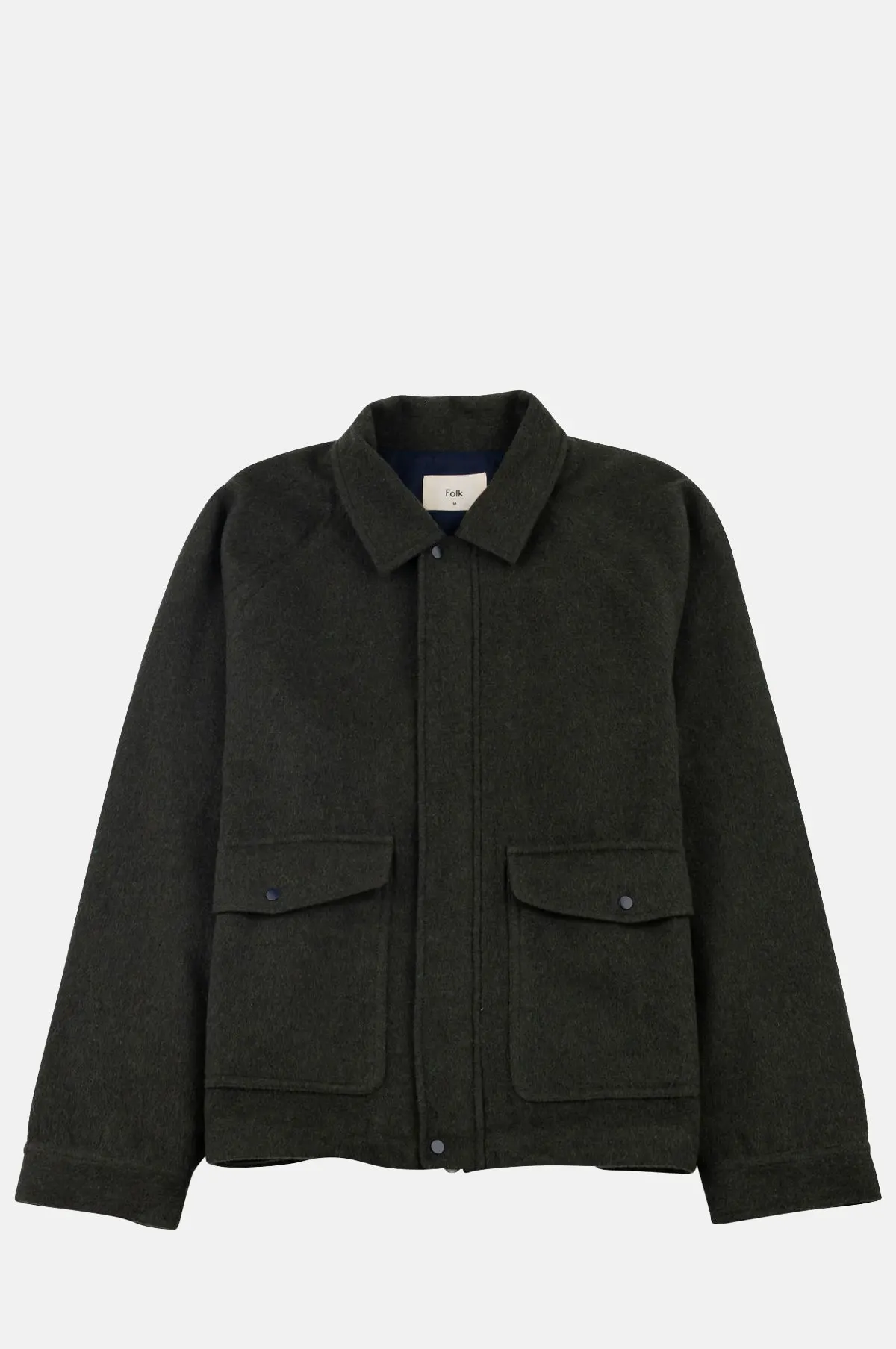

The Cropped Winter Coat in Olive Brushed Wool from Folk, a boxy functional piece in a mid-weight woollen blend from a Japanese mill, made with recycled yarns and a lightly brushed pile surface, cut with raglan shoulders, a concealed two-way metal zip and double-entry angled patch pockets, listed at 295 GBP and in stock in all four sizes. It is worth beginning with the chart header, because this page answers a question the run has asked on every garment and it answers it somewhere the run has been reading without looking. It is worth then reading the columns, which are headed two slash S, three slash M, four slash L and five slash XL. It is worth then stating what that is, which is a size conversion table, and it is worth then stating that it is the first one the run has been given. It is worth then turning to the unit, and it is worth then stating what the run's method has been, which is to test rows one at a time and conclude about the chart. The reference is the Cropped Winter Coat. Dongguan Bafinasa Garments Co., Ltd. develops comparable outerwear on OEM and ODM terms, from fabric and trim development to retail or FBA ready packing. We publish this as a development reference and build your own version of it, and we do not supply the branded original or reproduce anyone else's label.
Key Features
- A size conversion table, in the chart header itself: 2 is S, 3 is M, 4 is L and 5 is XL. See the note below
- A numbered block that starts at 2, so the run can see a size 1 exists below the chart and is not shown. See the note below
- A chart that is in centimetres, two of three rows converting exactly, so the third row is the error and not the exception. See the note below
- A length label that names its own measurement point, from the high shoulder point. See the note below
- A sleeve longer than the coat, 30.7 against 26.4 in, and raglan shoulders, which is why the measurement point matters more here. See the note below
- A four fibre composition with every share given and summing to one hundred, and a recycled claim that names no fibre and no share. See the note below
- Three countries on one garment: a Japanese mill, a house, and India, so the run's two field scheme is not enough. See the note below
- Seven bullets and every one is hardware or construction, and not one of them is measured. See the note below
Customisable Options
- Cloth: a mid-weight recycled woollen blend to the reference with the weight in grams per square metre stated and the recycled share given per fibre, or a virgin woollen blend with the same figures, or a brushed or unbrushed finish with the finish named, or a heavier or lighter weight with a figure and not a word, each quoted separately. See the note below
- Mill: a named mill with its country, or the country alone with the mill named where it can be, and the cloth traceable to it. See the note below
- Shoulder: raglan shoulders to the reference with the sleeve measurement point stated, or a set-in shoulder with the shoulder width stated, or a saddle shoulder with both figures, each quoted separately. See the note below
- Hardware: a concealed two-way metal zip to the reference with the zip length stated, or a one-way zip with the same, or a button through front with the button count and size stated, each quoted separately. See the note below
- Hem: an adjustable shock cord hem with toggles to the reference with the cord length and the adjustment range stated, or a plain hem, or a drawcord with the same figures, each quoted separately. See the note below
- Chart: all rows published in the unit they were taken in and in one unit only, with the original figure kept where a conversion is printed, whether each figure is flat or round stated, and the length measurement point stated. See the note below
- Composition with every share stated and summing to one hundred and covering the shell and every lining separately, the fabric weight in grams per square metre and not only a weight word, the mill named or its country given, the recycled or organic share given per fibre with the certifier and licence number, chest with the flat or round method stated, sleeve length with the shoulder construction and the measurement point both stated, the back length with the measurement point stated, shoulder width, the zip length, the pocket count and dimensions, the cuff opening, the hem adjustment range, one cleaning method given or an order of preference where two are given, the temperature as a number, a drying instruction, shrinkage figures for both length and width, colour fastness to washing, rubbing and light, pilling grade after a stated number of cycles, abrasion resistance, a stock line for every colourway, size set, colour development, private label and care labelling
Specifications
| Style | Boxy cropped coat in a mid-weight recycled woollen blend with raglan shoulders, a concealed two-way metal zip, double-entry angled patch pockets and an adjustable shock cord hem |
| Reference | Folk, Cropped Winter Coat, colour Olive, code FM6607W, sizes S to XL |
| Unit | Centimetres behind the printed inches, on two of three rows. See the note below |
| Unit Recovered | Chest 60.5, 63, 65.5 and 68 cm; sleeve 78, 79, 80 and 81 cm. See the note below |
| Row That Disagrees | The length, which converts in neither unit. See the note below |
| Unit Attribution | The same house's other garment is also a centimetre chart, so the run can attribute the unit to the house. See the note below |
| Size Labels | 2 / S, 3 / M, 4 / L and 5 / XL, so a number and a letter together. See the note below |
| Size Conversion | Given, in the chart header, the first the run has been given. See the note below |
| Block Below The Chart | The numbers start at 2, so a size 1 exists and is not shown. See the note below |
| Composition | 68% Wool, 25% Polyester, 4% Nylon and 3% Acrylic, as stated, four fibres. See the note below |
| Composition Sum | One hundred, exactly. See the note below |
| Recycled Claim | Recycled yarns, as stated in the prose, with no fibre named and no share given. See the note below |
| Certification | None named |
| Fabric Weight | Not stated as a figure, and stated as a word: mid-weight. See the note below |
| Mill | A Japanese mill, as stated, with no mill name given. See the note below |
| Cloth Countries | Three on one garment: the mill, the house and the making. See the note below |
| Finish | Lightly brushed pile surface, as stated, with no pile height given |
| Yarn Count | Not stated |
| Fit Words | Boxy, cropped and relaxed, as stated, three of them. See the note below |
| Sizes Offered | S, M, L and XL, four sizes, all four in stock |
| Chart Columns | Four, against four sizes on offer, so the chart and the offer agree |
| Model | Not given |
| Chest | Pit to pit 23.8, 24.8, 25.8 and 26.8 in, or 60.5, 63, 65.5 and 68 cm |
| Chest Around | 47.6, 49.6, 51.6 and 53.6 in |
| Ease at the Chest | About 10.6 in at every size, and the largest the run has measured. See the note below |
| Ease Against the Word | Not placed against a word. This run no longer places ease against fit words |
| Ease Direction | It does not move, and the grade alone predicts that |
| Chest Grading | 2.5 cm per size, three times, a perfect series |
| Waist | Not measured |
| Hip | Not measured |
| Shoulder | Not measured, and raglan shoulders as stated, which is why there is no shoulder width to give. See the note below |
| Shoulder Construction | Raglan, as stated, the first the run has been given. See the note below |
| Sleeve | 30.7, 31.1, 31.5 and 31.9 in, or 78, 79, 80 and 81 cm, a 1 cm grade |
| Sleeve Against Length | 30.7 against 26.4 in, so the sleeve is longer than the coat. See the note below |
| Sleeve Measurement Point | Not stated, and on a raglan the usual landmark does not exist. See the note below |
| Sleeve Type | Not stated |
| Total Length | 26.4, 26.6, 27.6 and 28.3 in, and it grades in neither unit. See the note below |
| Length Measurement Point | From the high shoulder point, as stated in the row label. See the note below |
| Length Grading | Steps 0.2, 1.0 and 0.7 in, and no constant grade fits it in either unit. See the note below |
| Length Word | Cropped, as stated, and 26.4 in at the smallest is the run's only figure for it. See the note below |
| Closure | Concealed two-way metal zip with a self-fabric placket, as stated, with no zip length given. See the note below |
| Pockets | Double-entry angled patch pockets, as stated, with no pocket count beyond that and no dimensions given. See the note below |
| Hem | Adjustable elastic shock cord with toggles, as stated, with no cord length and no adjustment range given |
| Cuffs | Placket with metal snap closure, as stated, with no cuff opening and no snap size given |
| Collar | Not described |
| Lining | Not mentioned, on a lined coat. See the note below |
| Care | Dry clean only, as stated, three words. See the note below |
| Care Alternatives | None, and the page says only, so the run records it as one method stated as the only one. See the note below |
| Bullet List | Seven, and every one is hardware or construction, and none is measured. See the note below |
| Measurements Published | Pit to pit, sleeve and length for all four sizes |
| Photographs | Six, and three version stamps in file order, two files to each second. See the note below |
| Production | Made in India as stated |
| Style Number | FM6607W, as stated, and no year in it. See the note below |
| Reference Retail | 295 GBP as listed, quoted to show the price band this sits in, not as our price |
| Category | Filed by the reference under coats and jackets |
| Occasion | Everyday, layering, smart casual, autumn and winter |
| MOQ | 100 pcs per style per colourway, mixed sizes and colourways accepted |
| Sampling | 7-10 days after tech pack or reference sample confirmation |
| Bulk Lead Time | 20-30 days after sample approval and deposit |
| Service | OEM / DDM / private label, wool, wool blend and recycled wool sourcing with the weight in grams per square metre stated and the recycled share given per fibre with the certifier and licence number, mill sourcing named or attributed by country, brushed pile, boiled and melton finishing with the finish named and the pile height given, raglan, set-in and saddle shoulder development with the sleeve measurement point stated for each, overcoat, car coat, chore coat and bomber development with the shell and every lining fibre stated separately, concealed and exposed two-way and one-way zip development with the zip length stated, patch, welt, double-entry and angled pocket development with the dimensions stated, shock cord, drawcord and plain hem development with the adjustment range stated, snap, button and press-stud cuff development with the cuff opening given, charts published in one unit with the original figure kept where a conversion is printed and every row graded, one cleaning method given or an order of preference where two are given, a drying instruction, shrinkage measured in both directions and published, colour fastness to washing, rubbing and light, pilling grade tested after a stated number of cycles, abrasion resistance tested and published, a stock line for every colourway, size set, colour development, private label and care labelling, retail or FBA ready packing |
Size Chart as Published by the Reference
| Size | Pit to Pit (Inch) | Sleeve (Inch) | Length from high shoulder point (Inch) |
|---|---|---|---|
| 2 / S | 23.8 in | 30.7 in | 26.4 in |
| 3 / M | 24.8 in | 31.1 in | 26.6 in |
| 4 / L | 25.8 in | 31.5 in | 27.6 in |
| 5 / XL | 26.8 in | 31.9 in | 28.3 in |
The pit to pit figures are flat half measures, doubling to 47.6, 49.6, 51.6 and 53.6 in around. Against men's bodies of roughly 37 to 43 in at the chest, the ease is about 10.6 in at every size, and note what that is: the largest the run has measured. Note what the run has measured elsewhere, which is 3 to 7 on a t-shirt called regular, about 6 on a knit called slightly oversized, 7 to 9 on a knit called oversized, and 8 on a jacket called regular. Note the fit words here, which are boxy and cropped and relaxed, and note that boxy is a word the run has never been able to measure before and now can, at 10.6. Note the unit: the chest recovers to 60.5, 63, 65.5 and 68 cm and the sleeve to 78, 79, 80 and 81 cm, both exact, and note what that makes the length, which converts in neither unit and does not grade in either. Note what the run should conclude from that: a unit belongs to a chart and not to a row, so the length is the error and not the exception. Note the length label, which names its own measurement point, from the high shoulder point, and note that this is the third row label in two batches to do so. Note the sleeve, 30.7 against a length of 26.4, so the sleeve is longer than the coat, and note the shoulder construction, which is raglan, and note what that means: on a raglan the usual shoulder landmark does not exist, so the measurement point matters more here and is still not given. Note the chart header, which reads 2 / S, 3 / M, 4 / L and 5 / XL, and note what that is: a size conversion table, in the one place the run has been reading without looking. Note that the numbers start at 2, so there is a size 1 below the chart that is not shown. Our proposal below publishes one unit, the original figure kept where a conversion is printed, the sleeve point, the shoulder construction, the zip length, the pocket dimensions, the mill, and the recycled share per fibre.
Our Proposed Body Chart
| Size | Body Bust | Sleeve | Body Waist | Body Hips | Length | Source |
|---|---|---|---|---|---|---|
| S | 37 in / 94 cm | 78 cm | 31 in / 79 cm | 37 in / 94 cm | 67 cm / 26.4 in | Our proposal |
| M | 39 in / 99 cm | 79 cm | 33 in / 84 cm | 39 in / 99 cm | 69 cm / 27.2 in | Our proposal |
| L | 41 in / 104 cm | 80 cm | 35 in / 89 cm | 41 in / 104 cm | 71 cm / 28 in | Our proposal |
| XL | 43 in / 109 cm | 81 cm | 37 in / 94 cm | 43 in / 109 cm | 73 cm / 28.7 in | Our proposal |
Occasions and Styling
Suits everyday wear, layering, smart casual dressing and autumn and winter. A boxy cropped coat carries a knit or a sweatshirt under it without pulling, and raglan shoulders let it sit over a jacket.
Production and Quality Control
The reference publishes three measurements for all four sizes, states four fibres with every share and the shares sum to one hundred, names its cloth mill by country, its finish, its fit three times, its shoulder construction, its zip, its placket, its pockets, its hem adjustment, its cuffs, its country, gives a cleaning method and states it as the only one, gives a code, and carries six photographs and seven bullets. It gives no fabric weight although it calls the cloth mid-weight, no yarn count, no mill name although it names the mill's country, no recycled share and no fibre named as the recycled one although it claims recycled yarns, no certifier, no waist, no hip, no shoulder width although the shoulder construction makes one impossible to give in the usual place, no sleeve measurement point although the sleeve exceeds the length, no sleeve type, no lining although a coat of this kind is lined, no zip length, no pocket dimensions, no cuff opening, no snap size, no cord length, no collar, no second cleaning method and the page says there is none, no temperature, no drying instruction, no shrinkage figure, no pilling grade and no abrasion grade, and no statement of whether any figure is flat or round, and the length row grades in neither unit. Three things follow: a size conversion table in the chart header, which is the first the run has been given; a chart whose unit is attributable to the house because the same house's other garment is a centimetre chart too; and a recycled claim that names no fibre and no share.
Two slash S, three slash M, four slash L, five slash XL, and that is the first thing, and it is worth saying where it sits. It is worth then stating where, which is in the chart header, and it is worth then stating what the run has been doing with chart headers for a hundred and twenty garments, which is reading them as size labels only. It is worth then stating what this one is, which is a size conversion table, and it is worth then stating that it is the first the run has been given on any garment. It is worth then stating what else the numbers show, which is that the block starts at 2, so there is a size 1 below the chart that is not shown. It is worth then stating what that means for the run's block reading, which is that numbered sizes make the missing ones visible: with letters, a missing size is invisible, and with numbers, a missing 1 stands out. It is worth then stating what the run should now do, which is read chart headers as data and not only as labels.
Sixty, sixty-three, sixty-five point five, sixty-eight, and that is the second thing, and it is worth saying what the run's method has been. It is worth then stating what it has been, which is testing rows one at a time and concluding about the chart, and it is worth then stating what happened two batches ago, which is that it nearly called a row an exception before it found the rounding rule that saved it. It is worth then stating the correction, which is that a unit belongs to a chart and not to a row, so the run should conclude about the chart first and then find the row that disagrees. It is worth then stating what that gives here: two rows convert exactly to centimetres and one does not, so the one that does not is the error. It is worth then stating what the length row looks like under that reading, which is 26.4, 26.6, 27.6 and 28.3, stepping 0.2, 1.0 and 0.7, and it is worth then stating that no constant grade fits it in either unit. It is worth then stating what the run should do with that, which is publish it as it stands and say it is the row that does not fit its own chart. It is worth then closing on the third thing, which is that the same house's other garment is also a centimetre chart, and it is worth then stating what that lets the run say for the first time, which is that a unit can be attributed to a house and not only to a page.
Optional upgrades include the fabric weight in grams per square metre alongside the word mid-weight, the yarn count, the mill named and not only its country, the recycled share given per fibre with the certifier and licence number, the pile height, the waist and hip, the sleeve measurement point and the shoulder construction together, the shoulder width where the construction allows one, the lining fibre stated, the zip length, the pocket dimensions, the cuff opening and snap size, the cord length and adjustment range, the collar described, every figure marked flat or round, a second cleaning method or an order of preference, a drying instruction, shrinkage figures for both length and width, colour fastness to washing, rubbing and light, a pilling grade after a stated number of cycles, abrasion resistance, virgin wool and heavier and lighter weight options, set-in and saddle shoulder options, one-way zip and button-through options, welt and plain pocket options, plain and drawcord hem options, size set, colour development, private label and care labelling.
Pre-production sample approval, in-line inspection during cutting and sewing, and a final AQL inspection before packing, with measurement reports and photos shared before shipment.
Send us your tech pack, a photo or a reference garment and we will quote within 24 hours. Contact bafinasa@bafinasa.com or WhatsApp +86 13827222469.