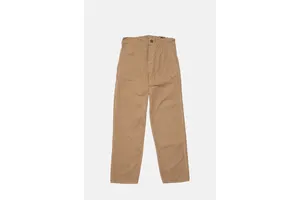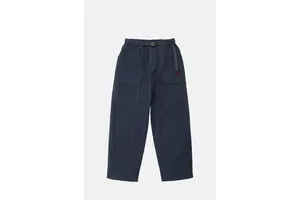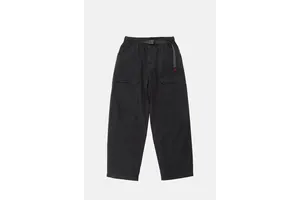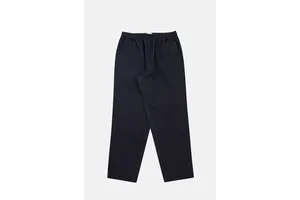
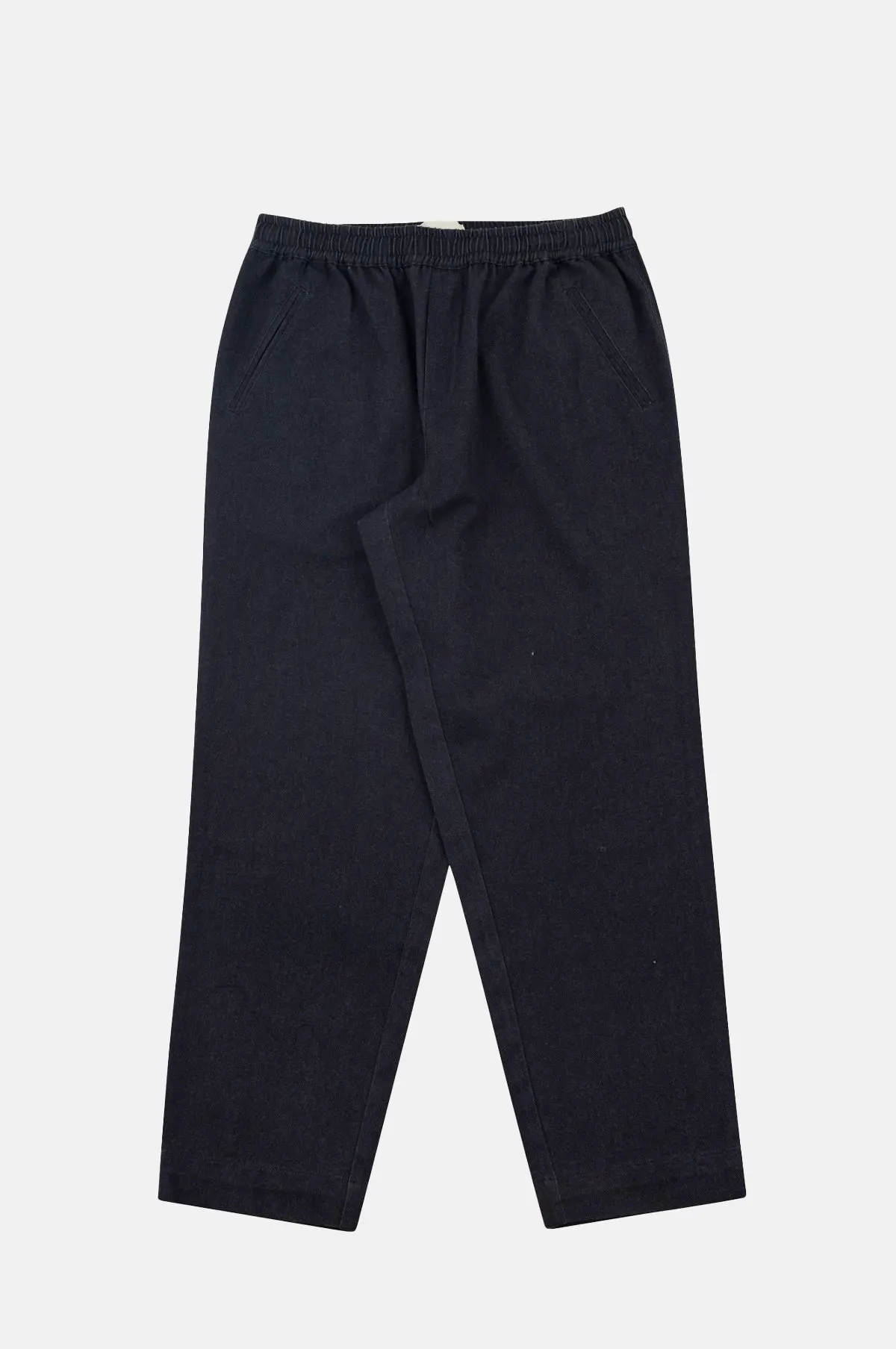

The Drawcord Assembly Pant in Black Twill from Folk, the drawcord version of a core style, bridging a smart trouser and a casual one with a relaxed tapered fit and a single pleat, in a mid weight cotton twill with an elasticated waistband, listed at 145 GBP and in stock in all four sizes. It is worth beginning with the chart, because it is the first one in this run with nothing wrong with it. It is worth then stating what the run checks, which is the columns against the offer, the cells against the columns, and the labels for a unit. It is worth then stating what it finds: four columns against four sizes, four rows with every cell filled, and every row label carrying its unit in brackets. It is worth then stating what the run has been saying for a hundred batches, which is that it has never seen a chart pass all three. It is worth then stating what it should do now, which is say that it has. It is worth then stating the second thing on this page, which is a trap: the waist figures are round measures, and the run's default would have doubled them into a fifty-seven inch waist. The reference is the Assembly Pant. Dongguan Bafinasa Garments Co., Ltd. develops comparable trousers on OEM and ODM terms, from fabric and trim development to retail or FBA ready packing. We publish this as a development reference and build your own version of it, and we do not supply the branded original or reproduce anyone else's label.
Key Features
- The first chart in the run to pass every check: columns matched to the offer, every cell filled, every label carrying its unit. See the note below
- A factor-of-two trap: the waist is a round measure, and doubling it gives 57.6 inches on a size 30. See the note below
- The waist is smaller than the body by about an inch and a half, and that is tension, not slack. See the note below
- The first trouser in the run whose inseam grades, and whose rise therefore grows. See the note below
- A rise word checked against a rise number for the first time, and it disagrees. See the note below
- The hem row is a one centimetre grade, the cleanest centimetre recovery in the run. See the note below
- The specific fabric word is buried in a tab and the vague one is in the bullets. See the note below
- A care instruction about the load and not about the garment, the first in the run. See the note below
Customisable Options
- Fabric: a mid weight cotton twill to the reference with the weight in grams per square metre stated, or a herringbone with the weave named and the weight given, or a heavier twill with the weight stated, each quoted separately. See the note below
- Waist: an elasticated drawcord waist to the reference with the relaxed and stretched figures both given, or a fixed waist with the ease published, each quoted separately. See the note below
- Rise: a mid rise to the reference with the rise measured and published, or a rise that does not grow across the range with the inseam and total length grading together, each quoted separately. See the note below
- Leg: a tapered leg to the reference with the hem measured flat and the method stated, or a straight leg with the opening given, each quoted separately
- Chart: four rows with every cell filled, columns matched to the offer, every label carrying its unit and its state, and one unit for the whole table. See the note below
- Composition with every share stated and summing to one hundred, the weave named, the fabric weight in grams per square metre, waist relaxed and stretched with the method stated, hip, thigh, knee, the rise measured directly, the inseam, the total length, the hem opening with the flat or round method stated, the front and rear pocket count and dimensions, an order of preference for cleaning with every temperature as a number, a drying instruction and not only a prohibition, storage guidance, shrinkage figures for both length and width, colour fastness to washing, rubbing and light, abrasion resistance, a stock line for every size, size set, colour development, private label and care labelling
Specifications
| Style | Mid rise single pleat tapered trouser in mid weight cotton twill with an elasticated drawcord waist |
| Reference | Folk, Drawcord Assembly Pant, colour Black Twill, sizes 30 to 36 |
| Chart | The first in this run to pass every check the run applies. See the note below |
| Chart Columns | Four, against four sizes on offer, so they match |
| Chart Cells | Sixteen across four rows, and every one is filled |
| Row Labels | Waist Relaxed, Inseam, Total Length and Hem, and each carries its unit in brackets. See the note below |
| Unit | Inches, stated in every row label, and two rows also carry a metric grade underneath. See the note below |
| Sizing | Nominal waist in inches, so the label states its own meaning. See the note below |
| Size Conversion | A second figure in the header, 2, 3, 4 and 5 against 30, 32, 34 and 36, and the run cannot read it. See the note below |
| Composition | 100% Cotton, as stated in a tab and in a second tab |
| Weave | Herringbone in one tab and twill in the prose and the bullets, and the specific one is buried. See the note below |
| Fabric Weight | Mid weight, as a word, and not as a number. See the note below |
| Yarn Count | Not stated |
| Certification | None named |
| Fit Word | Not given as a single word, and instead a comfortable loose fit through the hips and thigh with the leg tapering to the hem |
| Rise Word | Mid-rise, as stated in the bullets |
| Rise Measured | Not stated, and computable at about 12.6 to 14.3 in. See the note below |
| Sizes Offered | 30, 32, 34 and 36, four sizes, all four in stock |
| Waist | Relaxed 28.8, 30.5, 32.6 and 34.6 in, and these are round measures. See the note below |
| Waist Method | Relaxed, as stated in the row label, and the stretched figure is not given. See the note below |
| Waist Against The Label | Minus 1.2, minus 1.5, minus 1.4 and minus 1.4 in, and that is tension. See the note below |
| Waist Ladder | 1.7, 2.1 and 2.0 in against a label step of 2 in, so it tracks the body. See the note below |
| Hip | Not measured |
| Thigh | Not measured |
| Knee | Not measured |
| Inseam | 27.9, 28.3, 28.8 and 29.2 in, and it grades, which no other trouser in this run does. See the note below |
| Total Length | 40.5, 41.5, 42.5 and 43.5 in, and the steps are a uniform one inch |
| Rise Computed | About 12.6, 13.2, 13.7 and 14.3 in, so the rise grows. See the note below |
| Rise Word Against Number | The bullets say mid rise and the number says about 32 cm, which is high. See the note below |
| Length Grade Split | About 0.43 in into the leg and about 0.57 in into the rise, so one grade is two. See the note below |
| Hem | 6.3, 6.7, 7.1 and 7.5 in, and the steps are a uniform 0.4 in |
| Hem In Centimetres | 16, 17, 18 and 19, a one centimetre grade, the cleanest recovery in the run. See the note below |
| Hem Method | Not stated, so the run cannot say whether it is flat or round. See the note below |
| Leg Word | Tapered, as stated, and the hem is consistent with it if the figure is flat. See the note below |
| Waistband | Elasticated with a drawcord, as stated, with no band depth and no stretched figure given |
| Pleat | Single pleat, as stated in the prose and not in the bullets |
| Pockets | Two front and two rear jetted buttoned, as stated, with no dimensions given |
| Closure | Not stated |
| Care | 30 degree wash, do not bleach, do not tumble dry, cool iron, wash like colours together, as stated |
| Care Instruction Count | Five lines, and three instructions, because two are prohibitions. See the note below |
| Washing Temperature | 30, as a number |
| Ironing Temperature | Cool, as a word, on the same line as a number. See the note below |
| Drying | A prohibition and not a method, so the run counts it as neither |
| Storage | Not stated |
| Load Condition | Wash like colours together, the first care instruction in this run about other garments. See the note below |
| Bullet List | Six, covering the fit, the leg, the fabric, the rise, the front pockets and the rear pockets |
| Prose | One sentence of house and the rest of garment, the middle value of three seen in two batches. See the note below |
| Measurements Published | Waist relaxed, inseam, total length and hem for all four sizes |
| Photographs | Six, all uploaded in one session, and the second garment in the run with six in one go |
| Production | Made in Portugal as stated, the second garment in this batch made there. See the note below |
| Style Number | FM6621W, as stated, six characters, and no year. See the note below |
| Code Suffix | W, which is not the colour, so the decoder fails here too. See the note below |
| Reference Retail | 145 GBP as listed, quoted to show the price band this sits in, not as our price |
| Category | Filed by the reference under trousers |
| Occasion | Everyday, work, smart casual, autumn and winter |
| MOQ | 100 pcs per style per colourway, mixed sizes and colourways accepted |
| Sampling | 7-10 days after tech pack or reference sample confirmation |
| Bulk Lead Time | 20-30 days after sample approval and deposit |
| Service | OEM / DDM / private label, cotton twill, herringbone, corduroy and canvas sourcing with the weave named and the weight in grams per square metre stated, organic and recycled cotton options with the certifier and licence number given, tapered, straight, wide and barrel leg development with the hem measured and the flat or round method stated, single and double pleat development, elasticated, drawcord and fixed waist development with the relaxed and stretched figures both published, the rise measured directly and published, the inseam and total length graded to agree so the rise does not creep, hip, thigh and knee measured, chart columns matched to the sizes on offer with every cell filled and every row label carrying its unit and its state, one unit for the whole chart, an order of preference for cleaning with every temperature as a number, a drying method and not only a prohibition, storage guidance, shrinkage measured in both directions and published, colour fastness to washing, rubbing and light, abrasion resistance tested and published, a stock line for every size and colourway, size set, colour development, private label and care labelling, retail or FBA ready packing |
Size Chart as Published by the Reference
| Size | Waist Relaxed (inches) | Inseam (inches) | Total Length (inches) | Hem (inches) |
|---|---|---|---|---|
| 30 | 28.8 in | 27.9 in | 40.5 in | 6.3 in |
| 32 | 30.5 in | 28.3 in | 41.5 in | 6.7 in |
| 34 | 32.6 in | 28.8 in | 42.5 in | 7.1 in |
| 36 | 34.6 in | 29.2 in | 43.5 in | 7.5 in |
The waist figures are round measures and not flat halves, which is the first thing to establish: 28.8 doubled is 57.6 in, and no size 30 waist is fifty-seven inches, so these are circumferences. Read against the size labels, which are nominal waist inches and so state their own meaning, the waist runs about 1.2 to 1.5 in smaller than the body at every size. Note what that is, and note that it is not an error: this is an elasticated waist and the figure is given relaxed, so the garment is meant to be smaller than the body and to stretch onto it. Note what that does to the word the run has been using: at the chest, ease is slack and positive; here it is tension and negative; and the run has been reporting both with one word. Note the tension ladder, which is not flat: minus 1.2, minus 1.5, minus 1.4 and minus 1.4, and note that the formula accounts for it, since the waist grades 1.7, 2.1 and 2.0 against a label step of 2. Note the rise, which is not stated but can be taken as the total length less the inseam: about 12.6 in at a size 30 rising to about 14.3 in at a size 36, and note that the bullets call this mid rise. Our proposal below publishes the relaxed and stretched waist, the rise directly, the hip and thigh, and the method for every figure.
Our Proposed Body Chart
| Size | Body Waist | Body Hips | Length | Source |
|---|---|---|---|---|
| 30 | 30 in / 76 cm | 36 in / 91 cm | 103 cm / 40.6 in | Our proposal |
| 32 | 32 in / 81 cm | 38 in / 97 cm | 105 cm / 41.3 in | Our proposal |
| 34 | 34 in / 86 cm | 40 in / 102 cm | 107 cm / 42.1 in | Our proposal |
| 36 | 36 in / 91 cm | 42 in / 107 cm | 109 cm / 42.9 in | Our proposal |
Occasions and Styling
Suits everyday wear, work, smart casual dressing and autumn and winter. A single pleat tapered trouser in cotton twill sits between a suit trouser and a chino, and an elasticated drawcord waist makes it wearable all day.
Production and Quality Control
This is the first reference in this run to pass every check the run applies to a chart, and it is worth saying what those checks are: the columns against the sizes on offer, the cells against the columns, and the labels for a unit. Four columns against four sizes, sixteen cells across four rows with none missing, and every row label carrying its unit in brackets, and the waist label carrying its state as well. It still leaves things out: no hip, no thigh, no knee, no rise stated directly, no stretched waist figure, no fabric weight as a number, no yarn count, no certification, no closure, no pocket dimensions, no waistband depth, no size conversion that can be read, no drying method and only a prohibition, no storage guidance, no second cleaning method, no model, no shrinkage figure, no colour fastness figure and no abrasion figure, no statement of whether the waist figure is flat or round, and the hem method is not stated. Three things follow: the run's complaints about charts are not universal, and it should say when a page passes; the method word on a measurement is worth a factor of two; and the specific fabric word is buried while the vague one is promoted.
Twenty-eight point eight, and that is the first thing, and it is worth saying what the run does by default. It is worth then stating what it does, which is read a figure as a flat half measure and double it. It is worth then stating what doubling gives here, which is fifty-seven and a half inches. It is worth then stating what a size thirty waist is, which is thirty inches. It is worth then stating what that means, which is that the default is wrong by a factor of two, and it is worth then stating what the run has been doing with the missing method word for a hundred batches, which is noting it as an absence. It is worth then stating what it should now call it, which is a hazard worth a factor of two, and it is worth then stating what the run must do in future, which is test whether doubling gives a sane number before deciding. It is worth then stating the second half, which is that once the figure is read as a round measure it is still smaller than the label, by about an inch and a half, and it is worth then stating what the run has been calling that. It is worth then stating what it has been calling it, which is ease, and it is worth then stating what ease has meant everywhere else in this run, which is slack. It is worth then stating what it means here, which is tension, because the waist is elasticated and the figure is relaxed. It is worth then stating the rule that follows: the run must split the word into slack ease and tension ease and always say which, and it is worth then stating what it still cannot say, which is whether an inch and a half of tension is comfortable, because the stretched figure is not given.
Twelve point six, and that is the second thing, and it is worth saying where the number comes from. It is worth then stating that the run takes it as the total length less the inseam, and it is worth then stating the series, which runs from about twelve and a half inches at a size thirty to about fourteen and a quarter at a size thirty-six. It is worth then stating what the run has found on every other trouser in this run, which is that the inseam and the total length are frozen, so the rise is constant. It is worth then stating what is different here, which is that the inseam grades and the total length grades faster, so the rise grows, and it is worth then stating the split: about four tenths of an inch goes into the leg and about six tenths into the rise at every size. It is worth then stating what the bullets call it, which is mid rise, and it is worth then stating what twelve and a half inches is, which is about thirty-two centimetres and on the high side of mid. It is worth then stating what the run should conclude, which is that the first time it can check a rise word against a rise number, the two disagree, and it is worth then stating what that does to the run's standing claim that words and measurements are independent. It is worth then stating what it does, which is nothing, because the claim holds again, and it is worth then stating what the run should note all the same: it had expected a shape word to be checked on the hem and found it consistent, so words and numbers are not always independent. It is worth then stating the last thing, which is the hem itself: six point three, six point seven, seven point one and seven point five inches, which are sixteen, seventeen, eighteen and nineteen centimetres, a one centimetre grade, and the cleanest whole-number recovery in this run.
Optional upgrades include the fabric weight in grams per square metre, the yarn count, the hip, thigh and knee, the rise measured and published directly, the waist stretched as well as relaxed, the waistband depth, the pocket dimensions, the closure stated, the hem method given as flat or round, organic and recycled cotton options with certification, herringbone and heavier twill options, straight and wide leg options, fixed waist and half elasticated options, a size conversion that can be read, shrinkage figures for both length and width, colour fastness to washing, rubbing and light, abrasion resistance tested and published, further colourways, size set, private label and care labelling.
Pre-production sample approval, in-line inspection during cutting and sewing, and a final AQL inspection before packing, with measurement reports and photos shared before shipment.
Send us your tech pack, a photo or a reference garment and we will quote within 24 hours. Contact bafinasa@bafinasa.com or WhatsApp +86 13827222469.