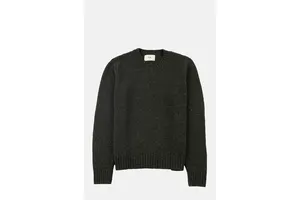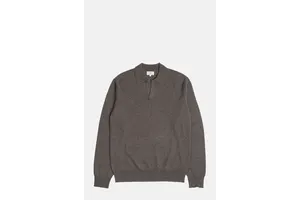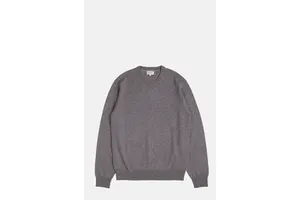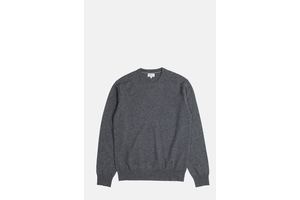
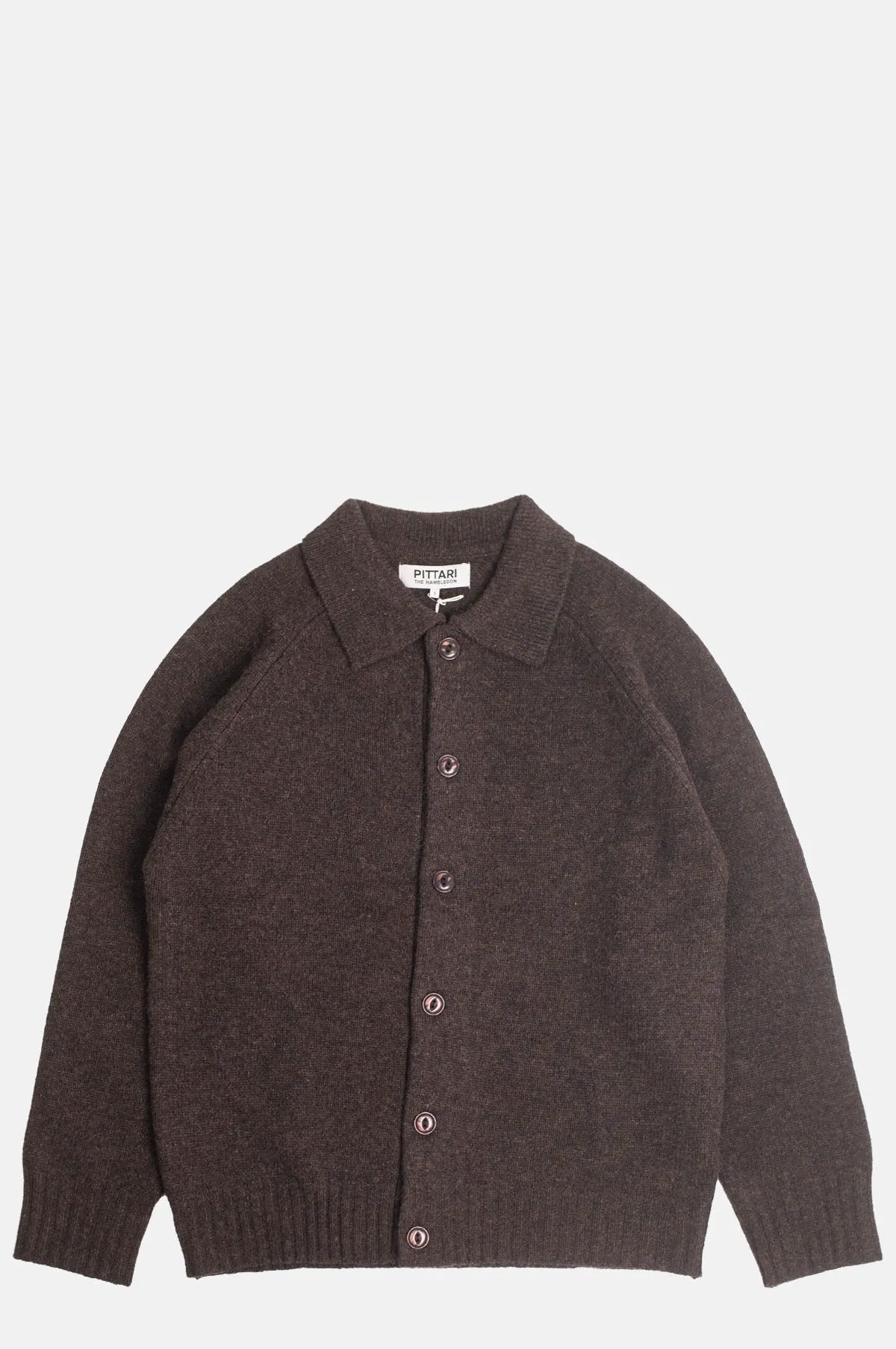

The Adams Cardigan in Cocoa from Pittari, part of a collaboration between the house and the shop, knitted in five gauge extra soft lambswool with a collar, ribbed cuffs and a button through front, listed at 165 GBP with three of its five sizes in stock. It is worth beginning with the gauge, because the run has been asking for one on every knitted garment and has been given open knit, jacquard, light cotton knit and nothing. It is worth then reading it, which is five. It is worth then stating what that is, which is five stitches to the inch, and what that makes this garment, which is a chunky knit. It is worth then turning to the composition, because there is not one. It is worth then stating what there is instead, which is a fibre in the prose, a share attached to two countries, and no line to put either on. It is worth then turning to the care, because it is a paragraph rather than a line and it runs to a hundred and twenty words, and it is worth then stating what is in it that the run has never once been given, which is how to store the garment. It is worth then turning to the sleeve, which is nineteen inches, and it is worth then stating what that does to a question the run has now asked on four garments. The reference is the Adams Cardigan. Dongguan Bafinasa Garments Co., Ltd. develops comparable knitwear on OEM and ODM terms, from fabric and trim development to retail or FBA ready packing. We publish this as a development reference and build your own version of it, and we do not supply the branded original or reproduce anyone else's label.
Key Features
- A knit gauge, five, the first this run has been given, and it is what open knit was withholding. See the note below
- No composition line at all, the first garment in this run without one, and the share that is given is attached to two countries rather than to a fibre. See the note below
- A storage instruction, the first in this run, inside the longest care text any garment has given, and the temperature in it is still a word. See the note below
- Nineteen inches of sleeve against twenty-four here and nine and a half elsewhere, so the run can now answer the question it has been asking: it depends, and nobody says where from. See the note below
- Five columns and five sizes, the first garment in this run to sell its largest size, and that settles the direction of the extra column. See the note below
- A description written by the shop rather than the house, because it is a collaboration with the shop, and the run has been reading every description as the house's. See the note below
- Three nouns for one object: cardigan, polo and jumper, and the fit line calls it a jumper, which does not open at the front. See the note below
- A house paragraph placed second and left unfinished on a comma, and the word it stops on is sustainability. See the note below
Customisable Options
- Cloth: a 5 gauge merino lambswool to the reference with the gauge stated as stitches per inch and the yarn count given, or a 7 gauge with the same figures, or a 12 gauge with the same, or a cotton knit with the gauge stated, each quoted separately. See the note below
- Composition: a composition line stating the fibre and its share, with the fibre carried from the prose onto the line, or a lambswool and nylon blend with both shares stated for durability, or a merino with the micron stated, each quoted separately. See the note below
- Closure: a button through front to the reference with the button count, size in ligne and spacing stated, or five buttons with the same figures, or azip front with the length and gauge stated, each quoted separately. See the note below
- Neck: a collar to the reference with the collar width and depth stated, or a polo collar with the same figures, or a V neck with the width and depth stated, each quoted separately. See the note below
- Fit: a regular fit to the reference with the chest, waist and hem all published and the ease given for every size and held steady across the range, or a relaxed fit with the same figures, or a loose fit with the same figures, each quoted separately. See the note below
- Sleeve: long sleeves to the reference with the sleeve measured from the shoulder and the measurement point stated, or a shorter sleeve with the same, each quoted separately. See the note below
- Composition with every share stated and summing to one hundred on a line of its own, the fibre named on that line and not only in the prose, the knit gauge as stitches per inch, the yarn count and the yarn origin, chest with the flat or round method stated, sleeve length with the measurement point stated and measured from the shoulder, shoulder width, the front and back length, the collar width and depth, the rib width, the button count, size and spacing, shrinkage figures for both length and width, pilling grade, colour fastness to washing, rubbing and light, a washing method with the temperature as a number, the detergent type, the drying method, a storage instruction, size set, colour development, private label and care labelling
Specifications
| Style | Regular fit collared knit cardigan in 5 gauge extra soft merino lambswool with ribbed cuffs and a button through front |
| Reference | Pittari, Adams Cardigan, colour Cocoa, sizes S to XXL |
| Name on the Page | Adams in the title and Adam in the address, so the run cannot say which is the name. See the note below |
| Attribution | Part of a collaboration between the house and the shop, so the description was written by a party with an interest. See the note below |
| Unit | Inches, throughout |
| Composition Line | None. There is no composition line on this garment. See the note below |
| Fibre | Extra soft lambswool in the prose, and first shear merino lambswool in the house paragraph, and no line to carry either. See the note below |
| Share | 100%, as stated, and it is attached to British and Irish yarn rather than to a fibre. See the note below |
| Certification | None named, and the house paragraph stops on the word sustainability. See the note below |
| Knit Gauge | 5 gauge, as stated, which is five stitches to the inch, the first gauge in this run. See the note below |
| Yarn Count | Not stated |
| Fabric Weight | Not stated, in any form |
| Fit Word | Regular, as stated |
| Fit Guidance | These jumpers fit true to size, so take your regular size, as stated, and it calls the garment a jumper. See the note below |
| Sizes Offered | S, M, L, XL and XXL, five sizes, three in stock at the time of writing, and those in stock are M, L and XXL. See the note below |
| Chart Columns | Five, against five sizes on offer, and this is the first garment in this run to sell its largest size. See the note below |
| Size Conversion | Not stated, the sizes given as letters only |
| Model | Not given |
| Chest | Pit to pit 21.5, 22.5, 24, 25 and 25.5 in, or 43 to 51 in around |
| Chest Around | 43, 45, 48, 50 and 51 in |
| Ease at the Chest | About 6.0, 6.0, 7.0, 7.0 and 6.0 in. See the note below |
| Ease Against the Word | Not placed against a word. This run no longer places ease against fit words |
| Ease Direction | It rises once and then falls back, and the last step is below the threshold. See the note below |
| Chest Grading | Steps 1.0, 1.5, 1.0 and 0.5 in, so it rises and then falls away |
| Waist | Not measured |
| Hip | Not measured |
| Shoulder | Not measured |
| Sleeve | 19, 19.5, 19.5, 20 and 20.5 in, stepping 0.5, 0, 0.5 and 0.5. See the note below |
| Sleeve Measurement Point | Not stated, and the run now has three sleeves it cannot reconcile. See the note below |
| Sleeve End | No sleeve word given, and nineteen inches is not on this run's scale. See the note below |
| Total Length | 25, 25.5, 26, 26.5 and 27 in, stepping 0.5 throughout |
| Length Measurement Point | Not stated |
| Neck | Collar, as stated, with no collar width and no collar depth given. See the note below |
| Cuffs | Ribbed cuffs, as stated, with no rib width given |
| Hem | Not mentioned anywhere, although the garment is a cardigan. See the note below |
| Closure | Button through closure, as stated, with no button count, no button size and no button spacing given. See the note below |
| Pockets | None stated |
| Washing | Hand wash briefly in cold water with a mild wool detergent, as stated, with no temperature as a number and no cycle. See the note below |
| Washing Alternatives | Airing or freezing, as stated, the first non wash care instruction in this run. See the note below |
| Drying | Dry flat in shape, rolled in a towel, and never wring or twist, as stated |
| Storage | Fold rather than hang, clean before storing, and use cedar or lavender to deter moths, as stated, the first storage instruction in this run. See the note below |
| Prohibitions | Do not use fabric softener, because it can cause pilling, as stated, with no pilling grade given. See the note below |
| Properties Claimed Without Figures | Breathable, resists odour, and shoulder stretch from hanging, three tested properties and no figures. See the note below |
| Bullet List | Four, covering the fit, the cuffs, the collar and the closure, and one of them is a single noun. See the note below |
| Measurements Published | Pit to pit, sleeve length and length for all five sizes |
| Photographs | Six, and five of them carry camera file names. See the note below |
| Yarn Origin | British and Irish yarn, as stated, two countries. See the note below |
| Production | Made in India as stated, and the house is described as British. See the note below |
| Style Number | None given |
| Reference Retail | 165 GBP as listed, quoted to show the price band this sits in, not as our price |
| Category | Filed by the reference under knitwear |
| Occasion | Smart casual, layering, everyday, work |
| MOQ | 100 pcs per style per colourway, mixed sizes and colourways accepted |
| Sampling | 7-10 days after tech pack or reference sample confirmation |
| Bulk Lead Time | 20-30 days after sample approval and deposit |
| Service | OEM / DDM / private label, lambswool, merino, cotton and blended yarn sourcing with the micron and the yarn origin stated, 5, 7, 9 and 12 gauge knit development with the gauge given as stitches per inch and the yarn count stated, cardigan, polo, jumper and pullover development with the front and back length published, regular, relaxed and loose fit development with the chest, waist and hem published and the ease held steady across the range, collared, V neck and crew neck development with the width and depth stated, button through development with the count, size in ligne and spacing stated, ribbed cuff and hem development with the rib width stated, sleeve development with the measurement point stated and the sleeve taken from the shoulder, size ranges matched to the chart so the largest size is actually sold, shrinkage measured in both directions and published, pilling grade tested and published, colour fastness to washing, rubbing and light, care labelling with a washing method and the temperature as a number, the detergent type, the drying method and a storage instruction, size set, colour development, private label and care labelling, retail or FBA ready packing |
Size Chart as Published by the Reference
| Size | Pit to Pit (in) | Sleeve Length (in) | Length (in) |
|---|---|---|---|
| S | 21.5 in | 19 in | 25 in |
| M | 22.5 in | 19.5 in | 25.5 in |
| L | 24 in | 19.5 in | 26 in |
| XL | 25 in | 20 in | 26.5 in |
| XXL | 25.5 in | 20.5 in | 27 in |
The pit to pit figures are flat half measures, doubling to 43, 45, 48, 50 and 51 in around. Against men's bodies of roughly 37 to 45 in at the chest, the ease runs about 6.0, 6.0, 7.0, 7.0 and 6.0 in, and the grade steps 1.0, 1.5, 1.0 and 0.5, so it rises and then falls away. Note what that does to the sentence above the chart, which says the garment fits true to size: the ease moves by an inch across the range, so the words say the fit does not change and the numbers say it does. Note the sleeve, at 19 to 20.5 in, and note what the run now has side by side: 9.6 on one cardigan, 19 here, and 24 on a long sleeve tee, and they cannot all be the same measurement, which is the answer to the question it has asked on four garments: it depends where you measure from, and nobody says. Note the zero step, at L to XL, where the sleeve does not grow at all. Note the body table, which is men's of 37 to 45 in. Note that five columns meet five sizes here, which is the first time in this run a garment has sold its largest size, and note what that settles about the extra column elsewhere: the chart is never narrower than the offer, so the error only ever runs one way. Our proposal below publishes the gauge as stitches per inch, a composition line carrying the fibre out of the prose, the sleeve measurement point with the sleeve taken from the shoulder, the button count, size and spacing, the collar width and depth, the hem, and holds every size in stock.
Our Proposed Body Chart
| Size | Body Bust | Sleeve | Body Waist | Body Hips | Length | Source |
|---|---|---|---|---|---|---|
| S | 37 in / 94 cm | 48 cm | 31 in / 79 cm | 37 in / 94 cm | 64 cm / 25.2 in | Our proposal |
| M | 39 in / 99 cm | 49 cm | 33 in / 84 cm | 39 in / 99 cm | 66 cm / 26 in | Our proposal |
| L | 41 in / 104 cm | 50 cm | 35 in / 89 cm | 41 in / 104 cm | 68 cm / 26.8 in | Our proposal |
| XL | 43 in / 109 cm | 51 cm | 37 in / 94 cm | 43 in / 109 cm | 70 cm / 27.6 in | Our proposal |
| XXL | 45 in / 114 cm | 52 cm | 39 in / 99 cm | 45 in / 114 cm | 72 cm / 28.3 in | Our proposal |
Occasions and Styling
Suits smart casual dressing, layering, everyday wear and work. A fine gauge collared cardigan works over a shirt or a tee, and it carries a coat over it.
Production and Quality Control
The reference publishes a knit gauge, three measurements for all five sizes, a fit word and a fit guidance line, names its collar, cuffs, closure, yarn origin and country, and gives the longest care text any garment in this run has given, including a storage instruction. It gives no composition line at all, no yarn count, no fabric weight, no sleeve measurement point, no shoulder width, no waist, no hip, no hem of any kind although the garment is a cardigan, no collar width or depth, no rib width, no button count, size or spacing although the closure is a button through, no washing temperature as a number, no certification, no model, no size conversion, no style number and no pilling grade although it warns against pilling, and two of five sizes are out of stock. Three things follow: the first knit gauge this run has been given, which is what open knit was withholding; a garment with no composition line, so the fibre lives only in the prose and the share belongs to two countries; and a sleeve figure that cannot be reconciled with two others the run already has.
Five gauge, and that is the first thing, and it is worth saying what the run has been given instead before saying what this is. It is worth then stating what it has been given, which is open knit, jacquard, light cotton knit, and nothing. It is worth then stating what this is, which is five stitches to the inch, and what that makes the garment, which is a chunky knit. It is worth then stating what that does to open knit, which is that it names a density and withheld the number, and this gives the number. It is worth then saying what the run still cannot do, which is compare: it has one gauge, and it needs the other house to publish one before any of this means anything. It is worth then turning to where the fibre is. It is worth then stating where, which is the prose, as lambswool, and then again in the house paragraph as first shear merino lambswool. It is worth then stating what the share is attached to, which is two countries and not a fibre. It is worth then stating what the run has: a fibre in the prose, a share on a place, yarn from two countries, making in a third, and no line to put any of it on.
Nineteen inches, and that is the third thing, and it is worth saying what else the run has before saying what it means. It is worth then stating what else, which is nine and a half on another cardigan and twenty-four on a long sleeve tee, both published in this run. It is worth then stating what it now has, which is three sleeves on garments with sleeves down the arm, spread across fifteen inches. It is worth then stating what that answers, which is the question it has asked on four garments: where is the sleeve measured from. It is worth then stating the answer, which is that it depends, and nobody says. It is worth then saying what the run will do with that, which is ask for the point every time and take no sleeve figure without it. It is worth then closing on the chart. It is worth then stating what this one is, which is five columns against five sizes, and it is worth then stating what that is, which is the first garment in this run to sell its largest size. It is worth then stating what that settles: elsewhere the chart is never narrower than the offer, so the error only ever runs one way, and the chart comes from somewhere the offer is cut to fit.
Optional upgrades include a composition line with the fibre and its share on it, the knit gauge as stitches per inch, the yarn count and the yarn origin, the fabric weight in grams per square metre, the sleeve measurement point with the sleeve taken from the shoulder, the shoulder width, the waist and the hip, the hem circumference and depth, the collar width and depth, the rib width, the button count, size in ligne and spacing, pockets, a washing temperature as a number alongside the method, a pilling grade alongside the warning, breathability and odour resistance as tested figures, a positive storage instruction with the reason given, every size held in stock and the ease held steady across the range, a size conversion table, a style number, shrinkage figures for both length and width, colour fastness to washing, rubbing and light, finer and coarser gauge options, merino, cotton and blended yarn options, relaxed and loose fit options, V neck and crew neck options, zip front options, size set, colour development, private label and care labelling.
Pre-production sample approval, in-line inspection during cutting and sewing, and a final AQL inspection before packing, with measurement reports and photos shared before shipment.
Send us your tech pack, a photo or a reference garment and we will quote within 24 hours. Contact bafinasa@bafinasa.com or WhatsApp +86 13827222469.