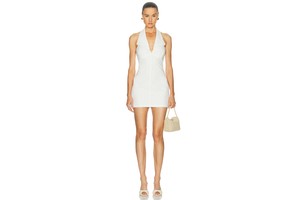
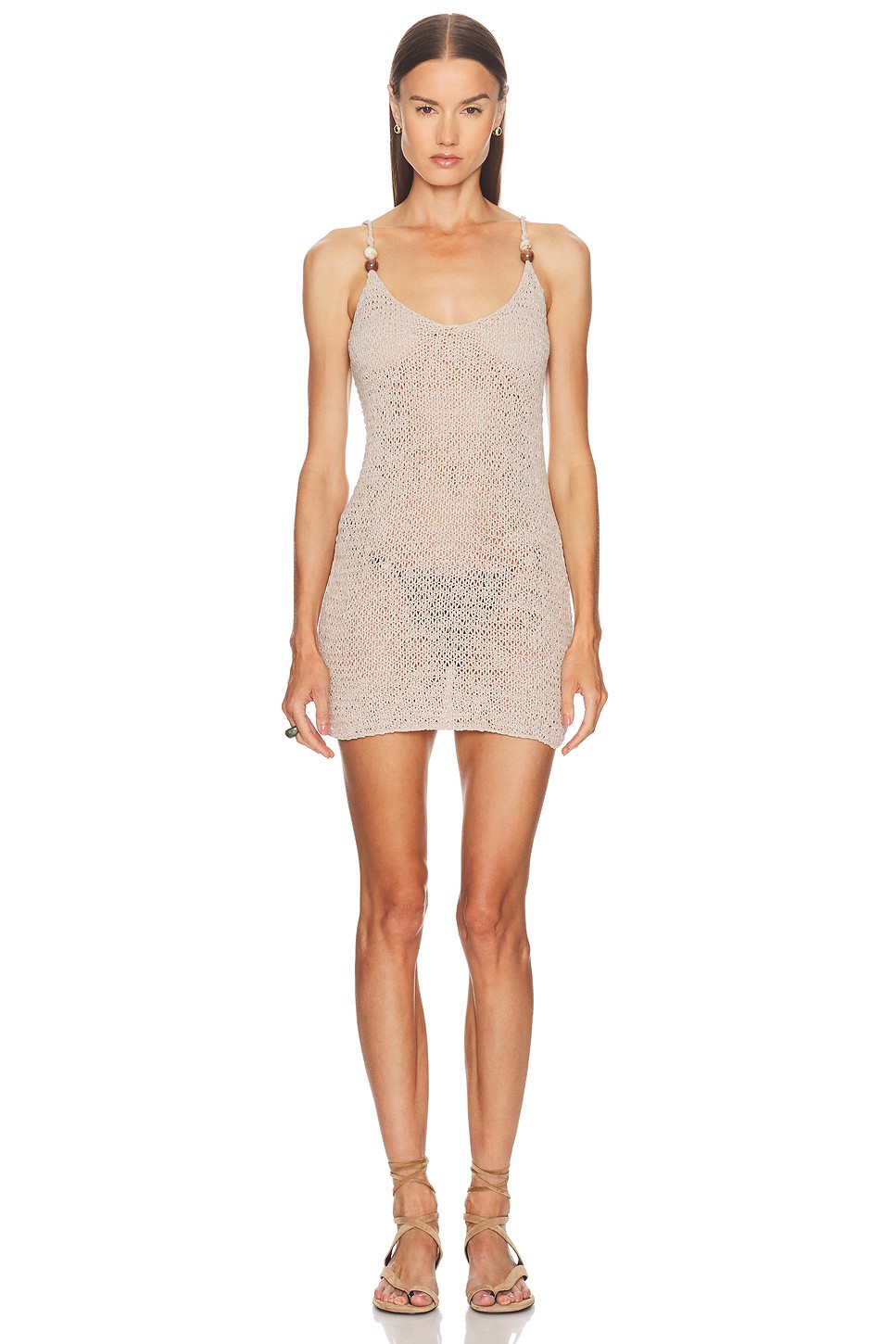
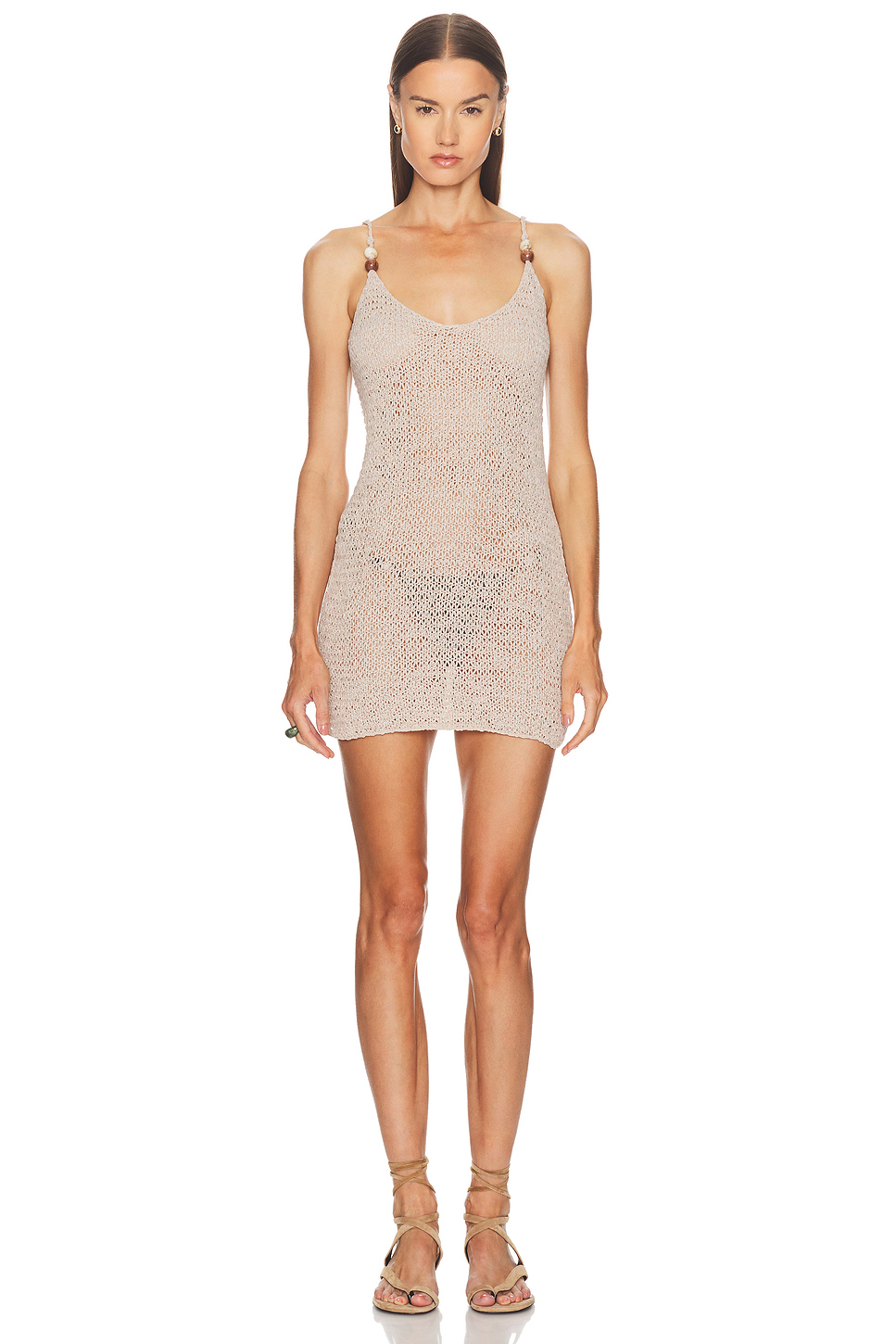
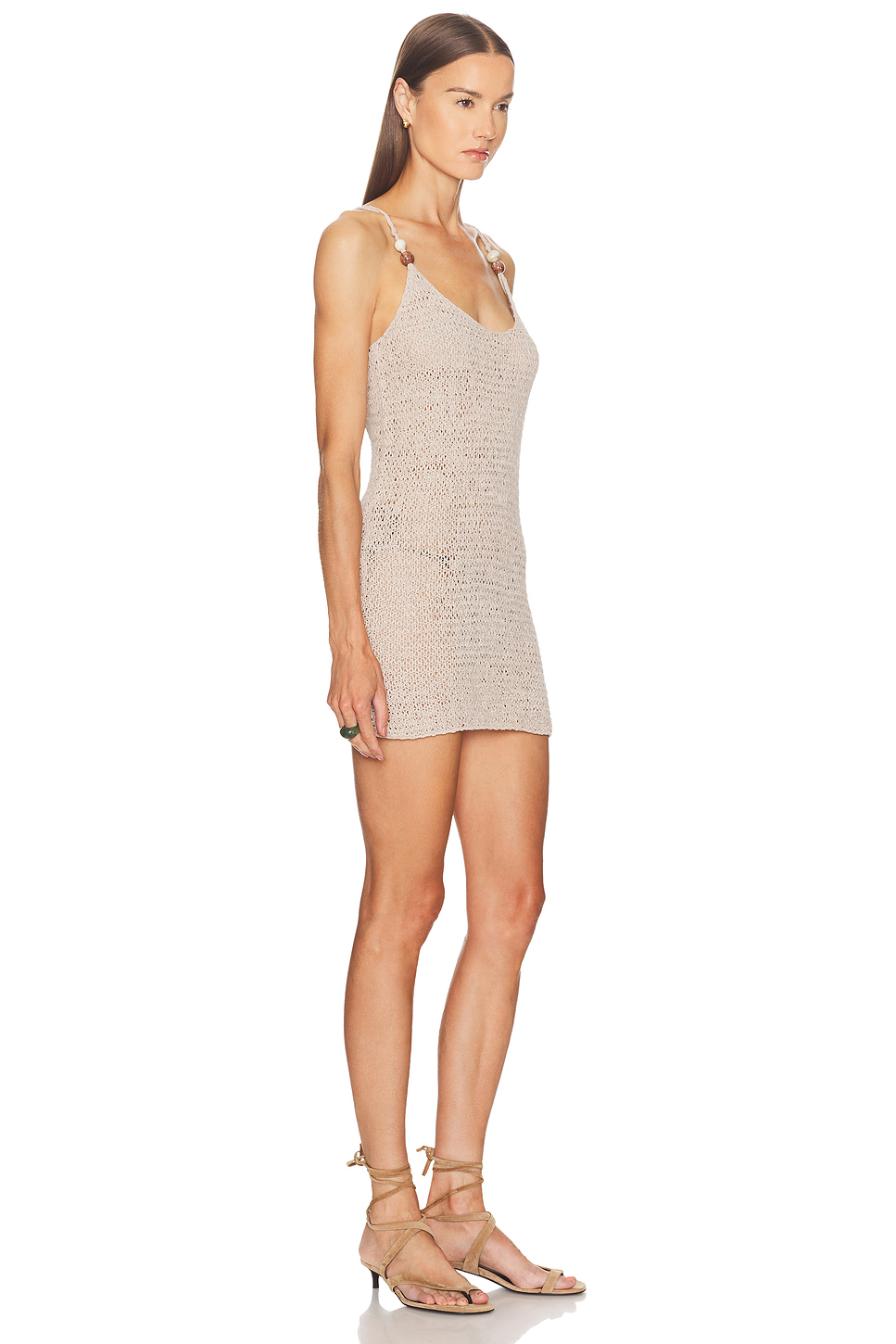
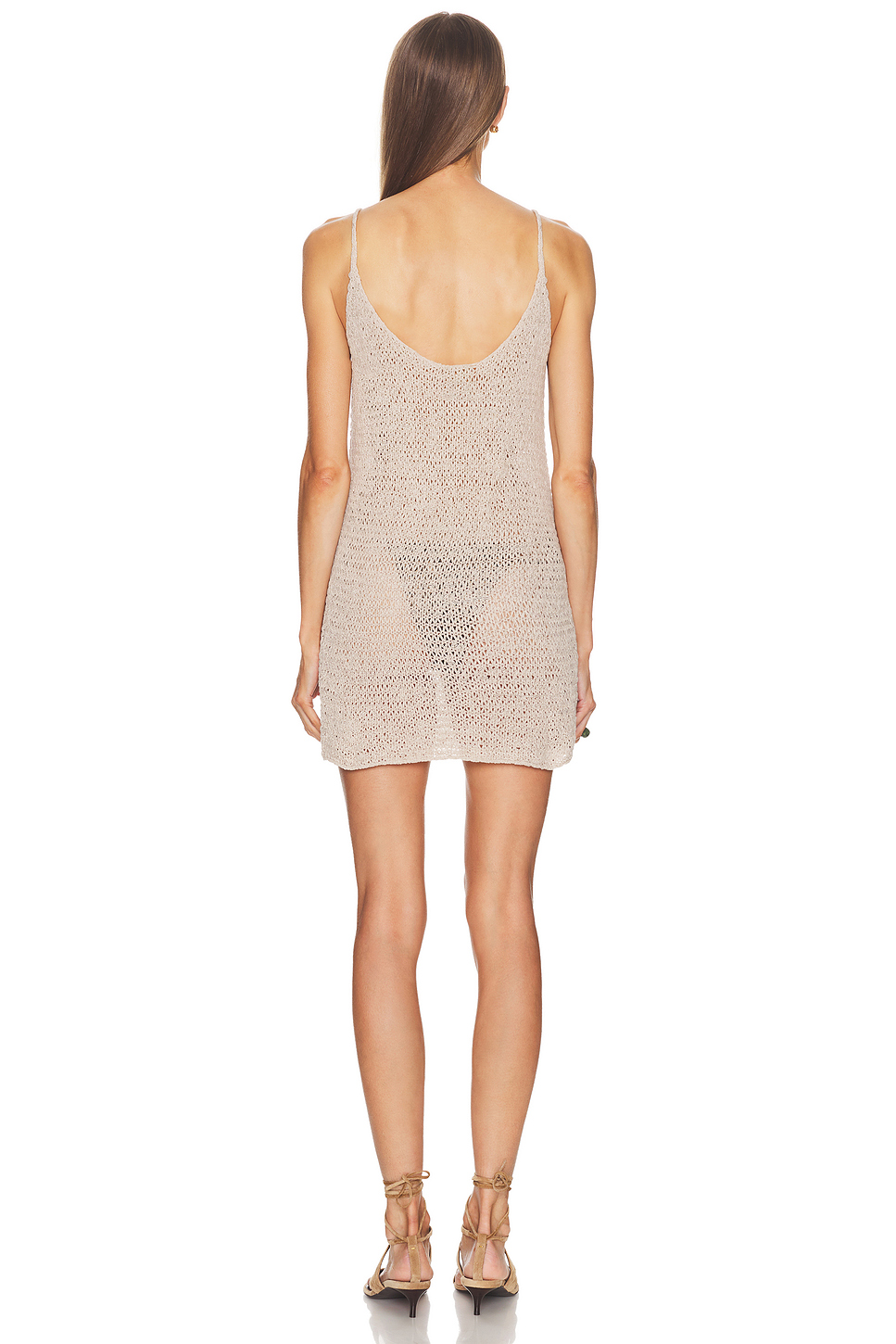
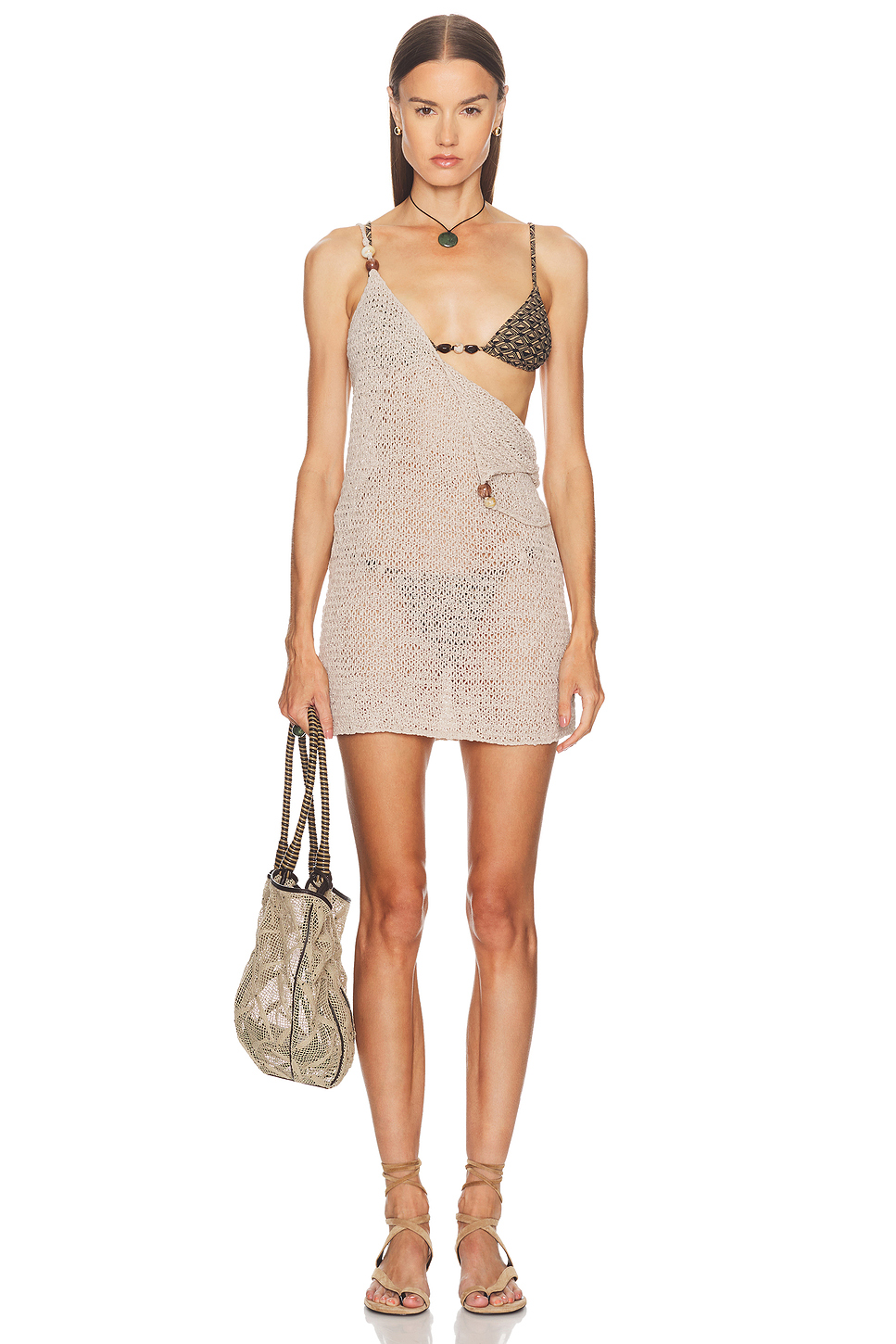
A mini dress listed as 74% organic cotton with 26% recycled nylon, pull-on styling, with beaded detailing at the straps, hand wash, made in China, ranked third in the retailer's shift dress list, at 120 dollars. There are no reviews and no fit votes, so there is no score to quote. Both fibres here carry an adjective describing how they were produced rather than what they are, which is a first in this series and worth being precise about. The length is the shortest yet measured here, and while the page does publish it, whether that is enough is another question. There is also something wrong with the image set on this listing that is worth naming plainly. The reference is the Mira Dress by Tropic of C in Mineral. Dongguan Bafinasa Garments Co., Ltd. develops comparable cotton dresses on OEM and ODM terms, from certified yarn sourcing and bead trim to retail or FBA ready packing. We publish this as a development reference and build your own version of it, and we do not supply the branded original or reproduce anyone else's label.
Key Features
- 74% organic cotton, 26% recycled nylon as stated, and both adjectives describe process rather than fibre. See the note below
- Pull-on styling with no closure as stated
- Beaded detailing at the straps as stated, and beads fail differently from other trim. See the note below
- Unlined as stated
- Hand wash as stated, which is right for both fibres and right for the trim
- Shortest length measured in this series, at 28.5 in. See the note below
- Measurements published for one size, including bust 34 in and length 28.5 in
- Made in China as stated
Customisable Options
- Fabric: organic cotton with recycled nylon to the reference, with certification documented rather than asserted
- Trim: beaded straps to the reference, with attachment tested for washing
- Weight: set from a tested sample and quoted, since nothing here states it
- Length: to the reference, and we would publish where it falls on a body rather than only the number
- Sizes: XS to XL offered, with measurements for each rather than only one
- Private label, hangtag and care labelling
Specifications
| Style | Beaded strap organic cotton mini dress |
| Reference | Tropic of C, Mira Dress, style TOFF-WD6, manufacturer style CS751, colour Mineral |
| Composition | 74% organic cotton, 26% recycled nylon as stated. See the note below |
| Closure | Pull-on styling, no closure stated |
| Trim | Beaded detailing at the straps as stated. See the note below |
| Lining | Unlined as stated, with opacity not addressed |
| Care | Hand wash as stated, which suits the fibres and the trim |
| Sizes Published | XS, S, M, L and XL, which is five sizes |
| Measurements Published | S: bust 34 in, waist 32 in, hips 33 in, length 28.5 in |
| Chart Note | The bust equals the model and the hip sits slightly under her. See the note below |
| Coverage | Only size S has figures. XS, M, L and XL are blank |
| Model | 179 cm, wearing size S, bust 34 in, waist 24 in, hips 34 in |
| Production | Made in China as stated |
| Reference Retail | 120 USD, quoted to show the price band this sits in, not as our price |
| Customer Reviews | None on the reference listing, so we quote no score |
| Best Seller Badge | Rank 3 in the retailer's shift dress list, which is a high position |
| Categories | Filed by the retailer under mini dresses and sleeveless dresses |
| Image Note | The image set associated with this listing includes images filed under other style numbers. See the note below |
| Occasion | Warm weather, holidays, casual, everyday |
| MOQ | 100 pcs per style per colourway, mixed sizes and colourways accepted |
| Sampling | 7-10 days after tech pack or reference sample confirmation |
| Bulk Lead Time | 20-30 days after sample approval and deposit |
| Service | OEM / ODM / private label, certified yarn sourcing, bead trim, retail or FBA ready packing |
Size Chart
| Size | Bust | Waist | Hips | Length | Source | ||||||||||||
|---|---|---|---|---|---|---|---|---|---|---|---|---|---|---|---|---|---|
| S | 34 | in | 32 | in | 33 | in | 28.5 | in / | 72 | cm | As published | ||||||
| XS | 31 | in / | 79 | cm | 24 | in / | 61 | cm | 34 | in / | 86 | cm | 72 | cm / | 28.3 | in | Our proposal |
| S | 33 | in / | 84 | cm | 26 | in / | 66 | cm | 36 | in / | 91 | cm | 74 | cm / | 29.1 | in | Our proposal |
| M | 35 | in / | 89 | cm | 28 | in / | 71 | cm | 38 | in / | 97 | cm | 76 | cm / | 29.9 | in | Our proposal |
| L | 37 | in / | 94 | cm | 30 | in / | 76 | cm | 40 | in / | 102 | cm | 78 | cm / | 30.7 | in | Our proposal |
| XL | 39 | in / | 99 | cm | 32 | in / | 81 | cm | 42 | in / | 107 | cm | 80 | cm / | 31.5 | in | Our proposal |
The published size S gives a 34 inch bust, a 32 inch waist, a 33 inch hip and a 28.5 inch length against a model at 34, 24 and 34. The bust equals her exactly and the hip sits an inch under, which together say this garment is cut to sit close through the top.
Occasions and Styling
Suits warm weather, holidays, casual wear and everyday. At about 72 centimetres on a model nearly 180 centimetres tall this is a genuinely short garment, which is worth knowing before ordering, and the beaded straps push it toward occasions rather than the beach despite the cloth being cotton.
Production and Quality Control
There are no reviews and no fit votes on this listing, so there is no score to quote. Both fibres here are described by how they were produced rather than only by what they are, and separating those two kinds of claim is the useful part. There is also a problem with this listing's images that is different in kind from anything else found here.
Both fibres described by process rather than substance, and this is the first time here, and that is the first thing. This series has met fibres carrying some kind of qualifier before, most recently a blend identified as French linen, and it was noted then that this was the first instance of a fibre being named by origin as well as identity, and that it carried genuine meaning: flax grown along the channel coast benefits from a maritime climate and is traditionally retted in the field by dew and weather rather than in tanks, a slower and less uniform process that yields a fibre longer, softer and more consistent in colour. That was an origin claim, and origin claims turn out to say something about how the cloth performs. These two are different in kind, and it is worth being precise about the difference because they get spoken about as though they were the same. Organic describes how the cotton was grown, meaning without synthetic pesticides or fertilisers and with attention to soil and water use. Recycled describes where the nylon came from, being recovered material rather than virgin polymer. Neither describes the fibre that results. Organic cotton is cotton, with the same length, the same strength, the same breathability and the same tendency to crease, so nothing about how this garment wears, washes or feels changes because of that word. Recycled nylon is nylon, and nylon matters here for a specific reason this series has noted before, being the strongest of the common apparel fibres and therefore contributing abrasion resistance without changing much else, though twenty six per cent is enough to be felt rather than merely technical. This series has examined the same fibre at seven per cent in a wool suiting and described it as doing quiet work. In cotton at twenty six per cent it will make the cloth noticeably smoother, stronger and more resistant to creasing than pure cotton would be, which is worth knowing because it partly offsets what cotton does badly. So the honest summary is that these two words tell you about how this garment was made in the world and not about how it will behave on you, and both kinds of information are legitimate, but they answer different questions and listing them together invites people to assume they answer the same one. It is worth adding what either can be checked against, since unlike an origin claim these are verifiable rather than merely plausible: textile certifications exist for both organic fibre and recycled content, and they involve documentation that traces material through the supply chain rather than trusting a word on a page. Nothing here cites one, and this series would rather say that plainly than either accept the claim or dispute it. The final point is practical and follows from the cotton being dominant at seventy four per cent. Cotton is washable, stronger wet than dry, and does not felt, does not lose half its strength and does not spot, so hand wash here is a defensible although conservative instruction, and nothing about the recycled content changes that.
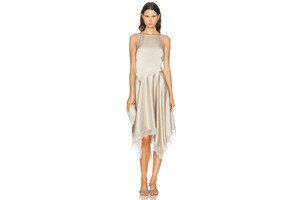
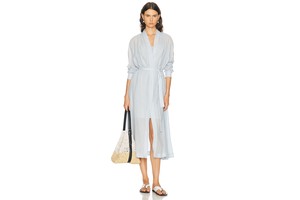
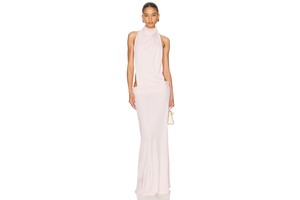
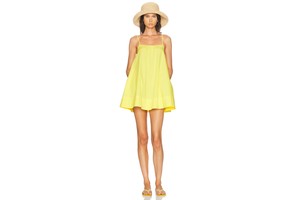
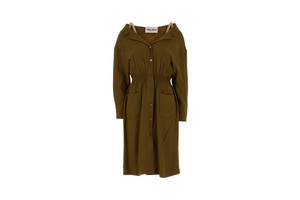
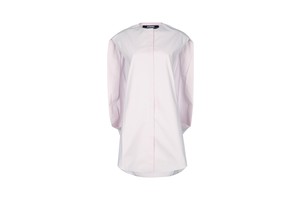
The images do not all belong to this garment, which is unlike anything else found here, and that is the second thing. The image set carried on this listing includes groups of files filed under two other style numbers as well as its own. It is possible that this is a deliberate presentation of related styles, since this series has several times noted that these pages carry very few photographs and it is common practice among retailers to show a product alongside others from the same maker. But if the page presents them as images of this garment, then some of what the customer is looking at is a different dress, and that is worth naming because of what photographs are for. This series has argued throughout that there are things about a garment no amount of description conveys, and opacity is the clearest example, having been repeated so often that the argument is short: photography taken under lighting arranged to flatter cannot show whether cloth transmits light, which is why recent pages have started stating it in words, three of them in an identical sentence from unrelated makers. Those words exist precisely because the picture cannot be relied on. If the picture is then of a different garment, the one thing that was supposed to compensate for the limits of photography is also compromised, and unlike a missing measurement this produces a positive belief rather than merely an absence of knowledge. It is worth separating this from the other data faults this series has recorded, because it is different in kind. There was recently a page where the recorded colour was grey while the product name said black, which was a direct contradiction between two published facts, though harm there was limited because both candidates were dark. There was a listing where the model was recorded as wearing size all, which is untidy rather than misleading. And there have been compositions written as relative words without ever naming the other layer, which withholds rather than distorts. None of those involve the customer believing something untrue about what she is looking at. This does, if the mixed images are shown as being this garment, and it is worth adding that it compounds the one thing this page otherwise does poorly: nothing is said about opacity at all, and this series has noted before that unlined pale garments raise that question before any other, having recently examined two white cotton pages that both declined to answer it. So this is a case where the photography needed to be reliable precisely because nothing else on the page addresses it.
Seventy two centimetres, the shortest yet measured here, and what a number does and does not achieve, and the strap trim worth naming separately, and that is the third thing. The published length is twenty eight and a half inches, which is about seventy two centimetres. This series has assembled landmarks for reading length since early on, being 79 centimetres for mini, 113 for midi, 127 for ankle and around 140 for floor, and until now seventy nine had been the shortest figure met, recorded recently on an organza cocktail dress where it was noted that three sources agreed, since the retailer filed it under mini dresses and the measurement matched. This breaks that floor by seven centimetres, and the discrepancy is worth thinking about rather than merely recording. On a model at 179 centimetres, seventy two centimetres falls in the upper thigh. Now, this page does publish the figure, and this series has consistently held that publishing a number neutralises disagreement elsewhere, having said of one garment called mini that actually measured 133 centimetres that once the figure is known the wrong word stops mattering, and contrasting it with a page where nothing could be checked and a customer was left guessing from photographs of a model whose height was not given. This page publishes both the length and the model height, so by that standard it has done what was asked. But it is worth noting what the number does not do, which is tell anybody anything about themselves. The model is 179 centimetres, so seventy two centimetres lands differently on somebody twenty centimetres shorter, and while this series has usually found model figures sufficient to make a judgement, there is a point at which the garment is short enough that landing point rather than total length becomes the question. Saying where it falls on the model would cost seven words. On the measurements more broadly, the bust of thirty four inches equals the model's thirty four exactly and the hip sits an inch under, which together are worth noticing because this garment is filed under sleeveless and this series established a rule for exactly this situation: when a measurement reads low while its neighbours read at or above, ask first whether the shape removes the landmarks the reading depends on, since strapless, halter and sleeveless all do. The rule has refinements now, having been extended when a sleeveless organza read high instead because organza stands away from the body rather than draping onto it, leaving a clear gap for the tape. Here the cloth is cotton rich and will drape, so the unreliable reading condition applies. It does not resolve whether thirty four is the bust or wherever else was chosen, which is the point worth carrying: equal is not the same as informative. Finally the trim, and it deserves its own sentence because beads are the third kind of embellishment here and fail differently from the first two. This series looked at plastic sequins and noted they soften and curl under heat, making pressing awkward, then at metallic sequins and noted that metal instead tarnishes irreversibly when water and soap are not dried off promptly, and additionally carries edges that abrade and weight that a fine ground fabric must bear. Beads combine the problems of both while adding one of their own: each bead is threaded, so the thread rather than the bead is what fails, and once one goes the rest follow along the same strand, which is the same single thread argument made about lace. Hand wash is right, but telling the customer not to rub or wring the straps specifically would be worth more than the instruction alone. Every bulk shipment gets a measurement report against your approved chart.
Optional upgrades include ensuring the image set shows only this garment, since nothing here addresses opacity and the photographs are therefore doing essential work, documenting whichever certification covers the organic cotton and the recycled nylon rather than only asserting them, adding where the length falls on the model given seventy two centimetres is short enough that landing point becomes the question, adding not to rub or wring the straps, since bead trim fails at the thread rather than at the bead, stating whether the garment is lined, since it is described only as unlined, publishing measurements for the remaining four of five sizes, the hip noted to equal the model and therefore not informative on its own, alternative strap treatments without beads, alternative lengths, alternative blends if certified yarns prove hard to source at scale, private label, hangtag and care labelling.
Pre-production sample approval, in-line inspection during cutting and sewing, and a final AQL inspection before packing, with measurement reports and photos shared before shipment.
Send us your tech pack, a photo or a reference garment and we will quote within 24 hours. Contact bafinasa@bafinasa.com or WhatsApp +86 13827222469.