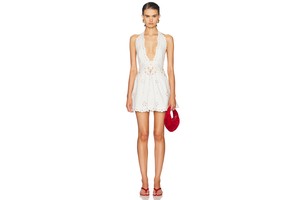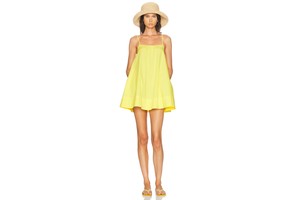
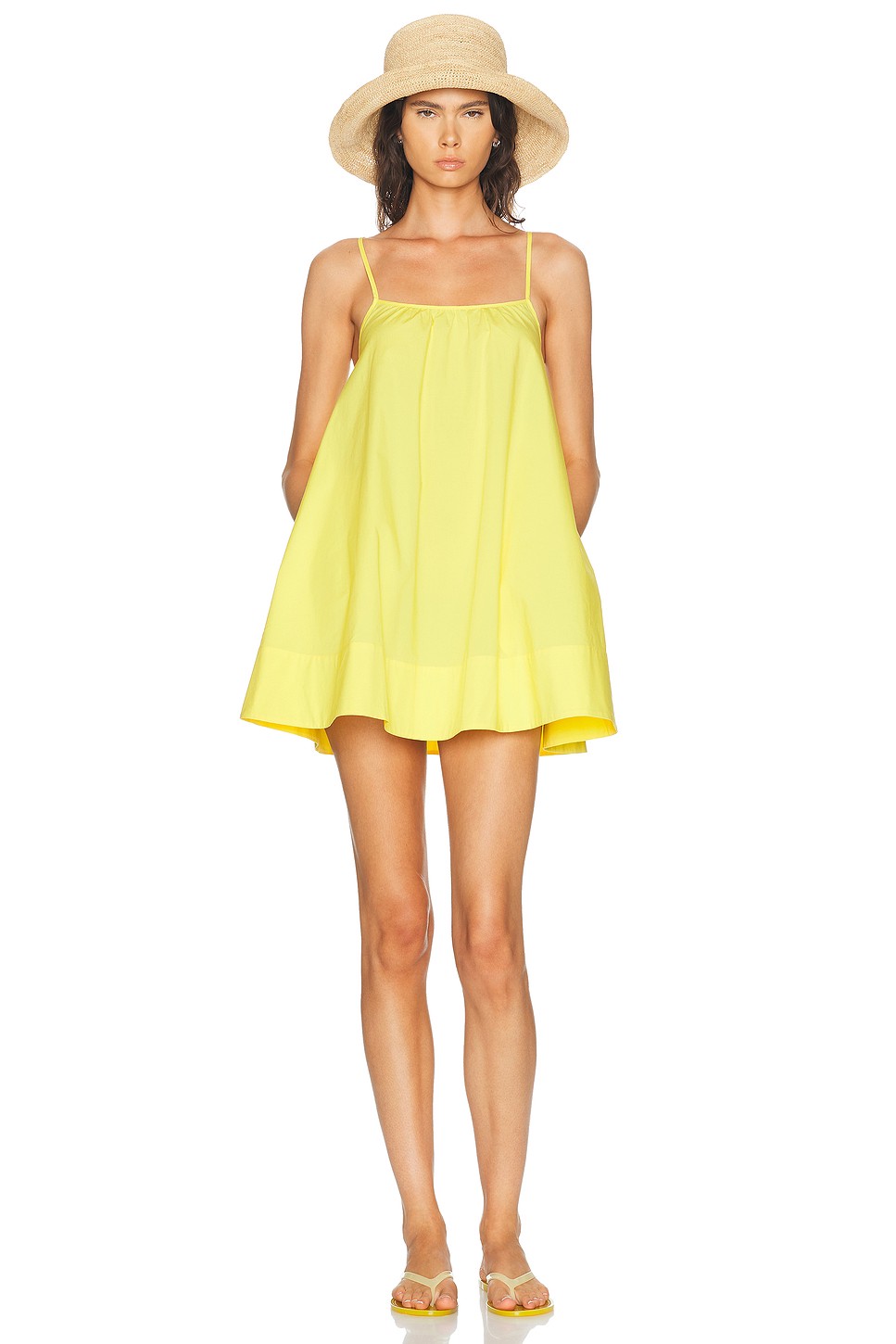
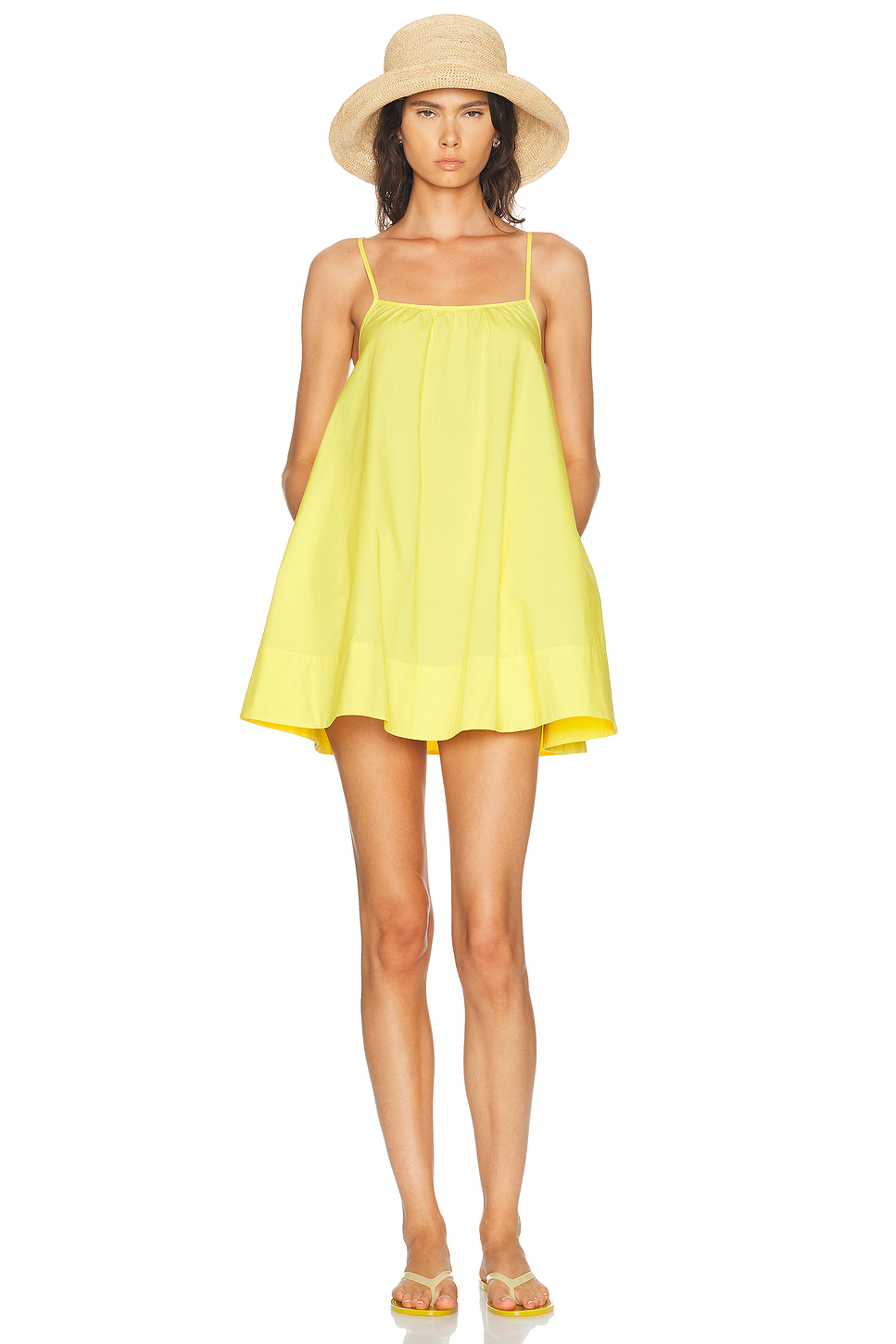
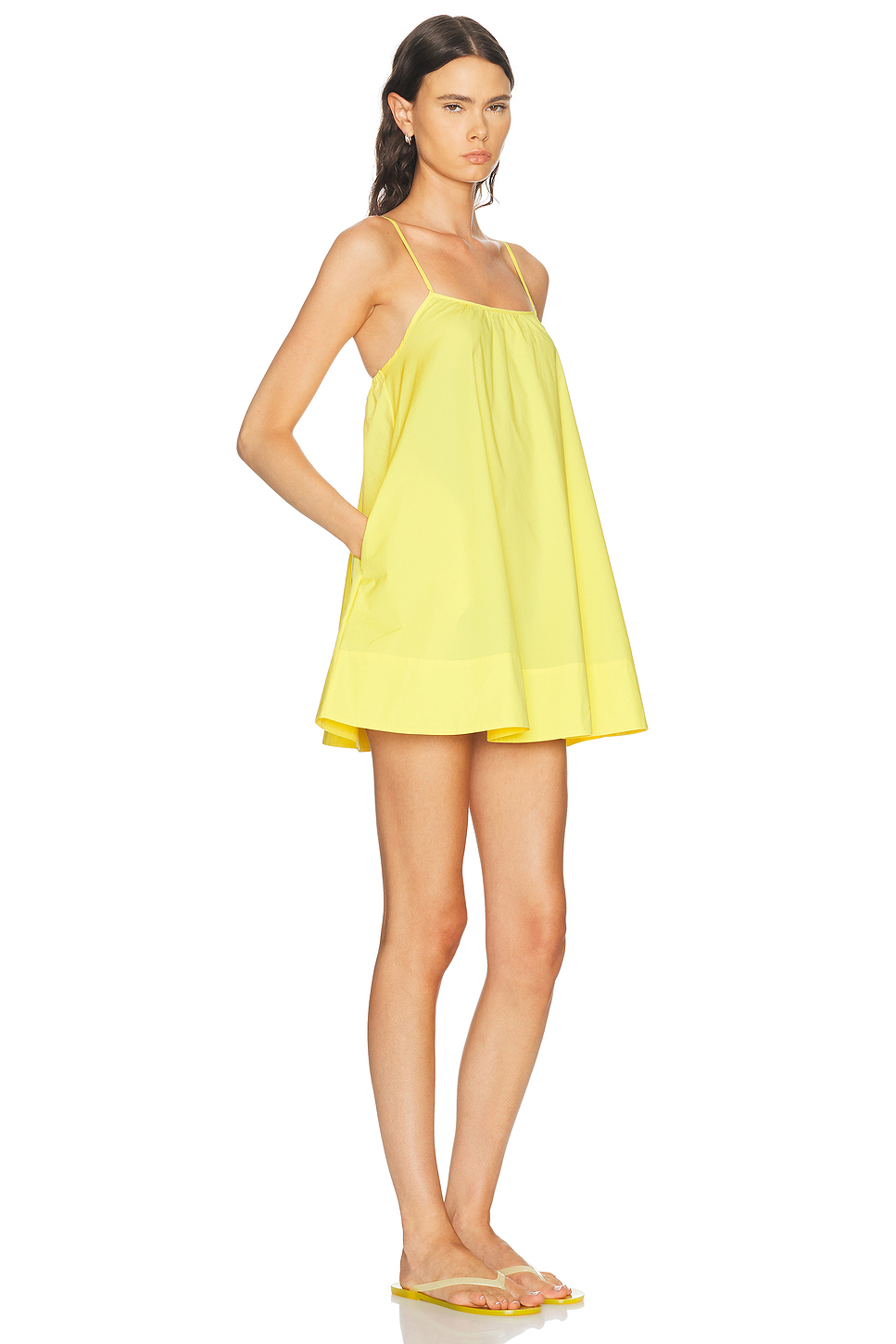
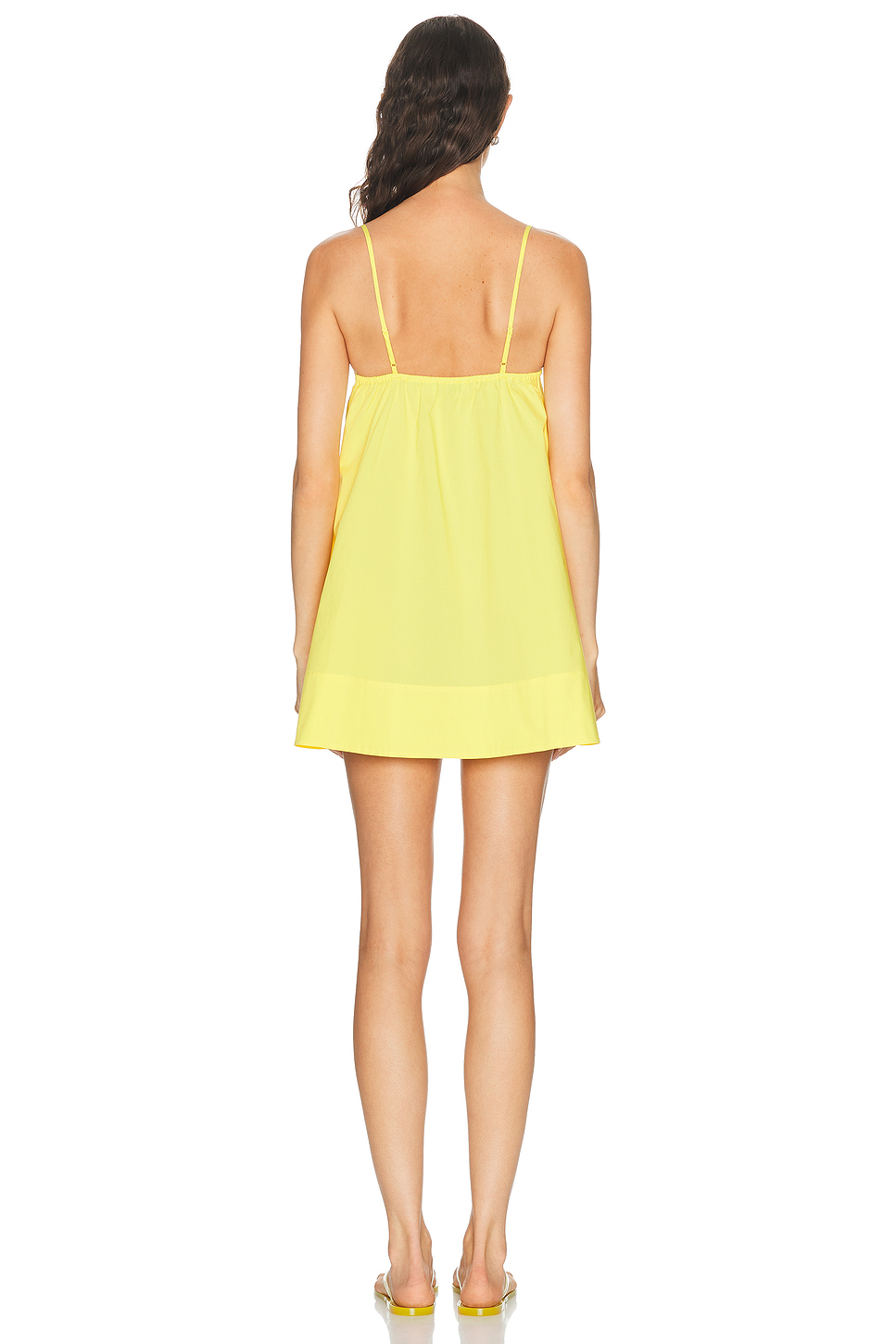

A mini dress listed in 98% cotton and 2% elastane, hand wash cold, unlined, in a lightweight poplin, with side seam pockets and adjustable shoulder straps, a pull-on style, made in China, ranked second in the retailer's sleeveless dress list, at 168 dollars. There are no reviews and no fit votes, so there is no score to quote. The position is the highest this series has encountered and it belongs to one of the cheapest garments examined, which settles an argument that has run quietly through many of these pages. The care instruction here is also the first one carrying a condition rather than merely naming a method. The reference is The Lindsay Dress by Solid and Striped in Citrina. Dongguan Bafinasa Garments Co., Ltd. develops comparable poplin dresses on OEM and ODM terms, from fabric sourcing to retail or FBA ready packing. We publish this as a development reference and build your own version of it, and we do not supply the branded original or reproduce anyone else's label.
Key Features
- 98% cotton, 2% elastane as stated, and the second component is named less precisely than usual. See the note below
- Hand wash cold as stated, which is the first instruction here carrying a condition. See the note below
- Unlined as stated, so the question raised by a lightweight pale poplin is answered directly
- Lightweight poplin as stated, and the weight is what makes the word poplin insufficient alone. See the note below
- Side seam pockets as stated
- Adjustable shoulder straps as stated, and this matters given how the measurements read. See the note below
- Pull-on style as stated
- Ranked second in the retailer's sleeveless dress list, which is the highest position met here
Customisable Options
- Fabric: cotton poplin to the reference, and we would specify the weight numerically rather than only as lightweight
- Elastane: the blend used here is around two per cent, and we would test alternatives for recovery
- Lining: offered either way, since a pale lightweight poplin is exactly the case where lining earns its place
- Straps: adjustable to the reference, with hardware chosen to survive whatever care method is specified
- Care: hand wash cold and line dry, or we would discuss washable finishes if machine washing is wanted
- Length from mini to knee, poplin weight, lining options, strap hardware, size set, colour development, private label and care labelling
Specifications
| Style | Cotton poplin strappy mini dress |
| Reference | Solid and Striped, The Lindsay Dress, style SOLF-WD52, manufacturer style SU26-R3310SP-CTN, colour Citrina |
| Composition | 98% cotton, 2% elastane as stated. See the note below on how the second is named |
| Fabric | Lightweight poplin as stated. See the note below, since this changes what the word poplin guarantees |
| Lining | Unlined as stated, which answers directly rather than leaving it open |
| Care | Hand wash cold as stated. See the note below, since this is the first conditional instruction |
| Straps | Adjustable shoulder straps as stated |
| Closure | Pull-on style as stated |
| Pockets | Side seam pockets as stated |
| Sizes Published | XS, S, M, L and XL, five sizes |
| Measurements Published | S: bust 29 in, waist 44 in, hips 60 in, length 30.5 in. See the note below |
| Chart Note | The bust sits about five inches under the model while the waist and hips sit far above. See the note below |
| Coverage | Only size S has figures. XS, M, L and XL are blank |
| Model | 182 cm, bust 86 cm, waist 58 cm, hips 91 cm, wearing size S |
| Production | Made in China as stated |
| Reference Retail | 168 USD, quoted to show the price band this sits in, not as our price |
| Customer Reviews | None on the reference listing, so we quote no score |
| Best Seller Badge | Rank 2 in the retailer's sleeveless dress list, which is the highest position met in this series |
| Categories | Filed by the retailer under mini dresses and sleeveless dresses, both consistent |
| Occasion | Summer, holidays, warm weather, casual daytime |
| MOQ | 100 pcs per style per colourway, mixed sizes and colourways accepted |
| Sampling | 7-10 days after tech pack or reference sample confirmation |
| Bulk Lead Time | 20-30 days after sample approval and deposit |
| Service | OEM / ODM / private label, cotton poplin sourcing, strap hardware, retail or FBA ready packing |
Size Chart
| Size | Bust | Waist | Hips | Length | Source | ||||||||||||
|---|---|---|---|---|---|---|---|---|---|---|---|---|---|---|---|---|---|
| S | 29 | in | 44 | in | 60 | in | 30.5 | in / | 77 | cm | As published | ||||||
| XS | 31 | in / | 79 | cm | 24 | in / | 61 | cm | 34 | in / | 86 | cm | 78 | cm / | 30.7 | in | Our proposal |
| S | 33 | in / | 84 | cm | 26 | in / | 66 | cm | 36 | in / | 91 | cm | 80 | cm / | 31.5 | in | Our proposal |
| M | 35 | in / | 89 | cm | 28 | in / | 71 | cm | 38 | in / | 97 | cm | 82 | cm / | 32.3 | in | Our proposal |
| L | 37 | in / | 94 | cm | 30 | in / | 76 | cm | 40 | in / | 102 | cm | 84 | cm / | 33.1 | in | Our proposal |
The published size S gives bust 29 in, waist 44 in, hips 60 in and length 30.5 in against a model at roughly 34, 24 and 34. The bust sits about five inches under her while the waist and hips sit far above, which is a recognisable shape.
Occasions and Styling
Suits summer, holidays, warm weather and casual daytime. A cotton poplin mini with pockets is a warm weather piece, and it is worth knowing before choosing what goes underneath that this one is unlined in a pale lightweight cloth.
Production and Quality Control
There are no reviews and no fit votes on this listing, so we quote no score. This is ranked second, which is the highest position encountered here, and it belongs to one of the cheapest garments examined, settling an argument that has run quietly through many of these pages. The care instruction also carries a condition rather than merely naming a method.
Second place, and cheap, and this settles something that has been running quietly, and that is the first thing. This garment is ranked second in the retailer's list of sleeveless dresses, and at 168 dollars it is close to the least expensive garment examined in this series. It is worth being precise about what that settles and what it does not, because this series has circled this question several times and always had to qualify the answer. The argument running through these examinations has been about whether saying difficult things on a page costs sales, and every piece of evidence until now has been indirect. Some garments have stated their transparency outright, three of them in an identical sentence from unrelated makers, and one of those was noted to place twelfth in a list, which was stronger evidence than the usual assumption but could still be dismissed as one instance. This is considerably harder to dismiss. Second out of however many sleeveless dresses this retailer carries is a genuine position, and it belongs to a garment costing 168 dollars, and there is no way to tell a story in which shoppers avoided the honest description and still put it in second place. Now what this does establish is narrow and worth stating as such: candour about what a garment is does not prevent it selling extremely well, so the excuse that disclosure costs custom is not available. What it does not establish is that disclosure caused the position, since plenty of things sell well for plenty of reasons, and this series has been careful about that distinction everywhere else. The honest reading is that this removes an objection rather than proving a claim. Someone arguing against disclosure used to be able to say it would hurt. This is evidence it need not. There is a second thread worth drawing together here, because it connects several things examined recently. This page also says lightweight and says unlined, and those two together with a pale colour are exactly the combination this series has described as being hardest to judge from photographs. Recently two very relevant things were noted: one page paired a fabric name with a weight and thereby made an estimable question out of what had previously been a guess, and one page stated outright that it had no lining, which was noted as the first unambiguous negative and as settling a question rather than leaving it open. This is the second instance of that direct negative, so it now has a companion, and it is worth noting that both pages stating it have come from makers rather than from the retailer's own listings. That may mean nothing, since two is a small number, but it is the sort of thing worth watching. And the general principle stands and gains a little from repetition: saying there is nothing there is more useful than saying nothing, because it removes a branch of speculation rather than merely failing to raise it.
Hand wash cold rather than hand wash, and that second word carries content, and that is the second thing. This is the first care instruction encountered in this series carrying a condition rather than only naming a method, and it is worth taking apart because the condition is doing real work. Most instructions met here have named a method alone: dry clean only, machine wash, hand wash, dry cleanable. This one names a method and then constrains it, and each half does something different. Hand wash limits mechanical force, which is what damages things, while cold limits the energy available to everything else. Together they address two different risks, and there are three plausible reasons on this particular garment, any of which would justify it. The first is shrinkage, since cotton moves when it meets water and warmth together, and how much depends largely on temperature, so cold water is the lever available for keeping that in check. The second is colour, since dye is least likely to move when water is cold, and this garment is a pale yellow, which is precisely where any bleeding or dulling would show. The third is the elastane, and though there is only two per cent here it is the component with the lowest tolerance for heat of anything in the composition, this series having noted before that elastane degrades under repeated heat in a way the fibres around it do not. Now, it is worth contrasting this with how the same question has been handled elsewhere, because the improvement is substantial. Many pages examined here carry no instruction at all, and this series has argued repeatedly that where there is no instruction the customer does not merely face an open question but tends to assume the permissive answer, because that is the default assumption people hold about cloth. Other pages carry instructions that are stricter than their contents appear to justify, which led to the conclusion some batches ago that habit at the level of the brand was driving them rather than judgement. This one sits where it should: a method proportionate to what is actually here, and a condition addressing a specific risk. There is one thing that would improve it further, which is what to do afterwards, since drying matters as much as washing for cotton and nothing here says anything about it. Heat from a dryer after cold water would undo the second word entirely, so the instruction is half a sentence short. There is also something notable about the second component in the composition, which is named here less precisely than anywhere else encountered. Every previous garment has named the elastomer specifically, whether as elastane, spandex, lycra or even the Portuguese word used once, whereas this says simply elastic fibre. That is worth flagging, because different elastomers tolerate different things, particularly heat, so knowing which one is present is what lets anybody reason about temperature limits with any confidence. More often than not the answer is the same one, but a word that declines to specify removes the ability to check.
A bust five inches under the body with everything else far above, and the straps explain part of it, and that is the third thing. The published size S gives a bust of twenty nine inches, a waist of forty four and hips of sixty, against a model at roughly thirty four, twenty four and thirty four. So there are two things happening at once which sound contradictory and are not. The bust sits about five inches under her measurement while the waist sits twenty inches above it and the hips twenty six above. When measurements across one garment disagree that sharply, this series has found over many garments that the usual explanation is that they were taken differently, and the standard case is that bust and hip are around the body while waist is flat, meaning straight across rather than following it, so a flat waist figure runs substantially larger than a circumference figure for the same garment. Here the waist and hips are enormous and the bust is small, and the simplest reading consistent with all three is that this is a shape rather than a measurement convention: close across the top and then opening out hard below it. That is a recognisable silhouette, sometimes called empire or baby doll, and what it produces visually is a narrow fitted upper section above a body that is not remotely fitted. Now the interesting question is what the twenty nine inch bust is doing, since that genuinely is below the model, and this series has established a rule for exactly this shape over many garments: when the bust sits below the body while adjacent measurements sit at or above it, ask first whether the garment is strapless, halter or sleeveless, since each of those removes or weakens the landmarks a bust figure depends on. This is filed as sleeveless and described as having shoulder straps, so the rule engages immediately. What makes this case unusual is the answer, because there is a mechanism stated outright that has not appeared anywhere else here. The shoulder straps are adjustable. That matters because an adjustable strap changes how a bust measurement behaves: the bodice can be drawn up or let down, so the figure published reflects one setting of several, and how the garment actually sits is partly the wearer's decision afterwards. This series catalogued four mechanisms for how a garment can be smaller than the body it fits, being knit structure, elastane high enough to compress, bias cutting, and shirring, and recently added a fifth after examining a boned bodice drawn closed with ties and hooks. This is another member of that fifth family, which might be called adjustable closure rather than stretch: alongside ties and hooks, an adjustable strap is something pulled inward rather than something that gives. Putting the two recent cases together, the general shape of that fifth mechanism is becoming clearer and is worth stating since it did not exist in the catalogue before this batch. It rests on nothing stretching, so unlike knit or elastane compression it does not fatigue, and unlike shirring the degree is set deliberately each time it is worn. It is a small addition, but it is a genuinely different answer to the same question. Every bulk shipment gets a measurement report against your approved chart.
Optional upgrades include adding what to do after washing, since heat from a dryer undoes cold water and the instruction is currently half a sentence short, naming the elastomer rather than only calling it elastic fibre, since different elastomers tolerate different temperatures, stating the poplin weight numerically rather than only as lightweight, which would let a customer reason about opacity, publishing measurements for the remaining four sizes, since one out of five follows the pattern seen repeatedly, offering a lined version for the paler colourways, since lightweight and pale is the hardest combination to judge, specifying what the strap adjusters are made of, since adjustable is noted here and hardware has its own tolerances, alternative cotton weights, alternative strap constructions, colour development including pale shades tested specifically for opacity, private label, hangtag and care labelling.
Pre-production sample approval, in-line inspection during cutting and sewing, and a final AQL inspection before packing, with measurement reports and photos shared before shipment.
Send us your tech pack, a photo or a reference garment and we will quote within 24 hours. Contact bafinasa@bafinasa.com or WhatsApp +86 13827222469.