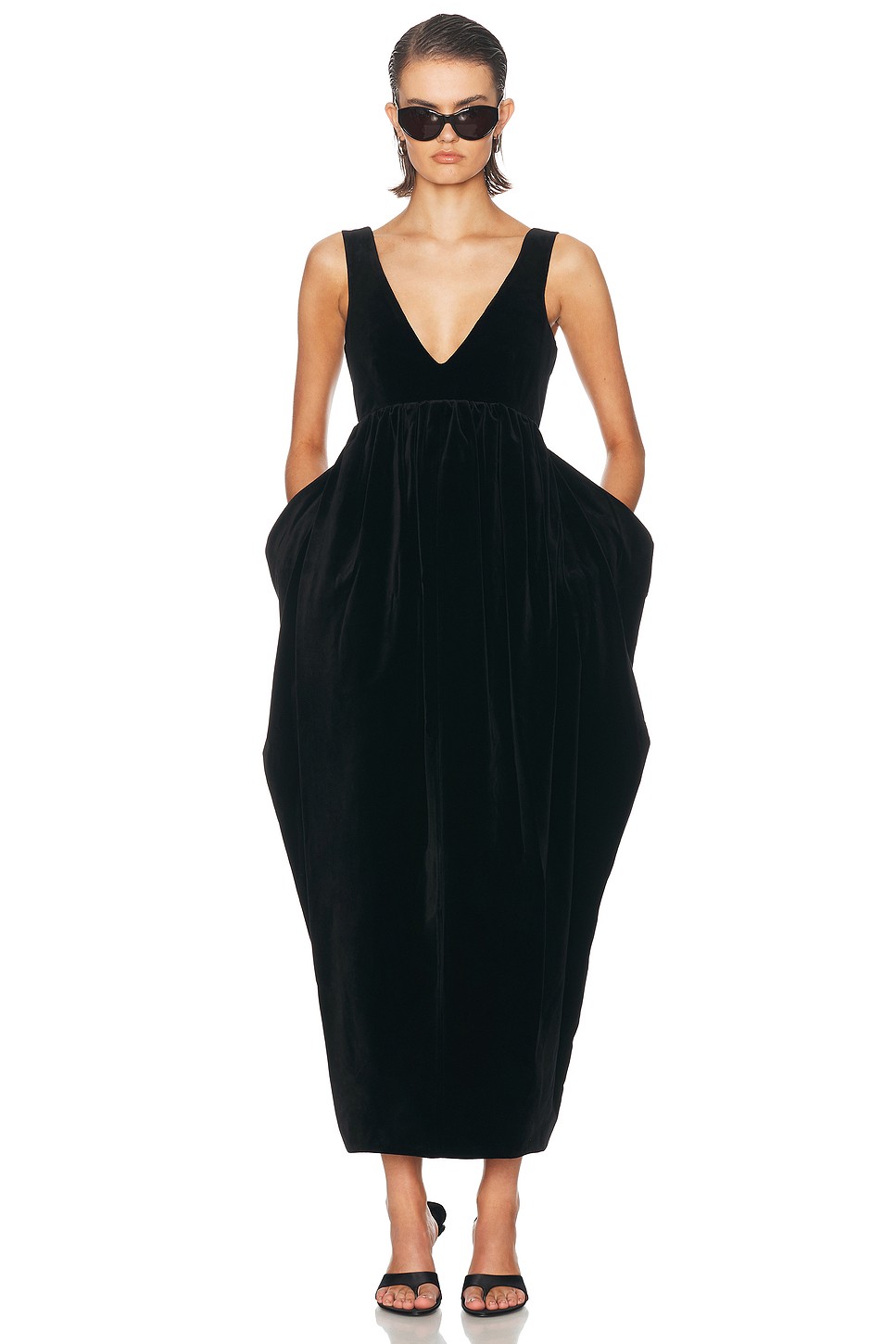
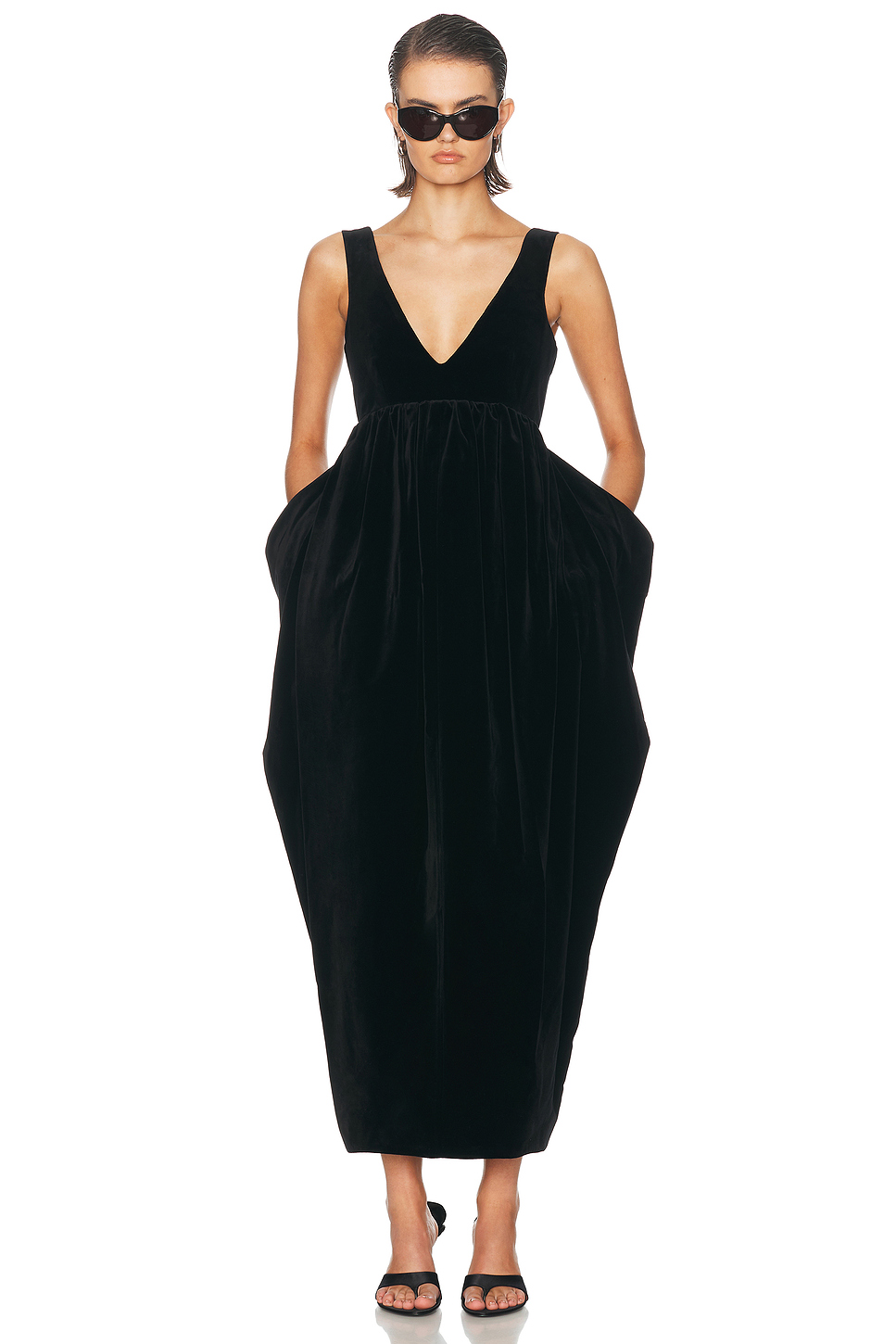
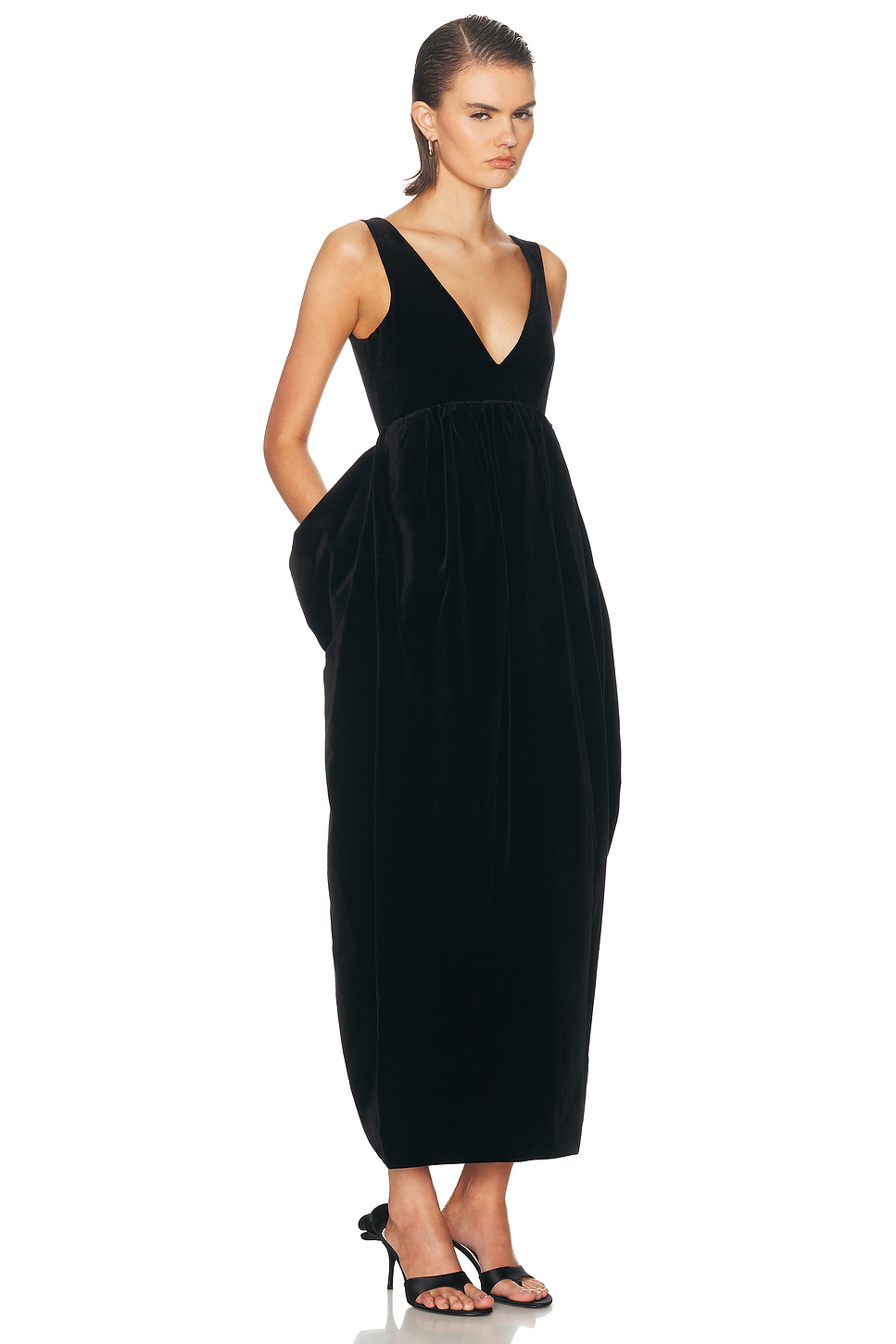
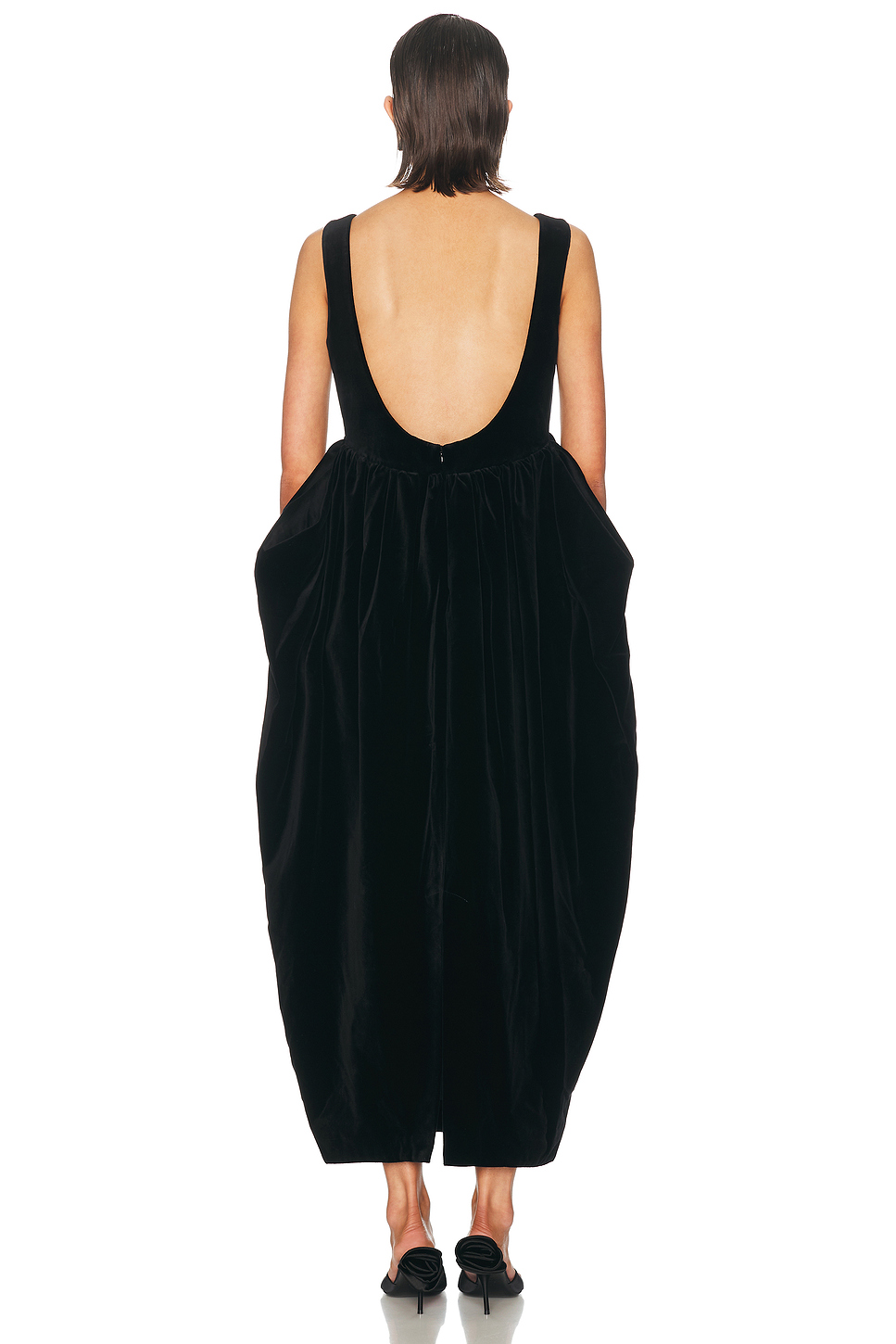
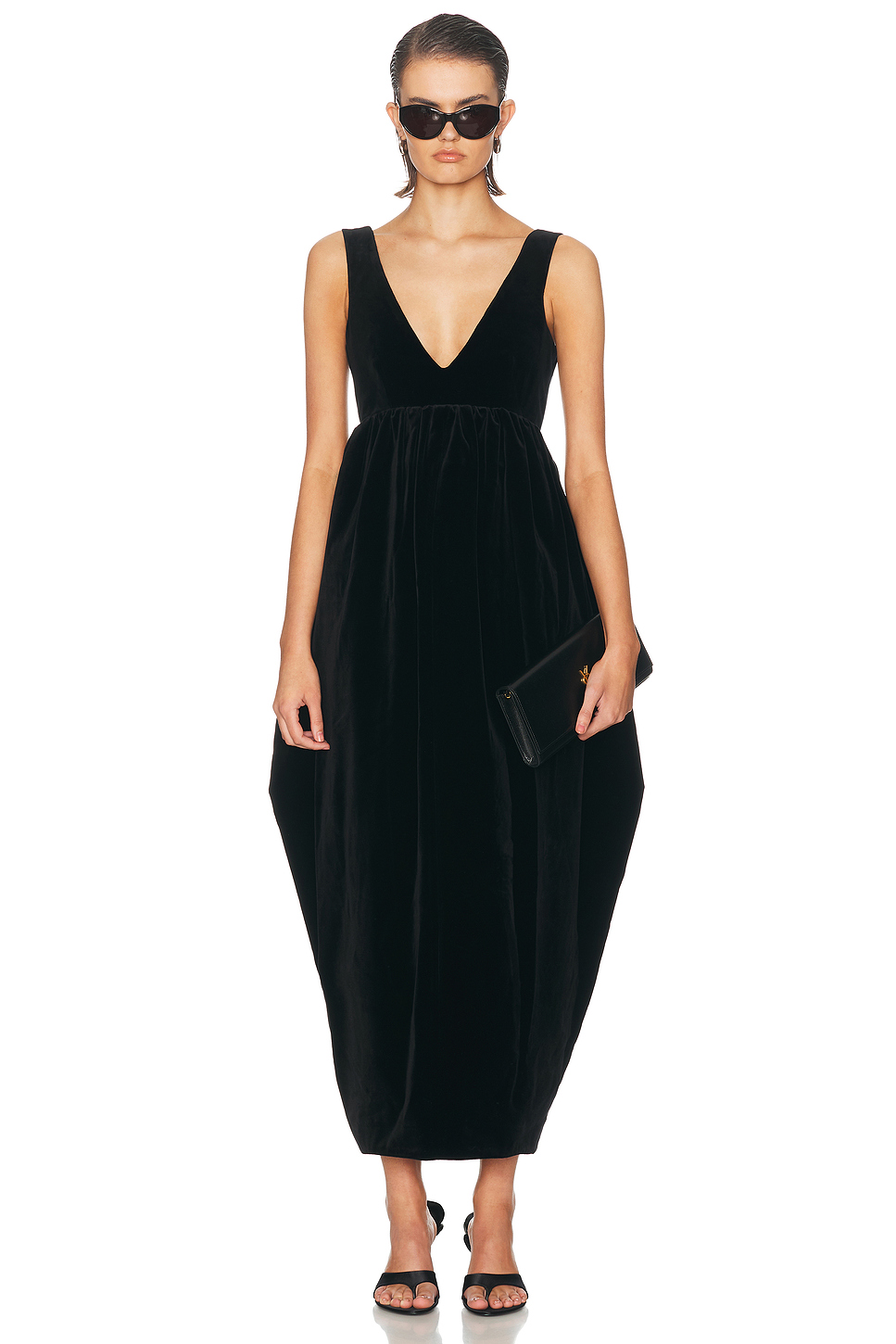
A gown listed in 100% cotton, dry cleanable, fully lined, in a heavyweight velvet, with a hidden zip at the back and pockets in the side seams, made in Lithuania, at 1,245 dollars. There are no reviews and no fit votes, so there is no score to quote. This is the first velvet this series has examined and it supplies a completely new reason why a garment made of the most washable fibre here should still be kept out of water. The care wording is also the weaker of two similar meanings, and this is now the third time it has appeared, which changes what can be said about it. The reference is the Sculptural Volume Velvet Dress by Rohe in Black. Dongguan Bafinasa Garments Co., Ltd. develops comparable velvet dresses on OEM and ODM terms, from fabric sourcing to retail or FBA ready packing. We publish this as a development reference and build your own version of it, and we do not supply the branded original or reproduce anyone else's label.
Key Features
- 100% cotton as stated, which is the most washable fibre encountered in this series
- Heavyweight velvet as stated, and this is the first velvet here. See the note below
- Dry cleanable as stated, and this wording permits rather than excludes home washing. See the note below
- Fully lined as stated
- Hidden zip at the back as stated
- Side seam pockets as stated
- Made in Lithuania as stated, the first producer in that country met here
- Measurements published for one size, including length 51 in and hips 50 in. See the note below
Customisable Options
- Fabric: cotton velvet to the reference, with pile height and ground cloth specified rather than only the word velvet
- Lining: fully lined to the reference, and we would name the lining fibre and match it to the shell
- Care: dry clean only rather than dry cleanable, since pile once crushed does not come back
- Pockets: side seam to the reference, which we would place rather than leave to the maker
- Length from midi to floor, velvet weight, lining options, pocket placement, size set, colour development, private label and care labelling
Specifications
| Style | Cotton velvet sculptural gown |
| Reference | Rohe, Sculptural Volume Velvet Dress, style ROHF-WD21, manufacturer style 421-33-242, colour Black |
| Composition | 100% cotton as stated |
| Fabric | Heavyweight velvet as stated. See the note below, since this is the first velvet here |
| Lining | Fully lined as stated, with the lining fibre not named |
| Care | Dry cleanable as stated, which permits rather than excludes washing. See the note below |
| Closure | Hidden zip at the back as stated |
| Pockets | Side seam pockets as stated |
| Sizes Published | 34, 36, 38 and 40, four consecutive sizes |
| Measurements Published | 36: bust 32 in, waist 28 in, hips 50 in, length 51 in. See the note below |
| Chart Note | The hip figure sits far above the model while the others do not, and there is a reason to read it carefully |
| Coverage | Only size 36 has figures. Sizes 34, 38 and 40 are blank |
| Model | 178 cm, bust 84 cm, waist 62 cm, hips 89 cm, wearing size 36 |
| Production | Made in Lithuania as stated |
| Reference Retail | 1,245 USD, quoted to show the price band this sits in, not as our price |
| Customer Reviews | None on the reference listing, so we quote no score |
| Best Seller Badge | None. The listing carries no rank |
| Categories | Filed by the retailer under black dresses and gowns |
| Occasion | Evenings, formal occasions, events |
| MOQ | 100 pcs per style per colourway, mixed sizes and colourways accepted |
| Sampling | 7-10 days after tech pack or reference sample confirmation |
| Bulk Lead Time | 20-30 days after sample approval and deposit |
| Service | OEM / ODM / private label, cotton velvet sourcing, lining matching, retail or FBA ready packing |
Size Chart
| Size | Bust | Waist | Hips | Length | Source | ||||||||||||
|---|---|---|---|---|---|---|---|---|---|---|---|---|---|---|---|---|---|
| 36 | 32 | in | 28 | in | 50 | in | 51 | in / | 130 | cm | As published | ||||||
| 34 | 31 | in / | 79 | cm | 24 | in / | 61 | cm | 34 | in / | 86 | cm | 130 | cm / | 51.2 | in | Our proposal |
| 36 | 33 | in / | 84 | cm | 26 | in / | 66 | cm | 36 | in / | 91 | cm | 132 | cm / | 52 | in | Our proposal |
| 38 | 35 | in / | 89 | cm | 28 | in / | 71 | cm | 38 | in / | 97 | cm | 134 | cm / | 52.8 | in | Our proposal |
| 40 | 37 | in / | 94 | cm | 30 | in / | 76 | cm | 40 | in / | 102 | cm | 136 | cm / | 53.5 | in | Our proposal |
The published size 36 gives bust 32 in, waist 28 in, hips 50 in and length 51 in against a model at roughly 33, 24 and 35. The bust sits slightly under her while the waist sits four inches above and the hip sits fifteen above.
Occasions and Styling
Suits evenings, formal occasions and events. Velvet carries more weight than most evening cloths and behaves very differently to anything else here, so it is worth knowing before buying that how it is stored matters as much as how it is cleaned.
Production and Quality Control
There are no reviews and no fit votes on this listing, so we quote no score. This is the first velvet encountered here and it supplies a new reason for keeping the most washable fibre out of water. The weaker of two care meanings has now appeared three times, which changes what can be said about it.
Velvet, and the reason has nothing to do with cotton, and that is the first thing. Velvet has not appeared in this series before, and it is worth setting out what makes it different from every other cloth examined, because the answer explains this page entirely. Velvet is woven with a second set of yarns forming loops that are then cut, leaving ends standing up from the surface, and that standing surface is called the pile. Everything particular to velvet follows from that structure. The pile has a direction, meaning it lies one way and not another, which is why velvet changes appearance as it is turned and why panels cut from different parts of a roll will not match. The pile also crushes, and this is the decisive part: pressure flattens those standing ends, and once flattened they do not reliably come back. Steam and careful brushing recover some of it, but not all, and repeated flattening leaves permanent marks that show as differences in how that area reflects light, which is the same category of damage described recently elsewhere, where the problem was noted to be not dirt on the surface but a change in how the surface behaves and therefore impossible to clean off. Now put that against the composition. Cotton is the most washable fibre in this series, being stronger wet than dry, immune to felting, and prone to losing neither half its strength nor permanently marking. Everything previously said about cotton says this should be washable. But wetting velvet and letting it dry does something to the pile that no amount of correct fibre behaviour prevents, since water leaves the ends collapsed and matted in whatever direction they happened to fall, and agitated movement makes that worse by folding and rubbing them against each other. The fibre survives perfectly, and the cloth does not. This is the clearest illustration yet of a principle stated early and used constantly since: an instruction is set by whatever is most vulnerable, not by whatever there is most of, established originally on a cotton twill needing dry cleaning because of applied decoration despite cotton being among the most washable fibres there is. What distinguishes this from that case is instructive, since the earlier one was about something added to the cloth while this is about how the cloth itself is built. Both override the fibre completely, which is why reading a composition alone never settles these questions. There is one further consequence worth mentioning because it is not obvious and affects ownership rather than cleaning. Velvet should not be folded or stored under pressure, since both crush the pile exactly as washing would, so this garment needs hanging space with room around it, and that is worth knowing before buying rather than after.
Dry cleanable rather than dry clean only, and this is now the third time, and that changes how it should be read, and that is the second thing. The distinction matters enough to restate. Dry clean only closes washing off. Dry cleanable permits professional cleaning without saying anything either way about whether a garment may be washed, so it leaves exactly the question a customer needs answered while appearing to have responded to it. This series objected when this wording first appeared, on a garment whose lining was largely rayon, noting that the fragile component alone should have forced the stricter line and the weaker one had been given, so the words were doing less work than they appeared to. It objected again recently on an unlined rayon satin, where the objection was sharper because the fibre was outside rather than inside and the weave exposed it. Now here it is again, with pile that does not recover from being crushed. Three instances changes what can reasonably be said, because up to now each might have been carelessness particular to one page. What makes these three worth comparing is that they share something beyond the wording: in every one of them the garment contains a component that argues strongly for the stricter instruction. A hidden rayon rich layer, an unlined fragile weave with exposed floats, and a pile that flattens permanently. So the pattern does not look like random error, since random error would appear on ordinary garments as readily as on demanding ones. It looks like something systematically offering the permissive wording where the demanding answer is the one indicated, and saying that carefully matters, because this series would rather describe what the three have in common than assert a cause nobody can see from these pages. There are two plausible mechanisms worth naming since neither can be distinguished from here. One is that this is a default in whatever template or translation produced these lines, so the weaker option arrived because nobody changed it. The other is that the weaker option is chosen deliberately under uncertainty, since it commits less. Both produce the same outcome, and the outcome is the useful thing to note: the garments carrying the permissive wording are disproportionately the ones needing the strict answer. There is a further consideration specific to this page that sharpens it considerably, which is what this series noticed when the wording was first met: absent an instruction, people assume the permissive answer, because for most garments that is simply true. So the combination here is unfortunate in a specific way. The customer is told something that reads like permission, on a garment where acting on that reading produces damage that cannot be undone. Changing one word would fix it, and this garment has the additional argument for doing so that pile damage is visible immediately, so this is not a failure that could go unnoticed for a long while.
Four sizes with one measured, and what the numbers themselves say, and that is the third thing. Sizes thirty four through forty are four consecutive European sizes with figures only for thirty six, which by now is a familiar arrangement: this series has met this four size shape several times, and each time concluded that consecutive runs of four indicate a deliberate narrow range rather than clearing leftovers, since random omission rarely leaves several in sequence. Repeated so often, the more useful observation has become the coverage rather than the run: three of four sizes are offered and blank, and that pattern has now appeared on enough garments to call systematic. Some things on this page are worth crediting though, and this series tries to proportion praise and complaint. It names velvet outright, which puts it among the minority giving any fabric name at all, and it states the weight alongside it, which fewer still do and which this series argued recently converts a fabric name from a hint into something estimable. Only one or two pages here have stated a weight, so this is doing better than most on precisely the question that page raised. Now, the measurements deserve a careful look, because there is something instructive in them. Bust thirty two against roughly thirty three is slightly under, waist twenty eight against twenty four is four above, and hip fifty against thirty five is fifteen above. That hip figure is far larger than the others relative to the model, and this series established a way of reading this some time ago: when one measurement disagrees sharply with its neighbours, suspect that the figure describes something other than what its label claims. The commonest case met has been a waist given flat rather than around the body, which inflates it. Here the likeliest reading of a fifty inch hip on a garment whose bust is thirty two is that this is the sweep, meaning the measurement around the hem, rather than the hip. On a gown described as sculptural volume that would make complete sense, and this matters practically rather than being a quibble, because any customer comparing that fifty against her own hip measurement will conclude this garment is enormous when it may not be. All told, this page gives enough to be useful and leaves the usual things out, which is a fair description of most of them. Every bulk shipment gets a measurement report against your approved chart.
Optional upgrades include strengthening the instruction to dry clean only, since pile once crushed does not recover and the current wording invites exactly the wrong assumption, saying what the instruction protects, since the reason here is the pile rather than the cotton and nobody would guess that, giving hip and sweep as separate figures, or replacing hip with sweep if sweep is what was measured, naming the lining fibre and matching it to the shell, since layers belong together when anything happens to either, publishing measurements for sizes 34, 38 and 40, since three of four blank has become systematic rather than occasional, specifying pile height and ground cloth rather than only the word velvet, advising hanging storage rather than folding, since pressure crushes the pile as surely as water does, colour development including how the pile direction reads in different shades, private label, hangtag and care labelling.
Pre-production sample approval, in-line inspection during cutting and sewing, and a final AQL inspection before packing, with measurement reports and photos shared before shipment.
Send us your tech pack, a photo or a reference garment and we will quote within 24 hours. Contact bafinasa@bafinasa.com or WhatsApp +86 13827222469.