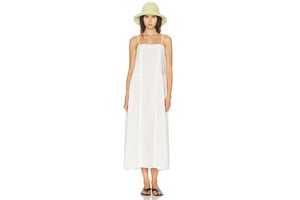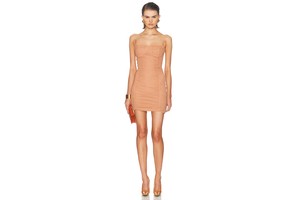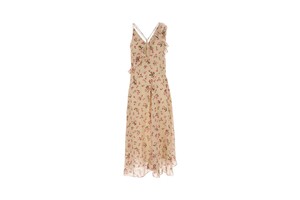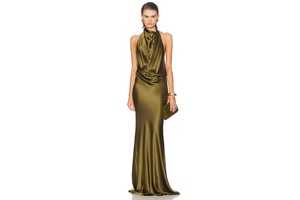
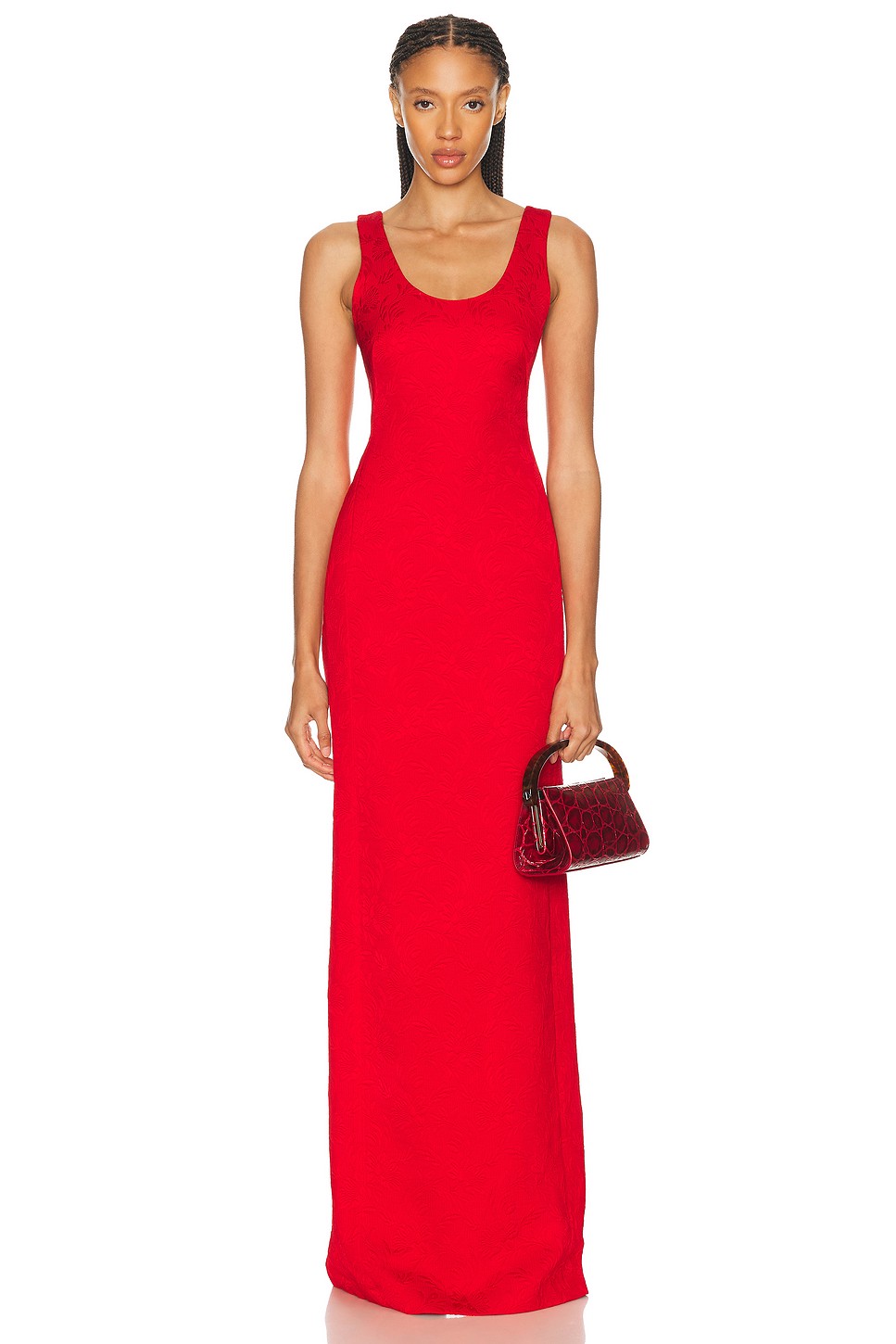
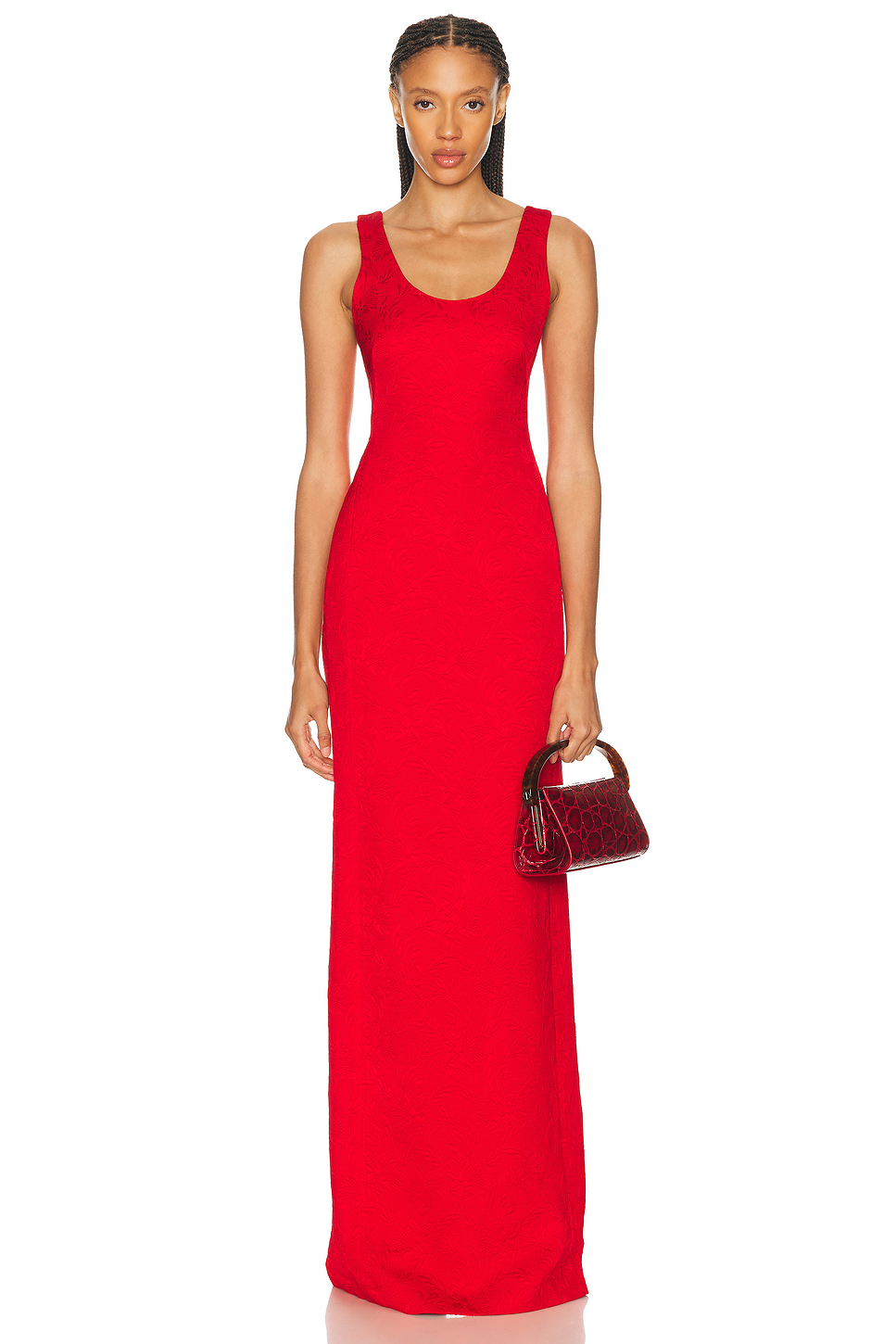
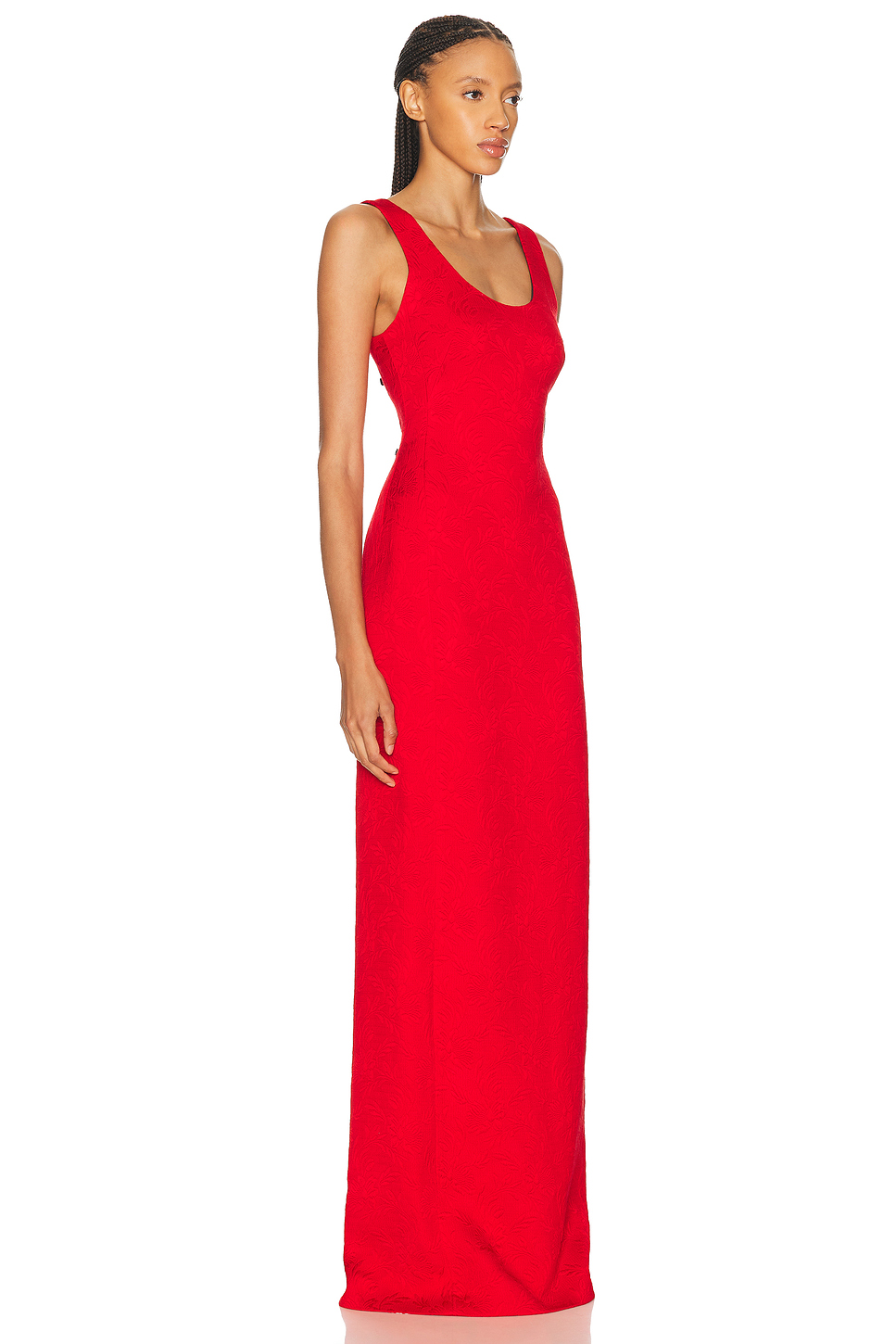
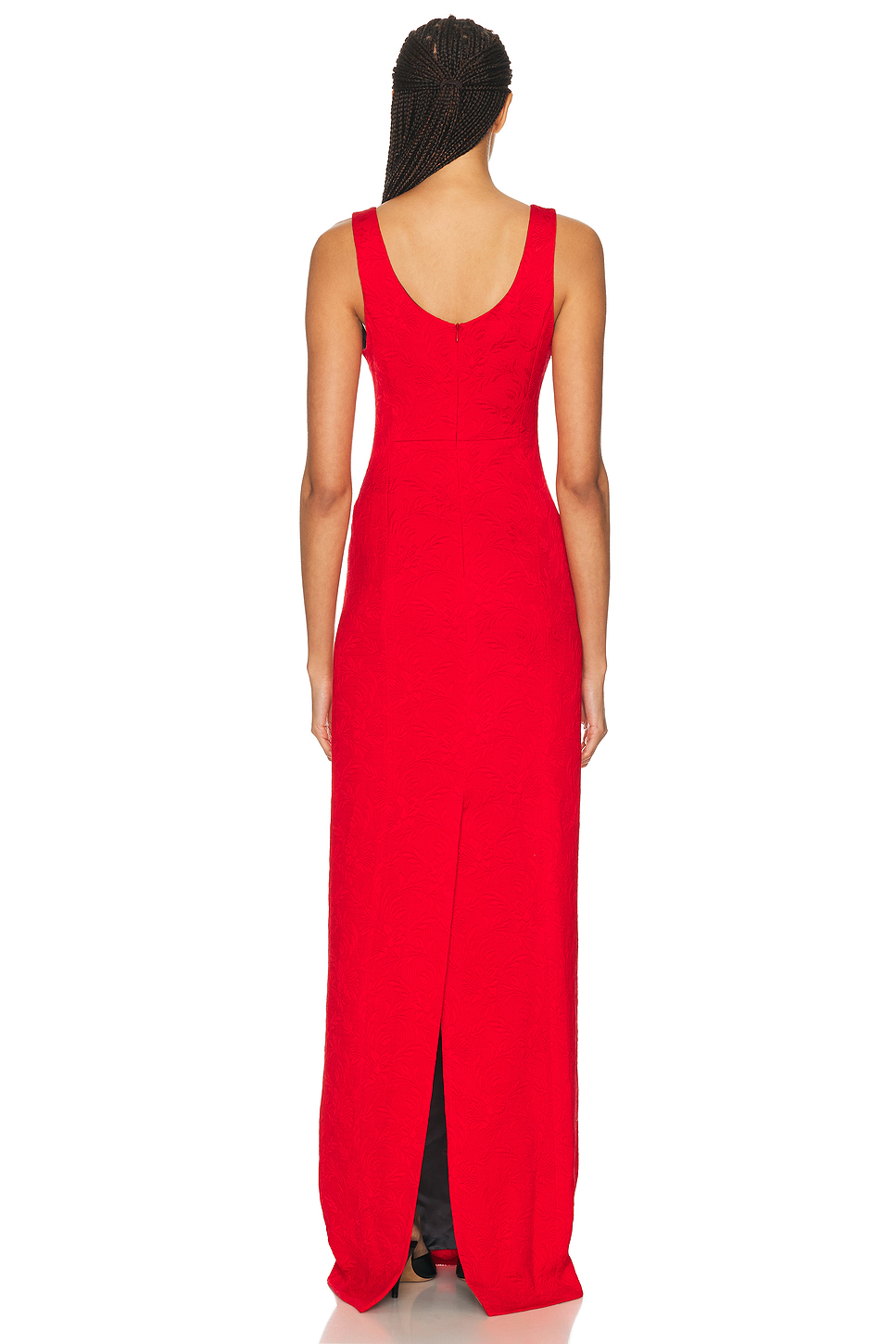
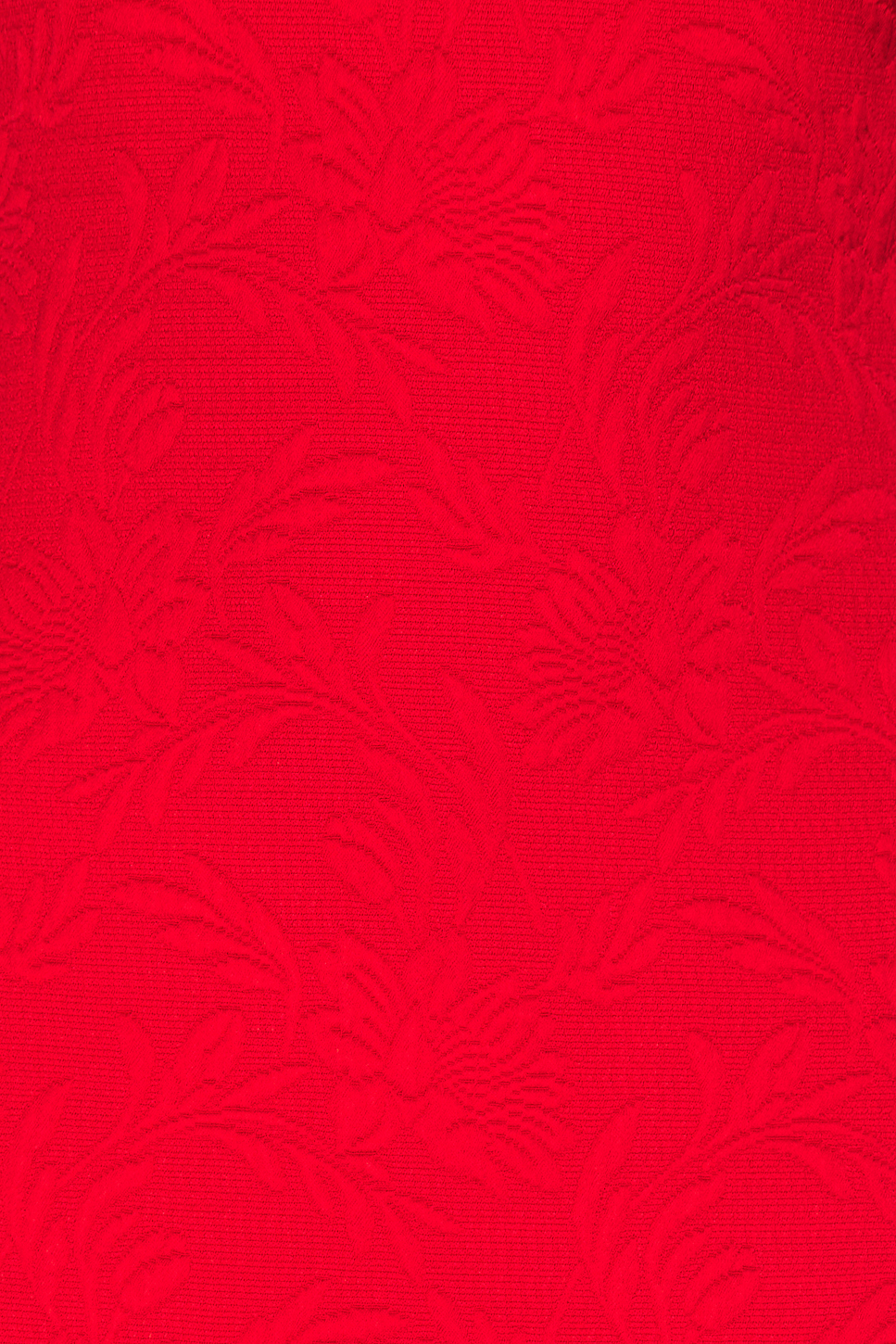
A maxi dress listed with a self of 64% viscose and 35% cotton alongside a lining of 100% viscose, dry clean only, fully lined, in a heavyweight crepe with a hidden zip at the back, made in Poland, at 1,379 dollars. There are no reviews and no fit votes, so there is no score to quote. At sixty three inches this is the longest garment examined here, and the reason that matters is that it puts a conclusion reached recently into its sharpest possible form. The two layers here are also worth comparing against a garment examined alongside it, since the two sit at opposite ends of a question this series has been tracking for a long while. The reference is the Debant Dress by Dries Van Noten in Red. Dongguan Bafinasa Garments Co., Ltd. develops comparable crepe maxi dresses on OEM and ODM terms, from fabric selection and lining matching to retail or FBA ready packing. We publish this as a development reference and build your own version of it, and we do not supply the branded original or reproduce anyone else's label.
Key Features
- Self in 64% viscose and 35% cotton as stated, with lining in 100% viscose as stated. See the note below
- Layers from the same family rather than different ones, and comparison makes the point. See the note below
- Heavyweight crepe as stated, which is now the third crepe here and settles something. See the note below
- Fully lined as stated, and here the lining fibre is the more demanding of the two
- Dry clean only as stated, and the lining is a sufficient reason on its own
- Hidden zip at the back as stated
- Length 63 in, the longest garment examined in this series. See the note below
- Made in Poland as stated
Customisable Options
- Fabric: crepe to the reference, with construction and weight specified rather than only the word
- Lining: viscose to the reference, offered in alternatives given what viscose does when wet
- Length: offered at several options rather than one, since sixty three inches suits a narrow range of heights
- Closure: developed for the weight of this cloth rather than inherited
- Weight options across the crepe range, hem finishing, size set, colour development, private label and care labelling
Specifications
| Style | Viscose cotton lined maxi dress |
| Reference | Dries Van Noten, Debant Dress, style DRNF-WD27, manufacturer style 261-011066-3265, colour Red |
| Self | 64% viscose, 35% cotton as stated. See the note below |
| Lining | 100% viscose as stated. See the note below |
| Fabric | Heavyweight crepe as stated. See the note below |
| Lining Coverage | Fully lined as stated |
| Care | Dry clean only as stated. See the note below |
| Closure | Hidden zip at the back as stated |
| Sizes Published | 34, 36 and 38, three consecutive sizes |
| Measurements Published | 36: bust 29 in, waist 26 in, hips 36 in, length 63 in. See the note below |
| Chart Note | The bust sits below the model while other points sit above it. See the note below |
| Coverage | Only size 36 has figures. Sizes 34 and 38 are blank |
| Model | 178 cm, bust 79 cm, waist 62 cm, hips 86 cm, wearing size 36 |
| Production | Made in Poland as stated |
| Reference Retail | 1,379 USD, quoted to show the price band this sits in, not as our price |
| Customer Reviews | None on the reference listing, so we quote no score |
| Best Seller Badge | None. The listing carries no rank |
| Categories | Filed by the retailer under maxi dresses and sleeveless dresses |
| Occasion | Occasions, evenings, formal events, galleries, warmer weather |
| MOQ | 100 pcs per style per colourway, mixed sizes and colourways accepted |
| Sampling | 7-10 days after tech pack or reference sample approval |
| Bulk Lead Time | 20-30 days after sample approval and deposit |
| Service | OEM / ODM / private label, crepe sourcing, lining matching, retail or FBA ready packing |
Size Chart
| Size | Bust | Waist | Hips | Length | Source | ||||||||||||
|---|---|---|---|---|---|---|---|---|---|---|---|---|---|---|---|---|---|
| 36 | 29 | in | 26 | in | 36 | in | 63 | in / | 160 | cm | As published | ||||||
| 34 | 31 | in / | 79 | cm | 24 | in / | 61 | cm | 34 | in / | 86 | cm | 160 | cm / | 63 | in | Our proposal |
| 36 | 33 | in / | 84 | cm | 26 | in / | 66 | cm | 36 | in / | 91 | cm | 162 | cm / | 63.8 | in | Our proposal |
| 38 | 35 | in / | 89 | cm | 28 | in / | 71 | cm | 38 | in / | 97 | cm | 164 | cm / | 64.6 | in | Our proposal |
| 40 | 37 | in / | 94 | cm | 30 | in / | 76 | cm | 40 | in / | 102 | cm | 166 | cm / | 65.4 | in | Our proposal |
The published size 36 gives bust 29 in, waist 26 in, hips 36 in and length 63 in against a model at roughly 31, 24 and 34. The bust sits about two inches under her, and the length is the longest figure encountered anywhere in this series.
Occasions and Styling
Suits occasions, evenings, formal events, galleries and warmer weather. Crepe holds structure while moving fluidly, though at sixty three inches this carries a length buyer and wearer should agree on in advance.
Production and Quality Control
There are no reviews and no fit votes on this listing, so we quote no score. At sixty three inches this is the longest garment encountered here, and that pushes a conclusion reached recently into its sharpest form. Its two layers also sit at the opposite end of a spectrum from something examined right alongside it, which makes the pair worth putting together.
Sixty three inches, the tallest model, and why the number matters more than usual here, and that is the first thing. The published length is sixty three inches, about one hundred and sixty centimetres, which is longer than anything else examined in this series. The shortest met was twenty eight and a half inches, so the total spread across hundreds of garments runs to about thirty five inches, or nearly a metre, and this one sits alone at the extreme end. Now, this series concluded recently that length categories are not claims about cloth but claims about how a garment looked on whoever modelled it, having found three garments whose lengths and labels could not be arranged by any consistent threshold, together with a pair differing by half an inch whose labels ran the wrong way round. This garment is the clearest possible demonstration of that mechanism, because it is extreme enough for arithmetic to do the work. The model here is one hundred and seventy eight centimetres. Sixty three inches is one hundred and sixty centimetres, which is ninety per cent of her height, and on somebody that tall this falls somewhere around the ankle, so calling it maxi is a fair description of that photograph and not a wrong one. Now take somebody considerably shorter. Someone at around one hundred and fifty five centimetres is twenty three centimetres shorter, and the same hundred and sixty centimetres of cloth does not fall twenty three centimetres lower on them in any comfortable way, it goes past the floor. So the identical garment is genuinely a maxi on one person and genuinely unwearable on another, with nothing changed but height. This series has argued throughout that the important habit is comparing a published length against your own height, and has said that whenever both figures are given anybody can work out where something falls, and that no category word can do that. Nothing encountered since has made the case better than this does, since at middling lengths there remains scope to assume it will be roughly fine, whereas at sixty three inches it will not. It is also worth saying what this means for anybody specifying garments, because it bears on a decision rather than a warning. Length is not one thing. Publishing this in one length means serving whoever happens to be close to one height, and for a garment at this extreme, that group is narrow. Offering two or three lengths, or stating the figure prominently and letting the buyer measure, costs little next to the number of people who would otherwise find this unwearable. This page does publish the figure, which deserves credit, since most do not.
Two layers from the same family, set against two from different ones, and that is the second thing. The self here is sixty four per cent viscose and thirty five per cent cotton, and the lining is hundred per cent viscose. Compare that against a garment examined immediately alongside this one whose self was hundred per cent wool and whose lining was hundred per cent silk, sharing no component and no behaviour whatever. These two are the opposite case, and stating the difference precisely is more useful than saying one is better. Viscose is regenerated cellulose, cotton is cellulose, so what is happening here is that processed and unprocessed versions of one material have been placed either side of each other. They take dye similarly, they absorb moisture similarly, they respond to heat similarly, and critically they move similarly when wet, since both swell and both relax at roughly the same rate. That is the property which does the work. Two layers which move together stay in proportion when something happens to them jointly, which is exactly what keeps an attached lining from puckering or pulling away from its shell after any cleaning. This series has stressed this repeatedly across many examinations, having noted most pointedly that what matters about layers is how they behave together rather than how either behaves alone. So this pairing is made competently in a way which is easy to overlook precisely because nothing goes wrong. Set it against the wool and silk alongside it and the contrast does real work: there, two entirely different things going wrong in two entirely different ways in two materials which share the same fate, so handling one necessarily handles the other. Here, one problem, shared proportionally, which is why this garment has one straightforward instruction rather than a negotiated one. That said, the instruction still needs justifying, and the reason is entirely in the lining. Self aside, a lining of hundred per cent viscose is sufficient on its own, since this series has noted throughout thatviscose loses around half its strength when wet, shrinks, and creases badly as it dries, none of which can be undone. There is also something here which has been met several times recently and deserves recording rather than explaining away. Sixty four and thirty five make ninety nine. This series has recently encountered the same missing one per cent on another arrangement of three fibres, and has noted before that what is unaccounted for might be sewing thread and inconsequential, or might be fusible interlining, which is glued rather than sewn and responds to heat and water unlike everything around it. Nobody can tell from this page which of those it is, and it is worth being clear that this series cannot resolve it either, only note that the question recurs often enough to be worth somebody answering in general rather than garment by garment.
The third crepe, and what three finally settle, and that is the third thing. This is heavyweight crepe, and crepe has now appeared three times here, which is enough for the three together to say something individually none of them could. Crepe gets its surface from yarns twisted hard before weaving, so the cloth emerges carrying tension which must then be released in finishing, meaning it arrives already having been stressed once before it is ever cut. The practical consequences are that it resists creasing, hangs fluidly without clinging, and has a slightly dry rather than slippery hand. Those three are why it keeps appearing on garments at this end of the price range. Now, the recent history matters here. This series examined a crepe fairly recently and drew a conclusion from it, which was dramatic enough to be worth re-examining. That garment carried far more of a fragile fibre and yet received a considerably more permissive instruction than an earlier one with less of it, which falsified a quiet expectation that more of the fragile fibre meant more caution. Degree alone does not decide it. Now to this one, which is heavyweight, and stated as such, and this is where the three resolve. Compare: lightweight was recently noted on another cloth as the word carrying most of the work in the entire description, because a construction name says how yarns are arranged and only quantity says how much material is there. Here the same principle applies in reverse, and it is what reconciles the apparent contradiction. The earlier comparison was between two crepes of statedly different weight, and once there is a word saying how heavy this one is, the instruction becomes predictable rather than arbitrary, because what actually damages cloth is mechanical force exceeding what its wet structure can take, and quantity of material is the single biggest contributor to whether that threshold gets reached. So the useful formulation reached across several hundred listings now reads like this: fibre sets the vulnerability, weight decides whether that vulnerability is ever touched, and mechanical action decides what happens if it is. Pages offering all three in the same place are unusual, which is what makes this page worth having: it names its fibre, names its layers, names its construction, names its weight, names its fastening, and publishes a length. There is one lasting omission worth recording, since it has recurred throughout: sizes thirty four and thirty eight carry no figures, and it is only size thirty six which does. Every bulk shipment gets a measurement report against your approved chart.
Optional upgrades include offering this in two or three lengths rather than one, since sixty three inches serves whoever happens to be near one height and that group is narrow at this extreme, publishing measurements for sizes 34 and 38, since one of three is worse than most, stating crepe weight in grams per square metre rather than only the one word which is doing all the work, identifying the missing percentage rather than leaving it to be guessed whether it is thread or interlining, offering a lining fibre which tolerates what the shell tolerates rather than one which does not, extending the size range past three sizes, keeping dry clean only given what the lining alone demands, hem finishing options given length, colour development, private label, hangtag and care labelling.
Pre-production sample approval, in-line inspection during cutting and sewing, and a final AQL inspection before packing, with measurement reports and photos shared before shipment.
Send us your tech pack, a photo or a reference garment and we will quote within 24 hours. Contact bafinasa@bafinasa.com or WhatsApp +86 13827222469.