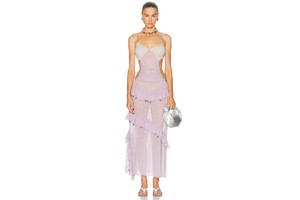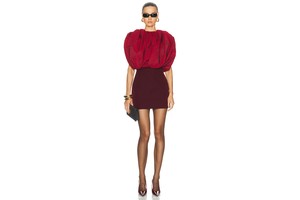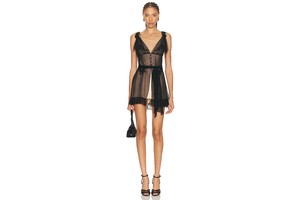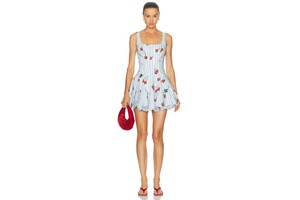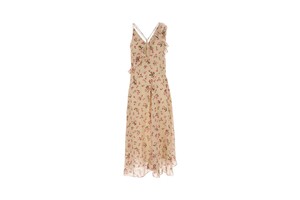
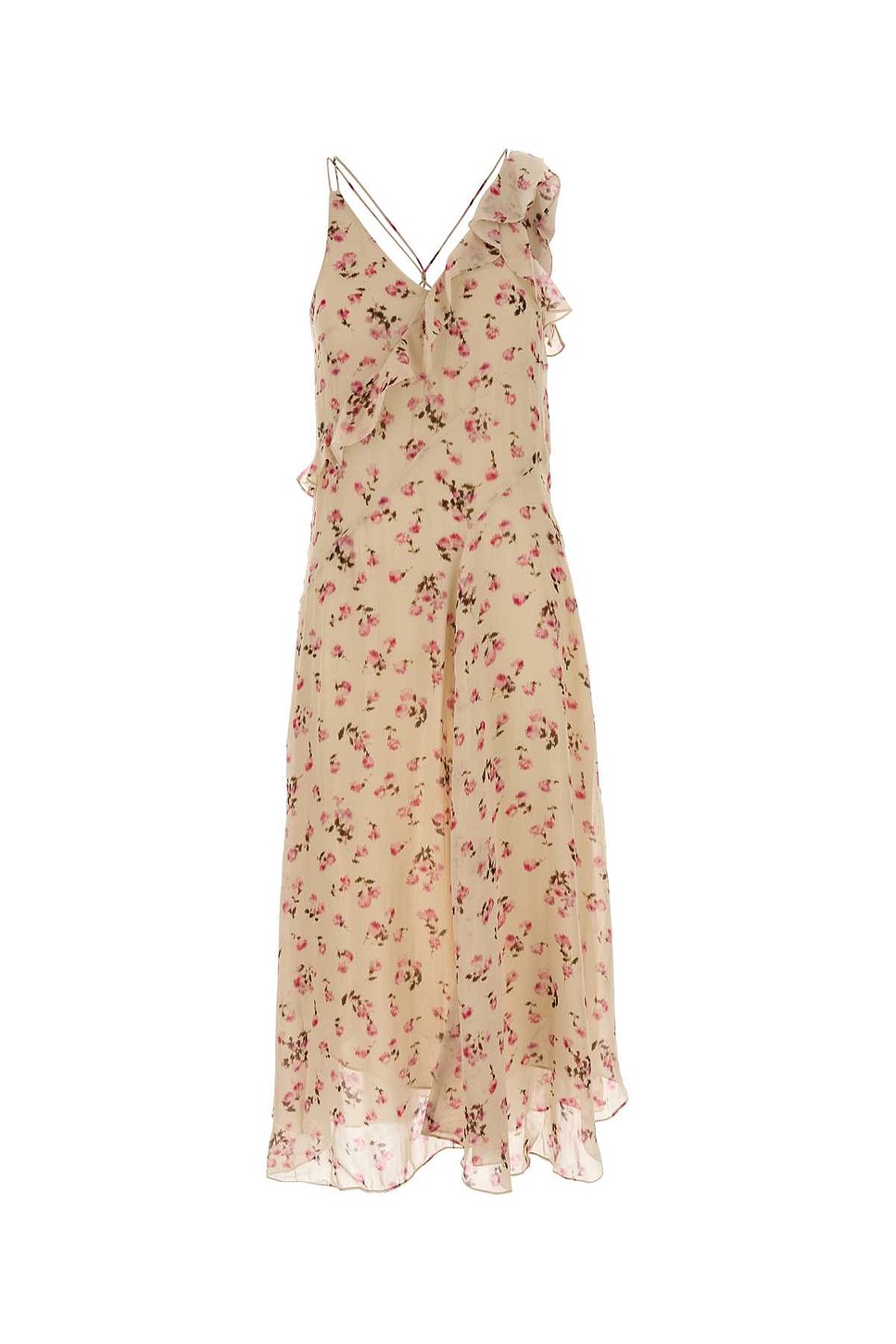
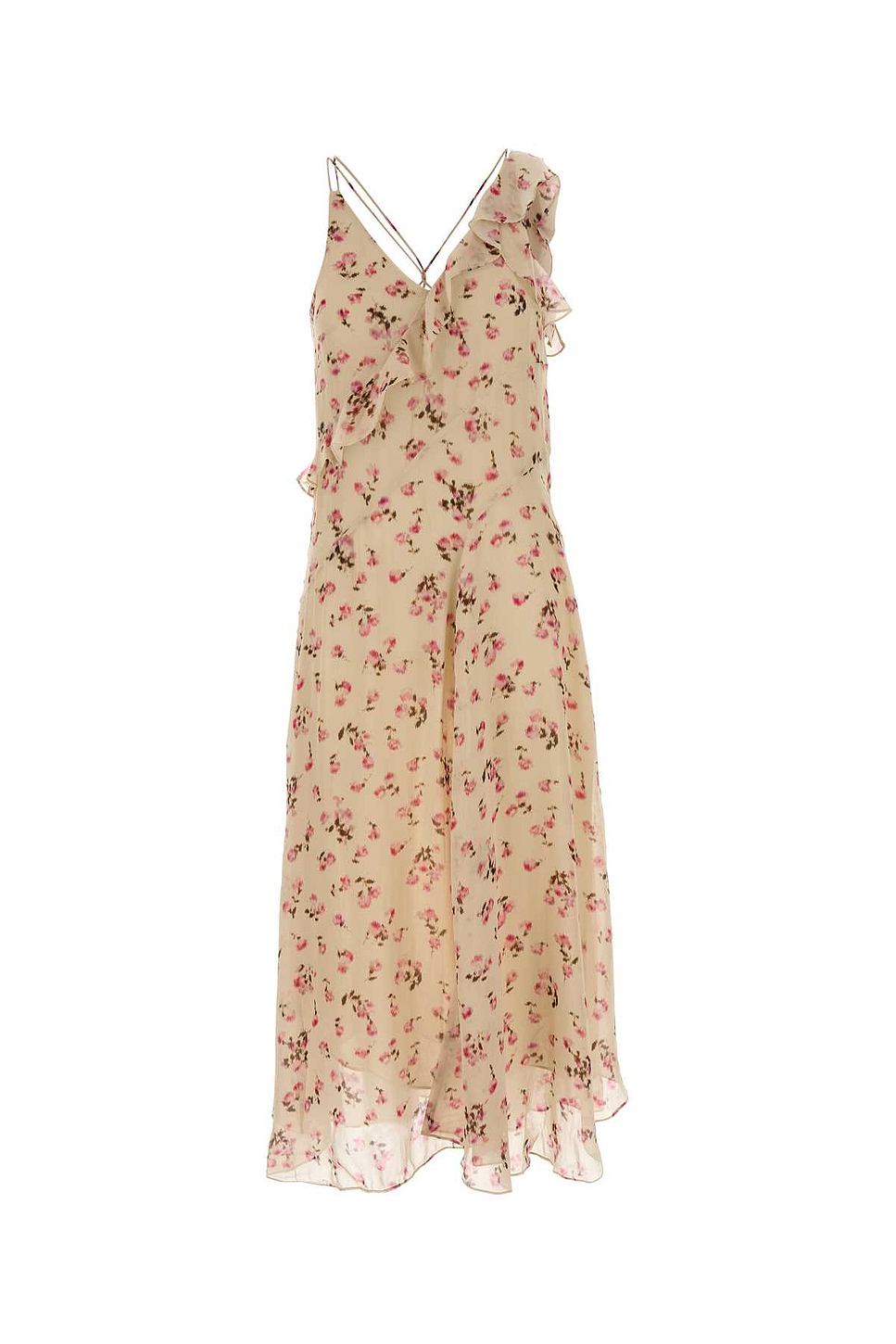
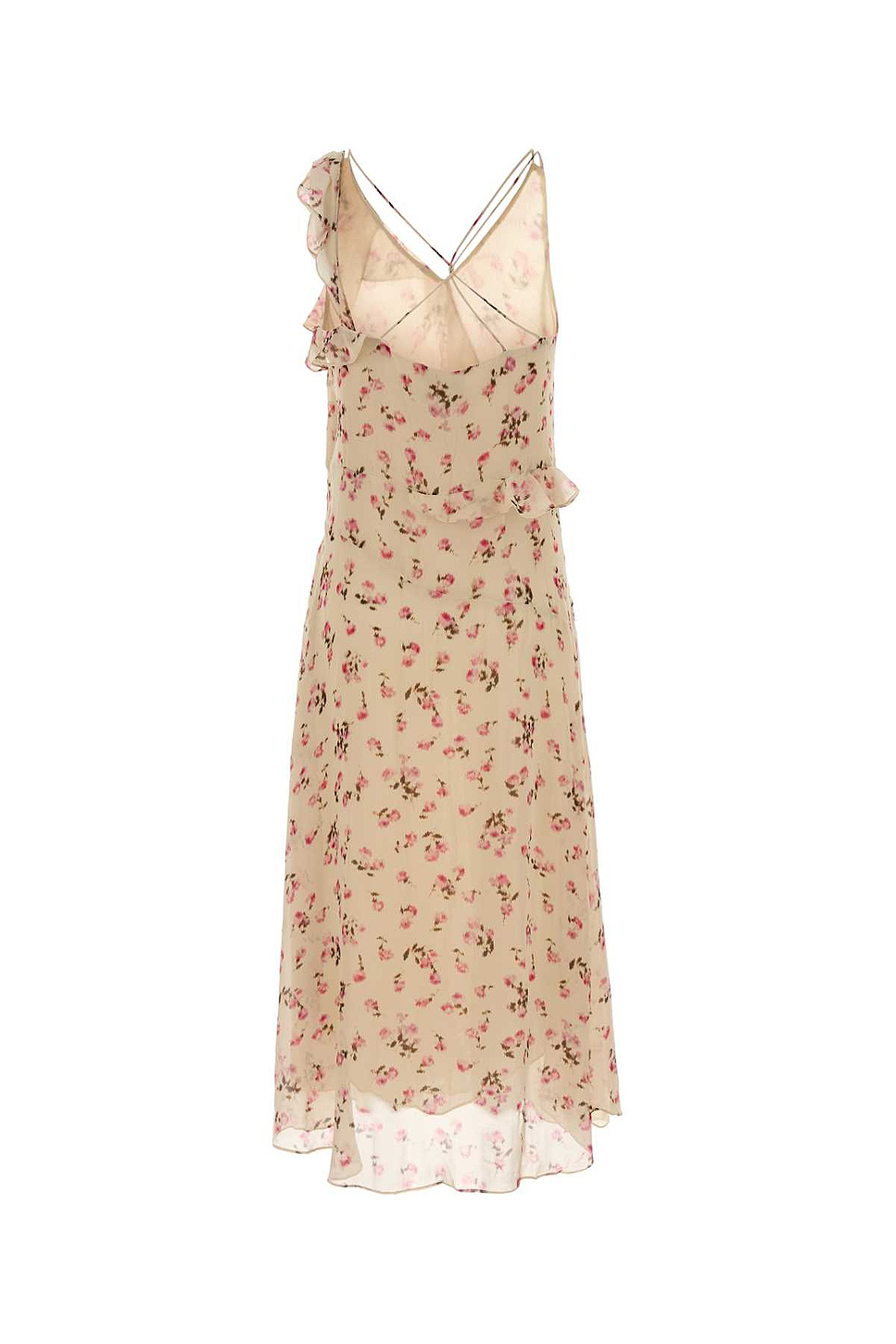
A printed viscose dress listed with a shell of 100% viscose and a lining of 100% viscose, made in India, at 634 dollars. There are no reviews and no fit votes, so there is no score to quote. Both layers are given, which is more than most manage, and yet reading them together produces a puzzle this series has not met before. This page is also the third of an exactly repeated structure, and three changes what can reasonably be said about where these come from. The reference is recorded here under style FEXN-WD1627, created by a maker named in the product description, in Floral. Dongguan Bafinasa Garments Co., Ltd. develops comparable printed viscose dresses on OEM and ODM terms, from fabric selection and print development to retail or FBA ready packing. We publish this as a development reference and build your own version of it, and we do not supply the branded original or reproduce anyone else's label.
Key Features
- Shell in 100% viscose as stated, with lining in 100% viscose as stated
- Both layers named, which most of these listings never manage. See the note below
- Printed muslin cloth as named in the product title, though the fibre is viscose rather than cotton
- Made in India as stated
- Everything else below is absent rather than present. See the note below
- No care instruction of any kind is given, despite a fibre that demands one
- One size offered with no measurements for it
- Third page in a row sharing one exact structure. See the note below
Customisable Options
- Fabric: printed viscose to the reference, with weight specified rather than omitted
- Print: developed rather than inherited, since placement depends on the cut
- Lining: viscose to the reference, and we would confirm it matches the shell's behaviour rather than assume
- Care: tested and stated rather than left open, given what this fibre does when wet
- Size range extended and measured, since one size with nothing published is currently the whole offering
Specifications
| Style | Printed viscose dress |
| Reference | Style FEXN-WD1627, manufacturer style RO1002FAD1J08E 90BE, colour Floral, made in India |
| Shell | 100% viscose as stated. See the note below |
| Lining | 100% viscose as stated. See the note below, since this is the interesting part |
| Cloth | Printed muslin as named in the product title. See the note below |
| Care | Not stated. No instruction of any kind appears on the reference listing |
| Closure | Not stated. No method of fastening is described |
| Sizes Published | 36, one size only |
| Measurements Published | None. No figure for that size and no model proportions |
| Chart Note | The listing gives no size chart and no model, despite offering a size |
| Production | Made in India as stated |
| Reference Retail | 634 USD, quoted to show the price band this sits in, not as our price |
| Customer Reviews | None on the reference listing, so we quote no score |
| Best Seller Badge | None. The listing carries no rank |
| Categories | Filed by the retailer under midi dresses only. No second category is given |
| Occasion | Daytime, holidays, warm weather, occasions |
| MOQ | 100 pcs per style per colourway, mixed sizes and colourways accepted |
| Sampling | 7-10 days after tech pack or reference sample confirmation |
| Bulk Lead Time | 20-30 days after sample approval and deposit |
| Service | OEM / ODM / private label, printed viscose sourcing, lining matching, retail or FBA ready packing |
Size Chart
| Size | Bust | Waist | Hips | Length | Source | ||||||||||||
|---|---|---|---|---|---|---|---|---|---|---|---|---|---|---|---|---|---|
| 36 | 33 | in / | 84 | cm | 26 | in / | 66 | cm | 36 | in / | 91 | cm | 122 | cm / | 48 | in | Our proposal |
| 38 | 35 | in / | 89 | cm | 28 | in / | 71 | cm | 38 | in / | 97 | cm | 124 | cm / | 48.8 | in | Our proposal |
| 40 | 37 | in / | 94 | cm | 30 | in / | 76 | cm | 40 | in / | 102 | cm | 126 | cm / | 49.6 | in | Our proposal |
| 42 | 39 | in / | 99 | cm | 32 | in / | 81 | cm | 42 | in / | 107 | cm | 128 | cm / | 50.4 | in | Our proposal |
The reference listing offers one size and publishes no measurements for it, giving no model proportions either, so nothing about fit is recoverable from this page.
Occasions and Styling
Suits daytime, holidays, warm weather and occasions. Printed viscose drapes and moves well in heat and takes colour brightly, though what happens when it meets water is worth knowing before deciding how casual it really is.
Production and Quality Control
There are no reviews and no fit votes on this listing, so we quote no score. Both layers are stated here, which most of these never manage, and yet reading the two together produces something this series has not met before. This is also the third page with one exact structure, and three permits saying considerably more than two did.
Both layers named, and the question that nevertheless remains, and that is the first thing. Give this page its due before anything else. It states a shell and it states a lining, and gives the composition of each. This series has been counting how these listings handle layers for hundreds of examinations, and the overwhelming majority raise the question and then decline to answer it: a single word appears alone, now well into double figures here, with the second layer never once following. Various other wordings do complete the pair, and this uses one of them. So this page belongs among the minority which actually answers, and this series has argued throughout that this is worth crediting rather than treating as unremarkable, since it costs almost nothing and changes what a customer can work out. Yet there is something left over which deserves setting out because it is new. The shell reads as viscose and the lining reads as viscose, and those are two different renderings of a name for one fibre. This series has met this situation across pages plenty of times, having noted repeatedly that certain things carry more than one name, and that the asymmetry runs one way only, so knowing one does not grant knowledge of the other. What has not happened before is seeing two renderings of one name inside a single sentence describing two layers of one garment. That is worth slowing down over, because it produces a specific and somewhat surprising misreading. Seeing two layers listed, a customer does the sensible thing and asks which is the harder of the two, since that is what determines treatment. Looking at this line, they have no way to tell whether they are reading two different things which happen to be written differently, or one thing written twice. Assume wrongly that they are different and you end up treating this more cautiously than it needs, since you hedge toward whichever you take to be worse. Assume wrongly that only part of it is the fragile one and you do something considerably more consequential, which is underestimating the whole. This series has generally argued that multiple names cost customers knowledge they should have had. Here the cost runs differently and the mistake is larger: the same quantity of fibre looks like less of it, because it appears twice under two headings. There is no way to resolve this from the page, and this series cannot either, only note that the same sentence could have said the same fibre throughout and thereby removed the question entirely. It is worth stating plainly because it is encouraging: this particular confusion would cost about three words to eliminate.
Muslin, and a name which no longer means what it meant, and that is the second thing. The product title calls this printed muslin, and muslin is worth unpacking because it illustrates something this series keeps running into. Muslin began as a specific thing: a plain woven cotton cloth, lightly constructed, made in a particular place, and used for everything from dress fabric to the toile which tests a pattern before the real cloth is cut. Today the word has drifted considerably, and it now tends to describe an open plain weave of light weight almost regardless of what it is made from, often used for that testing purpose specifically. Meanwhile the stated composition here is viscose, not cotton. So there are two possibilities and nothing distinguishes them, and both are interesting for different reasons. One is that the word has drifted far enough to be applied by feel rather than by material, in which case someone reading it may reasonably assume cotton where there is none. The other is that the weight and hand genuinely resemble what muslin describes, and the word is being used accurately for everything except the fibre, which is stated separately anyway. Either way the illustration is the same, and it extends something established recently. This series worked out comparing two similar cotton garments that a construction name does not reassure and a weight does, on the grounds that one describes how yarns are arranged while only the other says how much material is present. There is a further step available now, having met a case where the name could mislead about material rather than merely saying too little: a construction name does not identify the material either. Poplin has now appeared across several hundred listings made of cotton and of polyester, each sharing the arrangement and almost nothing else. So when these pages name a cloth, what has been established as worth extracting is three separate things which the name alone supplies none of: how much material there is, what it is made from, and how the yarns were arranged. Most manage the last and nothing else.
Three pages, one structure, and what three permits saying, and that is the third thing. This series has twice now met a structure which seemed worth noting and twice been careful to call it observed rather than concluded, since one instance proves little and two could be coincidence. This is the third, and the accumulated pattern is specific enough to be worth stating plainly. This page has four lines of product detail, two of which are stock numbers. It offers one size and publishes nothing about it. It carries two photographs. It has no care instruction, no closure description, no second sales category, no model, no measurements. The two previous instances were identical in every one of those respects. Meanwhile they share nothing that could explain it: different designers, different fibres including cotton and several blends and now viscose, different countries including Italy and Portugal and now India, and prices ranging across two thousand dollars. Three pages agreeing on structure while agreeing on nothing else is difficult to account for by any property of the garments, because there is no property they share. It is much easier to account for by the process producing them, which is what this series suggested two instances ago and can now hold rather more firmly. There is one further habit these pages display which reinforces it, and which has recurred throughout: the fields identifying a garment are complete while the fields describing it are empty. Both stock numbers present and correct, both layers given, country present, and then nothing about care, nothing about fit, nothing about how it fastens. This series has suggested repeatedly that an empty field is more often a fact about a record than about a garment, and that distinction keeps earning its place, because mistaking one for the other leads to concluding things about garments which are not true of them. It also matters practically here, and this is where it stops being merely interesting. Viscose loses around half its strength when wet, it shrinks, and it creases badly as it dries, none of which reverses. There is viscose on both layers of this garment, so whatever care is needed is needed uniformly, and that means one instruction would have covered everything. None is given. The absence therefore leaves a customer with no way to know something quite basic about a garment costing this much, and given that one line would have covered it, this is the sort of omission which costs nobody anything to fix. Every bulk shipment gets a measurement report against your approved chart.
Optional upgrades include saying the same fibre throughout rather than writing it two ways in one sentence, since this is the rarer instance where the confusion makes the garment look less fragile than it is, adding a care instruction, since viscose on both layers means one line covers everything and none is currently given, publishing measurements for size 36 plus model proportions, since there is currently nothing to work from, extending beyond a single size, describing how it fastens since that frequently explains how a garment measures, naming weight rather than only a cloth word which no longer identifies what it is made from, confirming whether muslin here means an open weave regardless of fibre and saying so, keeping both layers stated rather than dropping one, colour and print development, private label, hangtag and care labelling.
Pre-production sample approval, in-line inspection during cutting and sewing, and a final AQL inspection before packing, with measurement reports and photos shared before shipment.
Send us your tech pack, a photo or a reference garment and we will quote within 24 hours. Contact bafinasa@bafinasa.com or WhatsApp +86 13827222469.