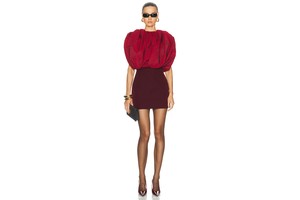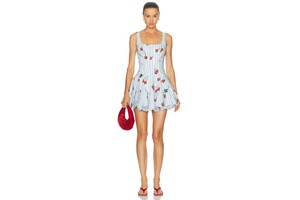
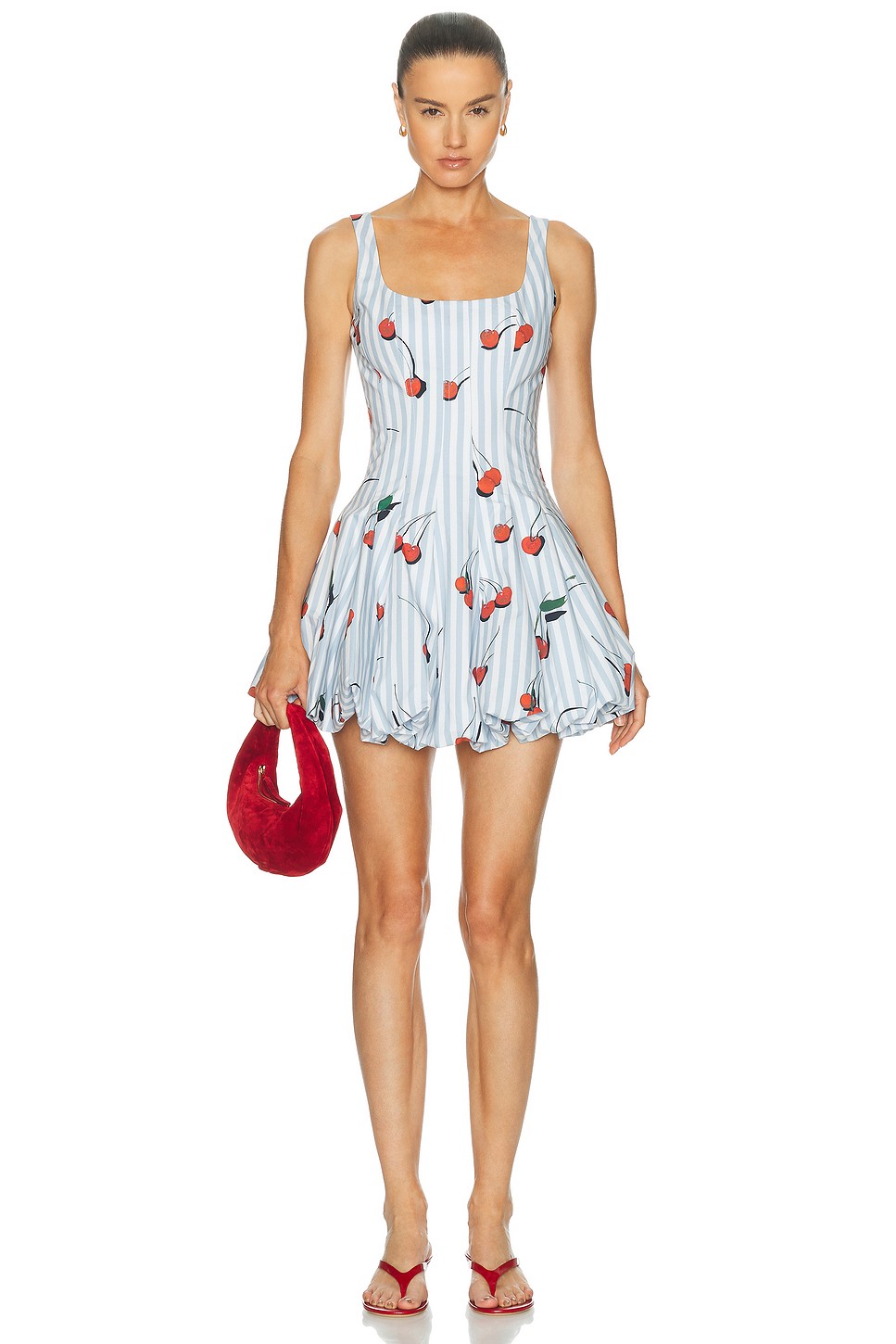
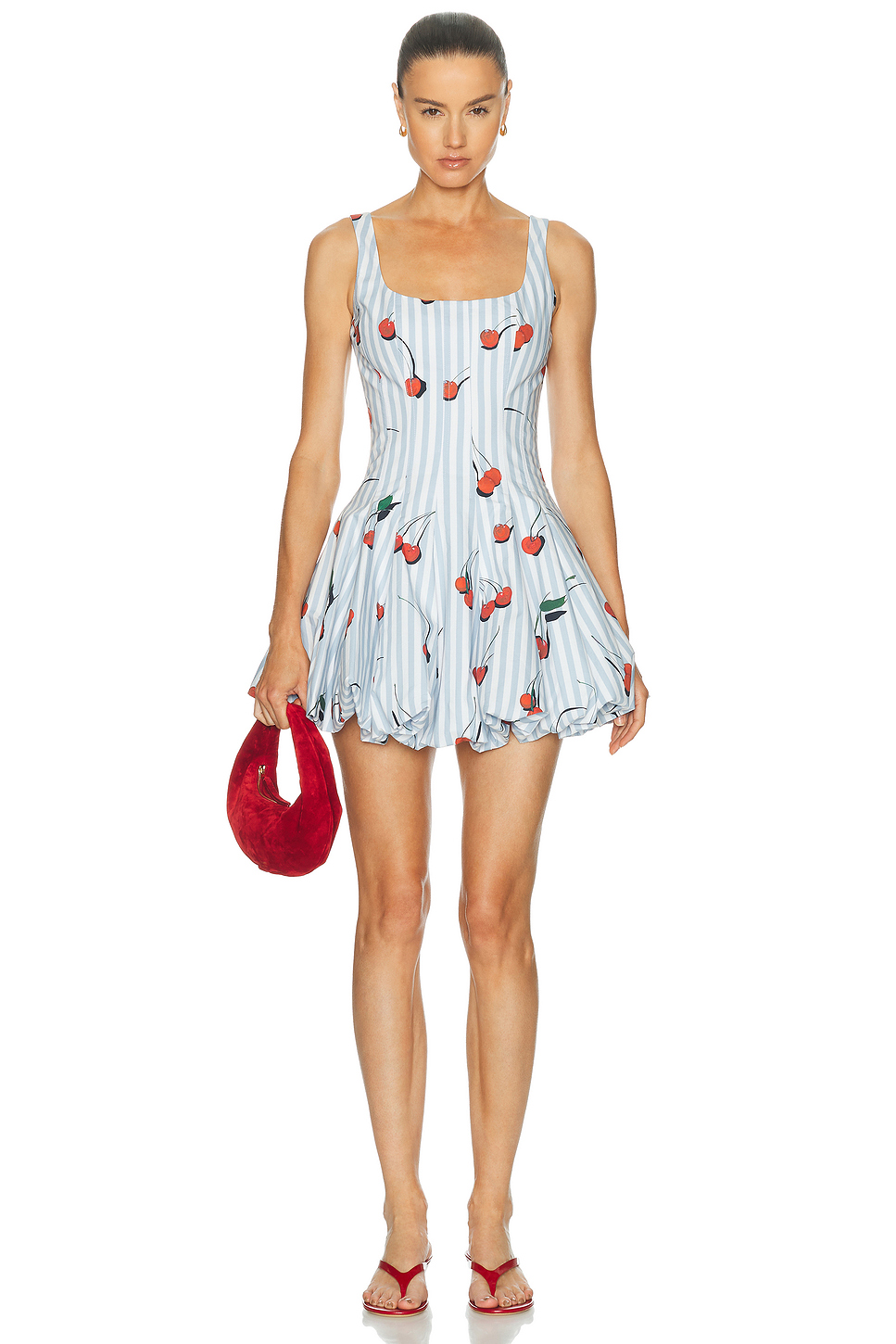
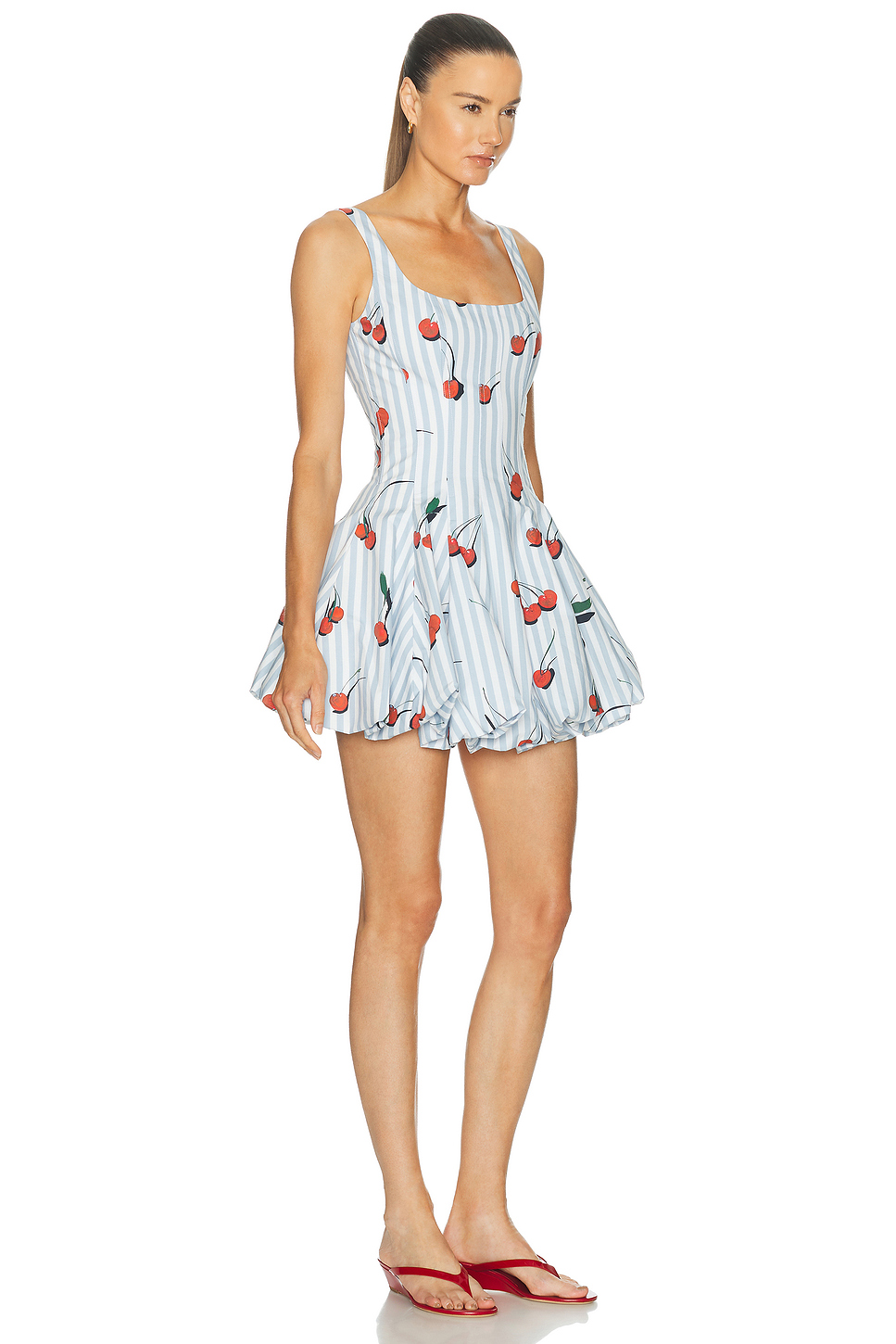
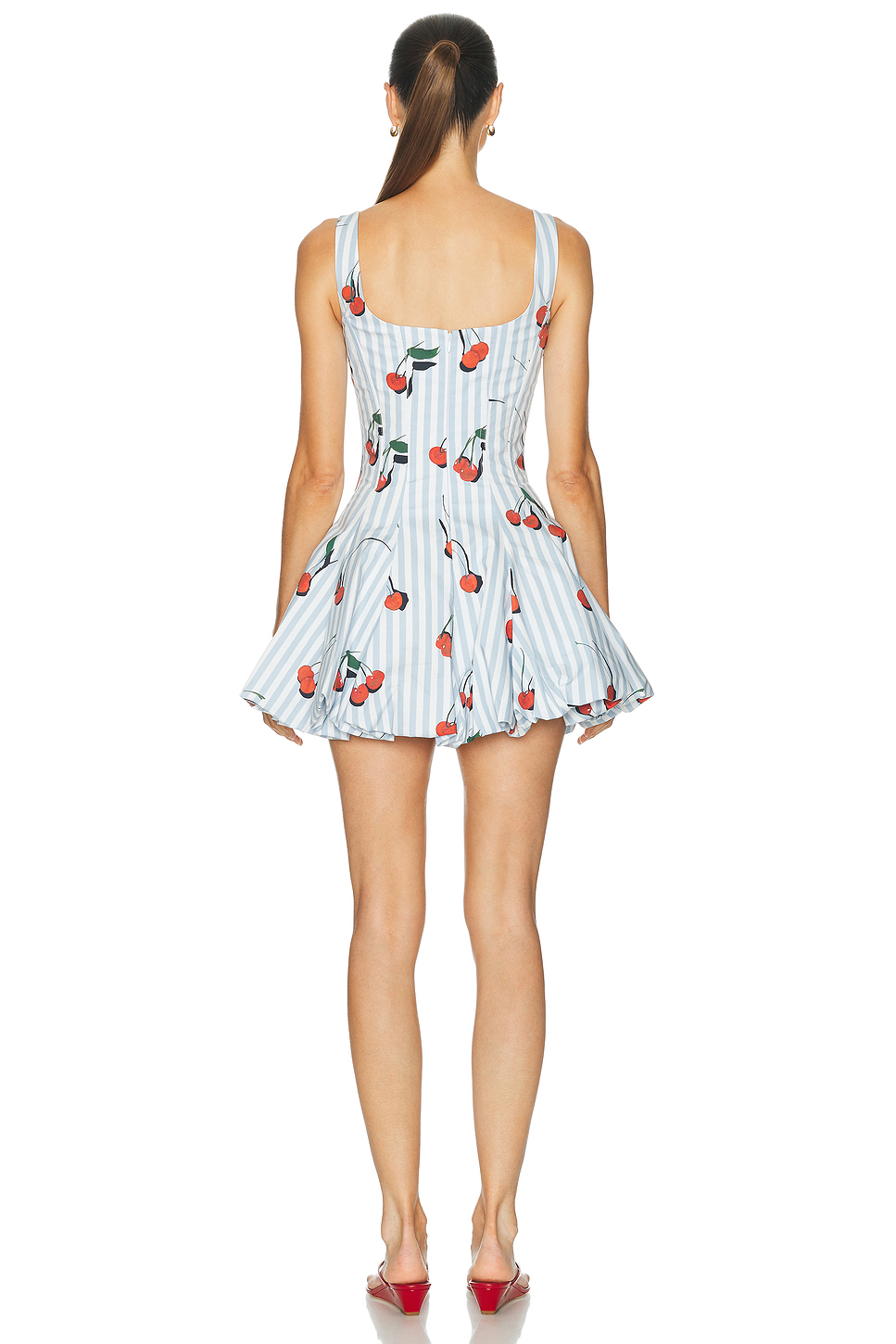
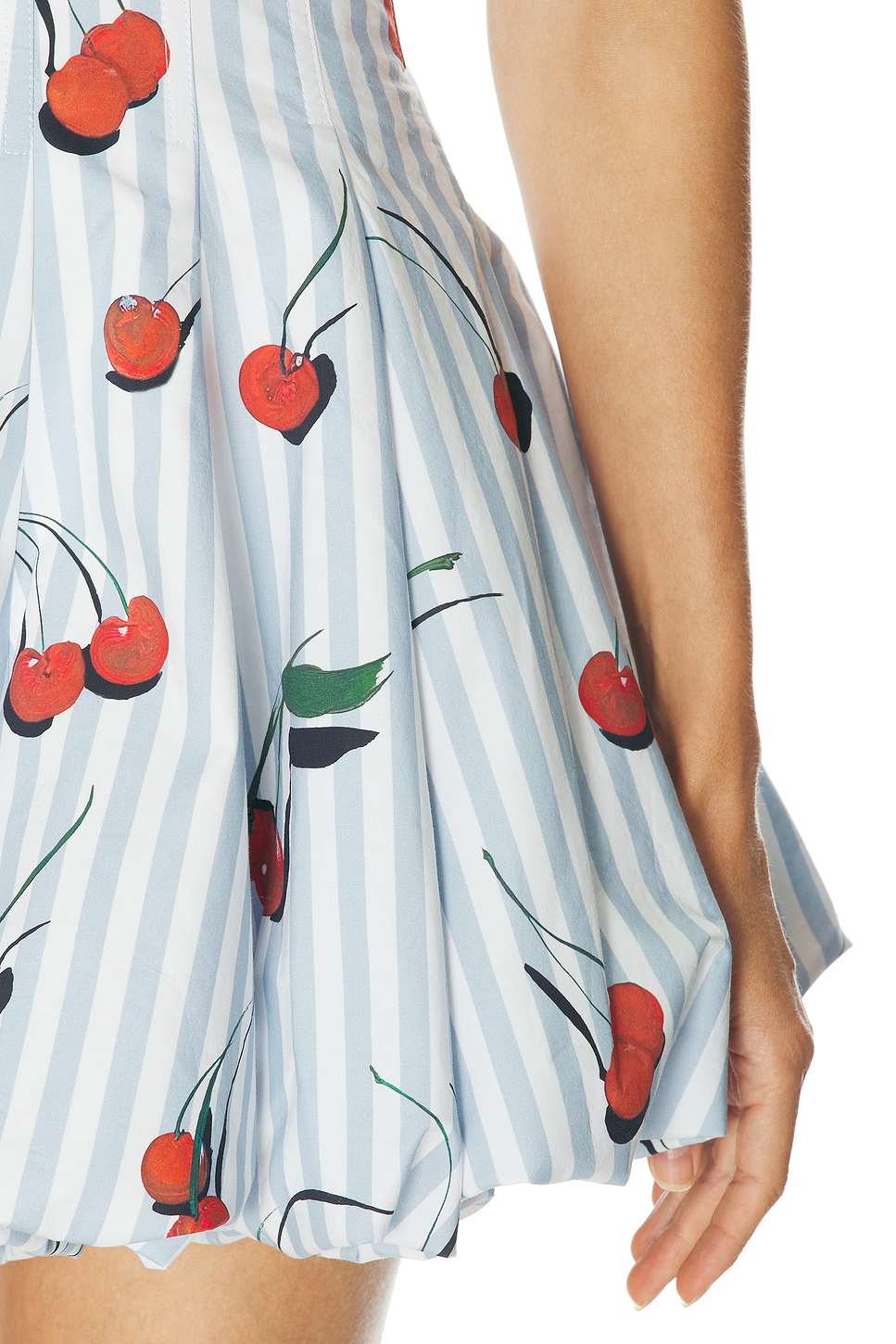
A bubble hem mini dress listed with fabric and lining both in 100% cotton, dry clean only, fully lined, in a heavyweight poplin with an exposed zipper and hook and eye fastening at the back and pockets set into the side seams, made in the United States, at 1,352 dollars. There are no reviews and no fit votes, so there is no score to quote. This is the strictest instruction ever given to a cotton garment in this series, and there is nothing about cotton that asks for it, which makes it a useful place to settle a question asked hundreds of times here. One number in its chart is also very large, and understanding why settles something none of the previous ones did. The reference is the Bubble Dress by Monse in Blue Multi. Dongguan Bafinasa Garments Co., Ltd. develops comparable structured dresses on OEM and ODM terms, from fabric selection and pattern development to retail or FBA ready packing. We publish this as a development reference and build your own version of it, and we do not supply the branded original or reproduce anyone else's label.
Key Features
- Fabric and lining both 100% cotton, stated in one combined field rather than two. See the note below
- Dry clean only as stated, the strictest instruction ever given here to cotton. See the note below
- Heavyweight poplin as stated, completing a weight range this series has been assembling
- Exposed zipper with hook and eye fastening at the back as stated
- Pockets set into the side seams as stated, rarely mentioned on these pages
- Fully lined as stated, so a second cotton layer sits behind the first
- Measurements published for size 2, showing hip ease of eleven inches. See the note below
- Made in the United States as stated
Customisable Options
- Fabric: heavyweight poplin to the reference, offered across several weights since that decides how it holds shape
- Silhouette: bubble hem to the reference, with the amount of fullness adjustable
- Lining: cotton to the reference, matched rather than substituted
- Care: we would test rather than inherit the instruction, since nothing here obliges dry cleaning to stay
- Length from mini to knee, fullness level, pocket options, size set, colour development, private label and care labelling
Specifications
| Style | Heavyweight cotton poplin bubble mini dress |
| Reference | Monse, Bubble Dress, style MNSF-WD107, manufacturer style MP260201SCC, colour Blue Multi |
| Fabric and Lining | 100% cotton, in a single field as stated. See the note below |
| Second Fibre | None stated anywhere |
| Fabric | Heavyweight poplin as stated. See the note below |
| Silhouette | Bubble hem as named in the product name. See the note below |
| Closure | Exposed zipper with hook and eye fastening at the back as stated |
| Pockets | Side seam pockets as stated |
| Lining Coverage | Fully lined as stated |
| Care | Dry clean only as stated. See the note below, since this is the interesting part |
| Sizes Published | 0, 2, 4, 6 and 8, five even numbered sizes |
| Measurements Published | 2: bust 30 in, waist 25 in, hips 45 in, length 32 in. See the note below |
| Chart Note | The hips sit eleven inches above the model while bust sits below her. See the note below |
| Coverage | Only size 2 has figures. Sizes 0, 4, 6 and 8 are blank |
| Model | 179 cm, bust 86 cm, waist 61 cm, hips 86 cm, wearing size 2 |
| Production | Made in the United States as stated |
| Reference Retail | 1,352 USD, quoted to show the price band this sits in, not as our price |
| Customer Reviews | None on the reference listing, so we quote no score |
| Best Seller Badge | Rank 44 in the retailer's fit and flare dress list |
| Categories | Filed under mini dresses and fit and flare dresses, with the badge also recording fit and flare. See the note below |
| Occasion | Occasions, events, parties, going out |
| MOQ | 100 pcs per style per colourway, mixed sizes and colourways accepted |
| Sampling | 7-10 days after tech pack or reference sample confirmation |
| Bulk Lead Time | 20-30 days after sample approval and deposit |
| Service | OEM / ODM / private label, poplin sourcing, structured pattern development, retail or FBA ready packing |
Size Chart
| Size | Bust | Waist | Hips | Length | Source | ||||||||||||
|---|---|---|---|---|---|---|---|---|---|---|---|---|---|---|---|---|---|
| 2 | 30 | in | 25 | in | 45 | in | 32 | in / | 81 | cm | As published | ||||||
| 0 | 31 | in / | 79 | cm | 24 | in / | 61 | cm | 34 | in / | 86 | cm | 81 | cm / | 31.9 | in | Our proposal |
| 2 | 33 | in / | 84 | cm | 26 | in / | 66 | cm | 36 | in / | 91 | cm | 83 | cm / | 32.7 | in | Our proposal |
| 4 | 35 | in / | 89 | cm | 28 | in / | 71 | cm | 38 | in / | 97 | cm | 85 | cm / | 33.5 | in | Our proposal |
| 6 | 37 | in / | 94 | cm | 30 | in / | 76 | cm | 40 | in / | 102 | cm | 87 | cm / | 34.3 | in | Our proposal |
The published size 2 gives bust 30 in, waist 25 in, hips 45 in and length 32 in against a model at roughly 34, 24 and 34. The hips sit about eleven inches above her while the bust sits about four below, and the two are explained quite differently.
Occasions and Styling
Suits occasions, events, parties and going out. A bubble hem holds its own shape rather than following the body, so what is underneath hardly shows and the weight of the cloth does much of the work.
Production and Quality Control
There are no reviews and no fit votes on this listing, so we quote no score. This carries the strictest instruction ever given here to a cotton garment, and nothing about cotton asks for it, which makes this a useful place to settle a question asked hundreds of times. One chart figure is also very large, and understanding why settles something previous cases did not.
Cotton and the strictest instruction yet, and why the fibre is not doing this, and that is the first thing. Both stated layers here are cotton, with no second fibre anywhere. This series has assembled a small population of cotton garments over hundreds of examinations, and their instructions have been notably varied: one was machine washable, another asked for cold water by hand, two offered professional cleaning as an option, and one gave no instruction at all. That set was already enough to establish that fibre does not determine treatment, since the same fibre was doing five different things. This garment extends it further, because it is the first cotton item examined here carrying the strict instruction: dry clean only, rather than professional cleaning offered alongside alternatives. Cotton tolerates water better than almost anything else discussed in this series. It does not felt, since it has no overlapping surface scales to interlock. It absorbs readily, grows rather heavy, and recovers. So nothing in the composition asks for this instruction, and it is worth being clear about what does. This series has maintained since very early that an instruction is decided by the most vulnerable element rather than the dominant fibre, and this page is close to a perfect demonstration of why. Three things here could be setting it. The first is the poplin being heavyweight, since cotton poplin is given a finish to produce its crisp smooth surface, and water and agitation are precisely what remove that finish, so a cloth chosen partly for its crispness loses most of what it was chosen for the first time it meets a machine. The second is the garment being fully lined, since those are two layers of the same fibre which nevertheless do not move identically, and any movement between them sets pleats or ripples which do not come out. The third is structural rather than material: a bubble hem is a shape held by construction, and nothing about that shape is maintained by the cloth itself. Agitation attacks the shape directly. Set that against what the buyer gains, and this is worth saying plainly. Nothing here obliges dry cleaning to stay what it is. A lighter weight and a simply sewn version of the same design would very likely wash, and this is listed among the options rather than merely noted, because it means the strict instruction is a consequence of choices rather than of cotton.
Eleven inches at the hip, and two garments looking identical for different reasons, and that is the second thing. Published figures are bust thirty, waist twenty five, hips forty five against a model at approximately thirty four, twenty four, thirty four. So the bust sits about four inches below her, the waist is roughly level, and the hips sit eleven inches above. Now, eleven inches of extra ease at the hip is very large by any measure, and this series considered an even larger instance recently. That garment showed eighteen inches at the hip, and the explanation there was structural rather than designed: its button fastening stopped partway down, so everything below that stopping point had to be travelled over the hips, and the textile had to be big enough to allow that. The easiest mistake here would be to carry that reading across unchanged, because it already exists and it fits. But there is a specific reason it cannot apply here, and actually it is decisive. This garment has a zipper running down the back, alongside a hook and eye at the top. A zipper means this opens substantially, and once it opens there is no requirement anywhere along it for anything to be passed over the widest part of the body. None of these figures had to be large, and they did not need to defeat any other part of the garment. So the eleven inches cannot be access cost, and there is only one thing left that it could be. It is the shape. The product name calls this a bubble dress, and a bubble hem is gathered at its lower edge so that the cloth balloons outward rather than falling straight, which means the widest point of the garment is deliberately not the body wearing it. Read that way these numbers stop being strange, and become a fairly precise description of a silhouette. The general point is the useful part and worth stating carefully, because it is easy to get wrong: a single row in a size chart mixes figures which answer quite different questions. Some describe how closely something sits to the body, and others describe what the garment itself is doing, and the row gives no indication which is which. This series argued recently that reading several facts together rather than picking one produces the clearer answer, and this is a case where that has to be applied with care, because the same number with the same magnitude meant something entirely different one garment ago. What distinguishes them is not the number but another word on the page. There is a third contributor worth knowing about, which is rarely stated anywhere here. Pockets set into side seams sit exactly where hip measurement is taken, and they add bulk at precisely that point. Since some part of what is being measured is the pocket rather than the body, that inflates the figure further, and it is another illustration of why the largest numbers deserve the most explanation rather than the least.
Three labels agreeing, and what that is worth, and that is the third thing. Three schemes describe this garment, recording it under mini, under fit and flare, and under fit and flare again, and for once they agree with each other. This series has spent hundreds of listings finding these arrangements unreliable and has assembled an impossible set of labelled lengths which no consistent set of thresholds could produce, alongside a garment so long that the length sequence was abandoned for it altogether. So the habit here is suspicion, and it should stay. What makes this instance worth a short note rather than a dismissal is that two of the three claims can be checked against the page and both survive. Thirty two inches is genuinely short, being near the lower end of anything measured here, so mini is doing real work rather than being loose talk. Fit and flare describes something fitted through the middle and widening below, which is exactly what the numbers above show, once it has been worked out what the widening is for. Honestly neither of those is a strong endorsement of the system, since it would be remarkable if every single label on every page were wrong, and finding some that are right proves very little on its own. What it does show, and this connects back to everything argued recently, is which kind of label can be checked. Claims about structure and silhouette are claims about the garment, so they can be right or wrong and there is a way to find out. Claims about length have repeatedly turned out to describe how something looked on whoever modelled it rather than anything about the textile, and this garment gives a small reminder of why. Thirty two inches on a model at one hundred and seventy nine centimetres really does look short, so the label is a fair description of that photograph. It just is not a measurement, and somebody of quite different height cannot use it. On care there is one further thing worth adding to what was established above, which concerns the fastening rather than the cloth. A hook and eye above a zipper is an old arrangement and a sound one, because the small fastening takes the strain while the zipper is closed and the zipper then carries it, rather than the very top of the zipper bearing years of tension on its own. It costs almost nothing and it removes the most common failure point on a back closure. Every bulk shipment gets a measurement report against your approved chart.
Optional upgrades include testing whether a lighter weight or a simplified construction would allow a gentler instruction, since nothing about cotton itself requires dry cleaning here, publishing measurements for sizes 0, 4, 6 and 8, since one of five repeats the pattern seen throughout, separating the shell and lining figures rather than combining them into one field, since these pages have repeatedly shown the two are not always the same fibre, giving the weight as a number rather than an approximate word, since how much material is present decides most of what happens later, saying how full the bubble is rather than only that there is one, since that single variable produces the eleven inches above, offering the design without pockets since they add bulk exactly where hip is taken, keeping the hook and eye above the zipper since it removes the most common failure point on a back closure, length options rather than thirty two inches alone, colour development, private label, hangtag and care labelling.
Pre-production sample approval, in-line inspection during cutting and sewing, and a final AQL inspection before packing, with measurement reports and photos shared before shipment.
Send us your tech pack, a photo or a reference garment and we will quote within 24 hours. Contact bafinasa@bafinasa.com or WhatsApp +86 13827222469.