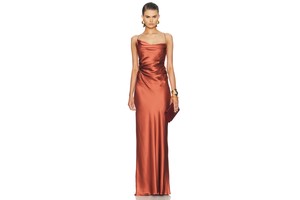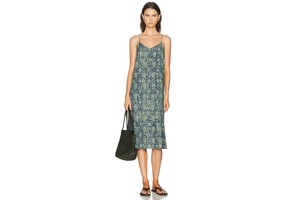
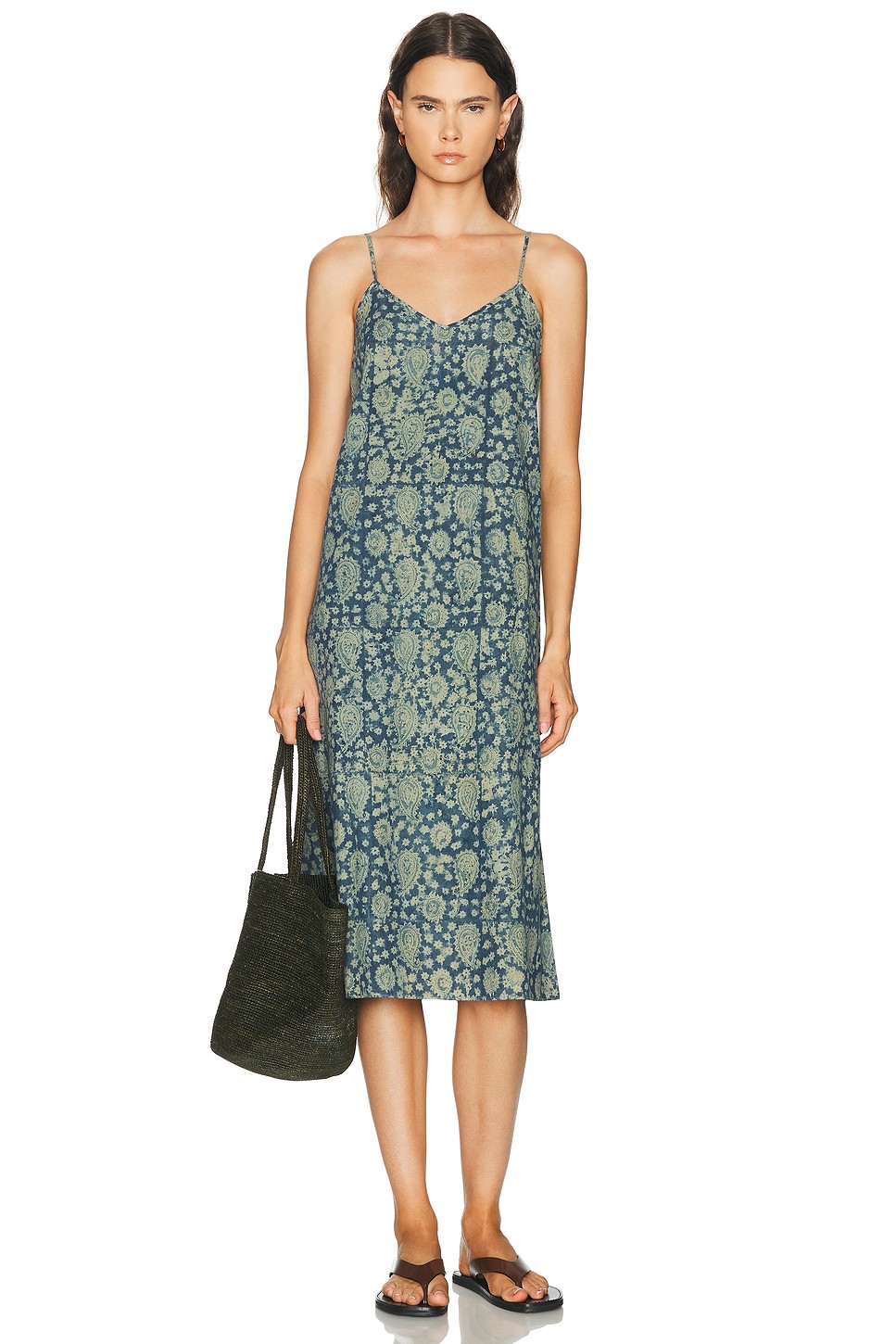
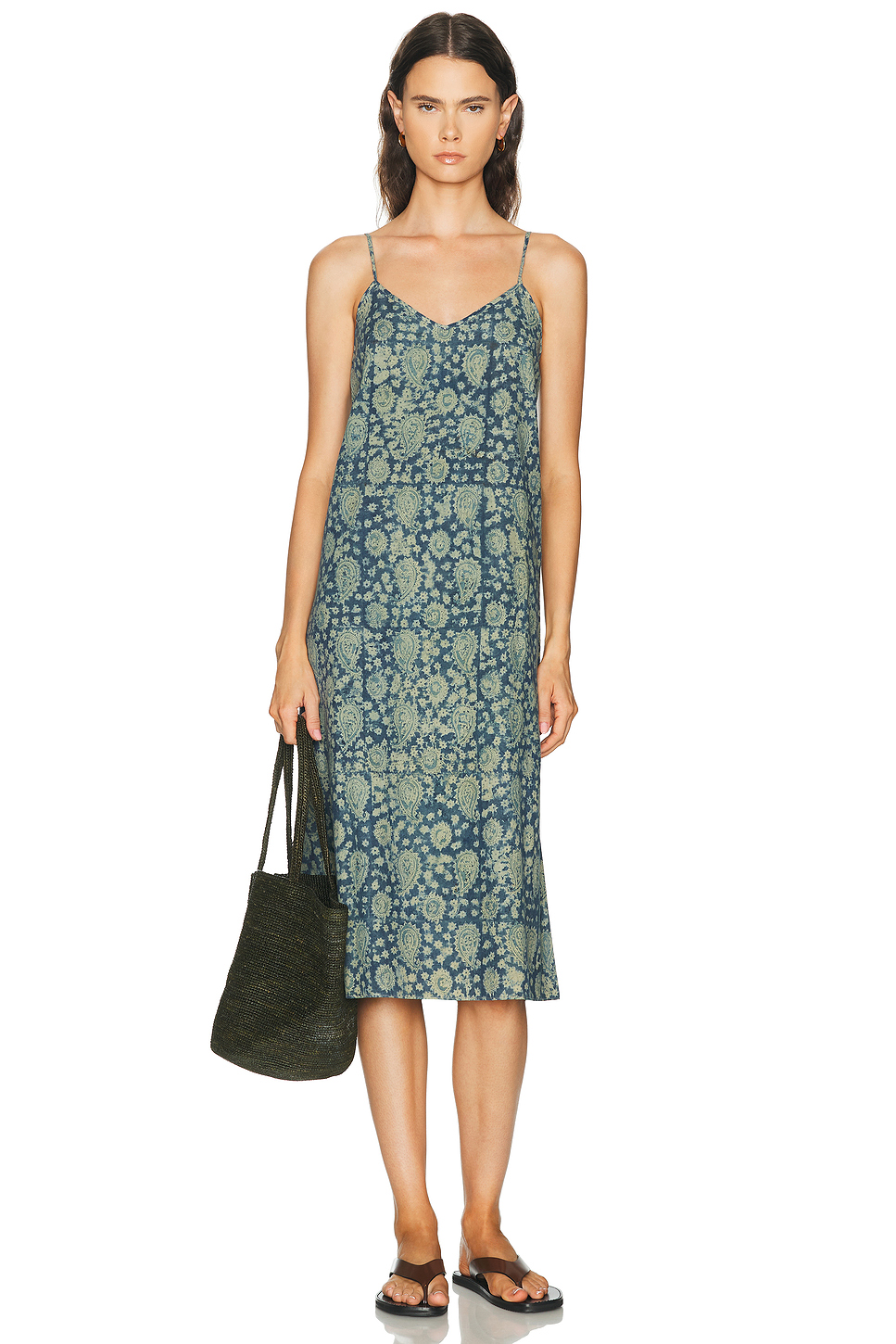
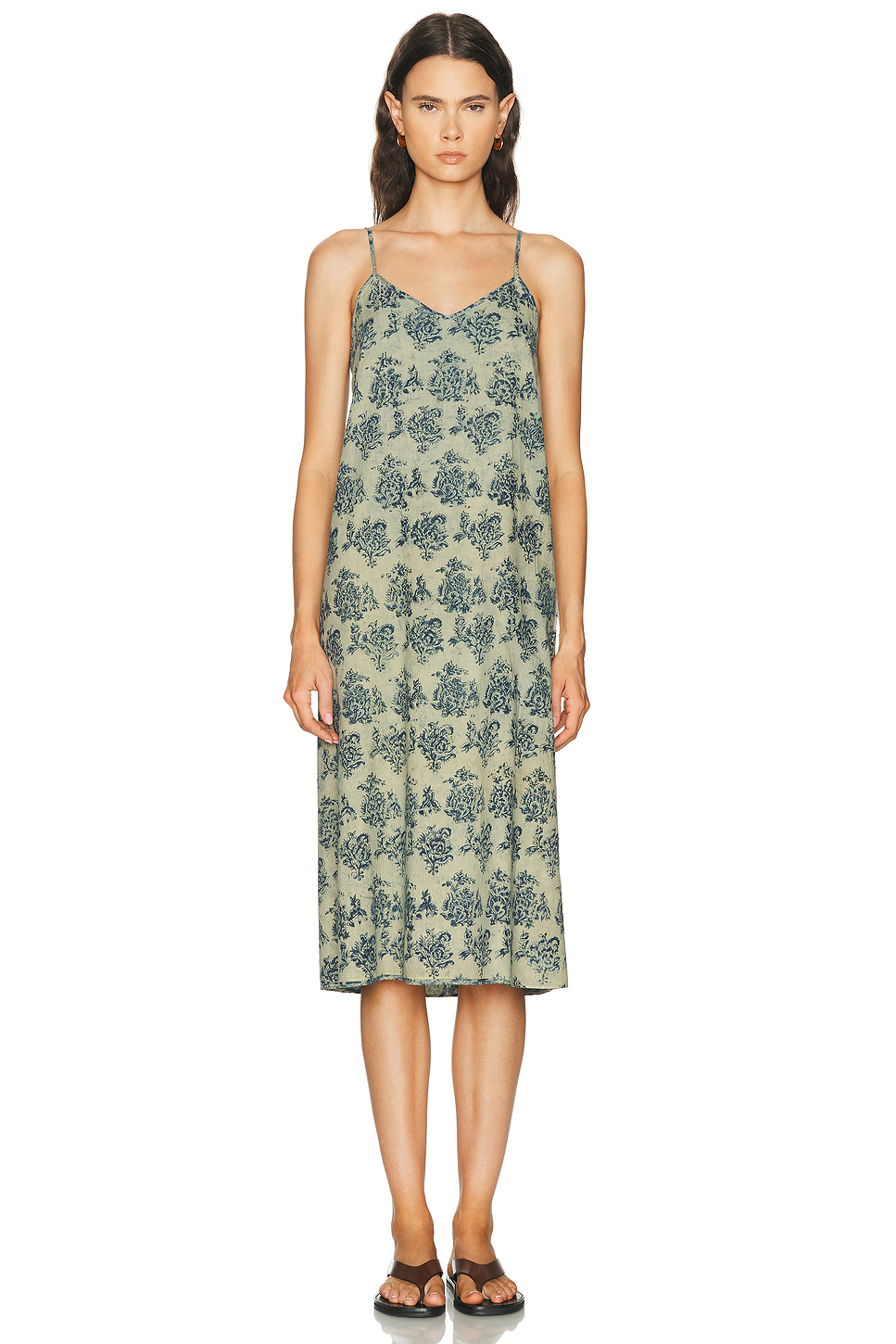
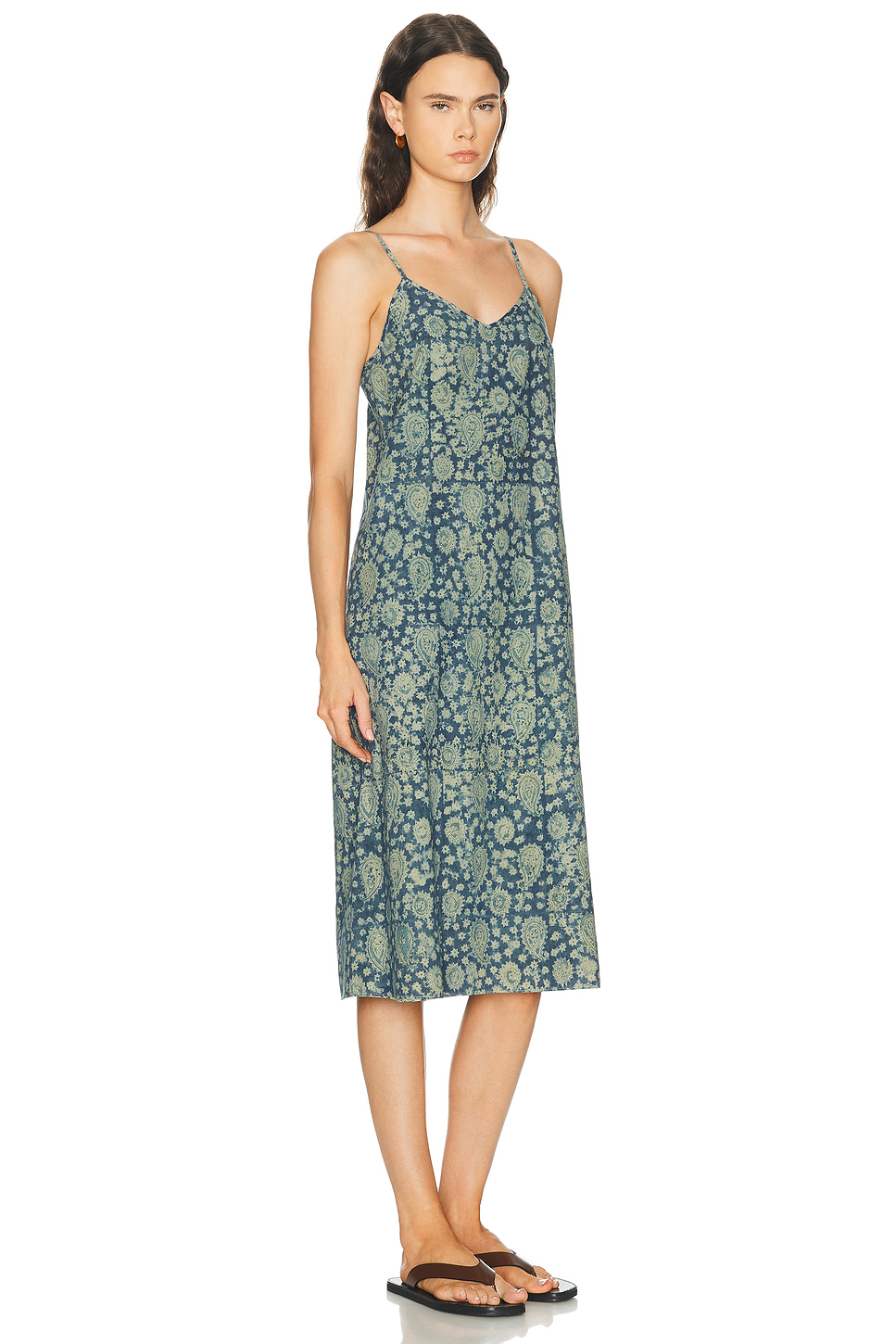
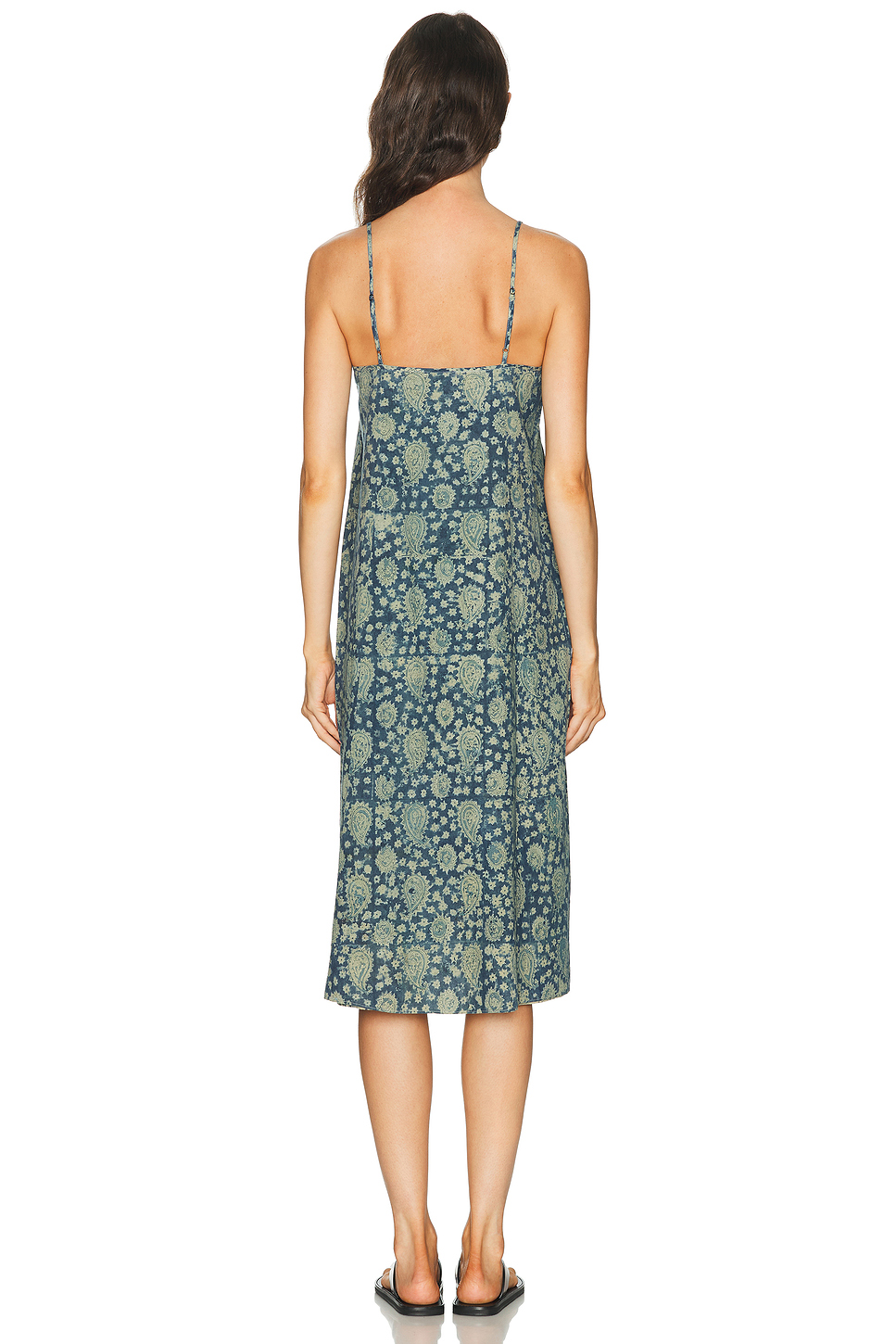
A slip dress listed as 100% cotton, fully lined, pull-on with no zip, with adjustable straps and a reversible construction, machine wash, made in India, ranked eighteenth in the retailer's slip dress list, at 506 dollars. There are no reviews and no fit votes, so there is no score to quote. This is the first reversible garment in this series, and reversibility has consequences that are not obvious until you think about where the seams go. There is also a lesson here about the order in which a size chart should be read, and a cutting method that would explain a figure on the chart if this garment uses it. The reference is the Reversible Slip Dress by R13 in Blue. Dongguan Bafinasa Garments Co., Ltd. develops comparable slip dresses on OEM and ODM terms, from fabric sourcing to retail or FBA ready packing. We publish this as a development reference and build your own version of it, and we do not supply the branded original or reproduce anyone else's label.
Key Features
- 100% cotton as stated
- Reversible construction as stated
- Fully lined as stated
- Adjustable straps as stated
- Pullover with no zip as stated
- Machine wash as stated
- Made in India as stated
- Ranked eighteenth in the retailer's slip dress list
Customisable Options
- Fabric: cotton as the reference, in two layers that are both face cloth, which is what reversible requires
- Seams: we would specify enclosed seams throughout, for the reason set out below
- Labels: we would use a removable or concealed label, since a reversible garment has no inside
- Straps: adjustable as the reference, which is the best answer to the length question
- Length from mini to maxi, strap width, size set, colour development, private label and care labelling
Specifications
| Style | Reversible cotton slip dress |
| Reference | R13, Reversible Slip Dress, style R13-WD118, manufacturer style R13WR629-R831B, colour Blue |
| Composition | 100% cotton as stated |
| Construction | Reversible as stated, which changes what the lining is and how the seams must be made. See the note below |
| Straps | Adjustable straps as stated |
| Closure | Pullover with no zip as stated |
| Lining | Fully lined as stated, though on a reversible garment both layers are face cloth |
| Care | Machine wash as stated, which means pre-shrinking before cutting is required |
| Sizes Published | XS, S, M, L |
| Measurements Published | XS: bust 31 in, waist 34 in, hips 40 in, length 46 in |
| Chart Note | The published size does not match the size the model wears. See the note below |
| Model | 182 cm, wearing size S, bust 86 cm, waist 58 cm, hips 91 cm |
| Production | Made in India as stated |
| Reference Retail | 506 USD, quoted to show the price band this sits in, not as our price |
| Customer Reviews | None on the reference listing, so we quote no score |
| Best Seller Badge | Rank 18 in the retailer's slip dress list, which is a good position |
| Categories | Filed by the retailer under both midi dresses and slip dresses |
| Occasion | Daytime, layering, weekends, warm weather |
| MOQ | 100 pcs per style per colourway, mixed sizes and colourways accepted |
| Sampling | 7-10 days after tech pack or reference sample confirmation |
| Bulk Lead Time | 20-30 days after sample approval and deposit |
| Service | OEM / ODM / private label, cotton sourcing, reversible construction, retail or FBA ready packing |
Size Chart
| Size | Bust | Waist | Hips | Length | Source | ||||||||||||
|---|---|---|---|---|---|---|---|---|---|---|---|---|---|---|---|---|---|
| XS | 31 | in | 34 | in | 40 | in | 46 | in / | 117 | cm | As published | ||||||
| XS | 31 | in / | 79 | cm | 24 | in / | 61 | cm | 34 | in / | 86 | cm | 117 | cm / | 46.1 | in | Our proposal |
| S | 33 | in / | 84 | cm | 26 | in / | 66 | cm | 36 | in / | 91 | cm | 119 | cm / | 46.9 | in | Our proposal |
| M | 35 | in / | 89 | cm | 28 | in / | 71 | cm | 38 | in / | 97 | cm | 121 | cm / | 47.6 | in | Our proposal |
| L | 37 | in / | 94 | cm | 30 | in / | 76 | cm | 40 | in / | 102 | cm | 123 | cm / | 48.4 | in | Our proposal |
The measurements are published for size XS, while the model is wearing size S. That mismatch is the first thing to check on any chart and it means these figures cannot be compared with the model directly. It is also worth noting that the waist, at 34 inches, is larger than the bust, at 31, which is the shape of a slip rather than an error.
Occasions and Styling
Suits daytime, layering, weekends and warm weather. A reversible slip is two garments in one, which is worth saying plainly since it is the main reason to buy it, and it should be photographed on both sides.
Production and Quality Control
There are no reviews and no fit votes on this listing, so there is no score to quote. There is a reversible construction here with consequences that are not immediately visible, a mismatch on the chart that shows the order in which to read one, and a cutting method that may explain a figure on it.
A reversible garment has no inside, and that changes what the lining is and how it is sewn, and that is the first thing. Reversible means both faces are intended to be worn outward, and once that is true the ordinary vocabulary stops working. There is no lining in the usual sense, because a lining is the layer nobody sees and here both layers are seen. So what the composition describes as a lining is better understood as a second face cloth, and it has to be finished to the same standard as the first. The immediate consequence is at the seams. On a normal lined garment the raw edges of the seam allowance are hidden between the shell and the lining, where nobody sees them. On a reversible garment there is no between: both sides are exposed, so there is nowhere for a raw edge to go. Every seam has to be enclosed, which in practice means either a French seam, where the allowance is folded back inside itself so that no raw edge exists on either face, or a bound seam, where a separate strip covers it. Both are more work than the plain seam a lined garment can use, and both are also stronger, which is worth noting because it means the extra cost of making a reversible garment buys something rather than merely being absorbed. That is the useful thing to understand about reversibility commercially: it uses roughly twice the cloth, but it does not cost twice as much to make, because the design, the pattern, the cutting and the shipping are all shared. So it is closer to one and a half times the cost than two, and it gives the customer two garments. There is one more practical detail that is easy to miss: a reversible garment cannot have a care label sewn into an inside, because there is no inside. It needs either a removable label or one printed somewhere unobtrusive, and it is worth deciding that early rather than discovering it at packing.
Check that the size measured is the size modelled before anything else, and that is the second thing. The chart is published for size XS and the model is wearing size S. That is a small thing and it invalidates the comparison, because the whole method we have used throughout this series is to read the published measurements against the measurements of the person wearing them, and to ask what on the garment accounts for the difference. That only works if both sets of numbers refer to the same size. Here they do not, and it is worth stating as a rule because it is the first check to make on any chart and it takes a second: confirm that the size in the chart is the size in the photograph. If it is not, the apparent ease is partly an artefact of grading, and the honest response is to measure the size that was photographed. Look at what happens if you read this chart as though it did match. The bust is 31 inches against a model at roughly 34, which is three inches under, and there is no elastane in this cloth at all. We have been consistent about that combination: a measurement under the body needs a mechanism, and we have collected them across this series, knit structure being the commonest, elastane being another, and bias cutting being a third. Bias cutting is the one that applies to a slip dress, because cutting a woven cloth on the diagonal puts the yarns at forty five degrees to the direction of pull, and a woven structure that resists being pulled along its yarns will give considerably when pulled diagonally across them. It is a way of buying stretch out of a cloth that has none, and it is traditional for this garment. The cost of it is real, though, and worth knowing: cutting on the bias wastes more cloth than cutting straight, because diagonal pattern pieces do not nest efficiently, and a bias cut garment also has a tendency to twist, because the diagonal hangs in a slight spiral. The remedy for that is a process rather than a material, which is to hang the garment for a day or two before the hem is sewn so the cloth settles into the shape it will keep. We would want to know whether this garment is bias cut before drawing any conclusion from the 31 inches.
Adjustable straps are the best available answer to the length problem, and the waist being larger than the bust is not an error, and that is the third thing. We have returned to the question of length repeatedly in this series and the recommendation has been consistent: publish the measurement and publish the height of the model it was taken on, because a length in inches tells a customer nothing about where a hem will fall on her. Adjustable straps solve it differently and better, because they let the wearer set the garment to her own height rather than asking her to calculate where somebody else's falls. It is worth designing for deliberately rather than treating as a standard detail, and it also makes a garment forgiving in a way that reduces returns. On the shape, the chart gives the bust at 31, the waist at 34 and the hip at 40, so the garment gets wider from top to bottom in a straight progression. We have seen the flat version of this before, where the bust and the waist were published as the same figure and we concluded from it that a garment which measures the same in both places cannot have any waist suppression, and we have since found that pattern four times and stated it as a rule. This is the opposite arrangement and it says something just as clearly: the garment is cut as a slight A, widening toward the hem. That is the traditional shape of a slip, which hangs from the shoulders rather than being fitted to the waist, and it is worth saying on the page because a customer expecting shaping will read those numbers as a fault. One last point on the care: this is 100% cotton and machine wash, which means it must be pre-shrunk before cutting, and it matters more here than usual, because if the garment is bias cut the distortion from shrinkage shows up as twist rather than merely as a shorter length. Every bulk shipment gets a measurement report against your approved chart.
Optional upgrades include enclosed seams throughout, which reversible construction requires, a removable or concealed care label, the straps kept adjustable and specified with a slider that looks right from both sides, pre-shrinking before cutting and especially important if bias cut, hanging before hemming if bias cut, the size measured matching the size modelled, alternative strap widths, alternative lengths, extended sizing, colour development and private label, hangtag and care labelling.
Pre-production sample approval, in-line inspection during cutting and sewing, and a final AQL inspection before packing, with measurement reports and photos shared before shipment.
Send us your tech pack, a photo or a reference garment and we will quote within 24 hours. Contact bafinasa@bafinasa.com or WhatsApp +86 13827222469.