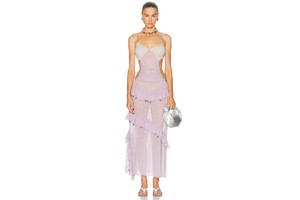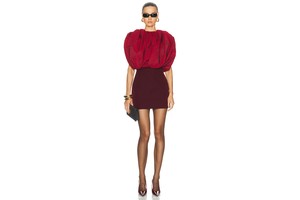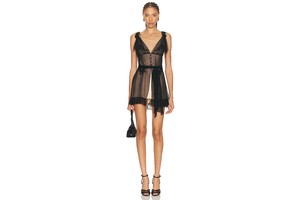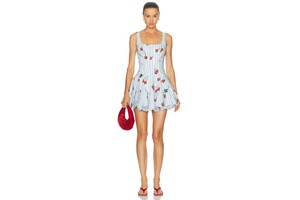
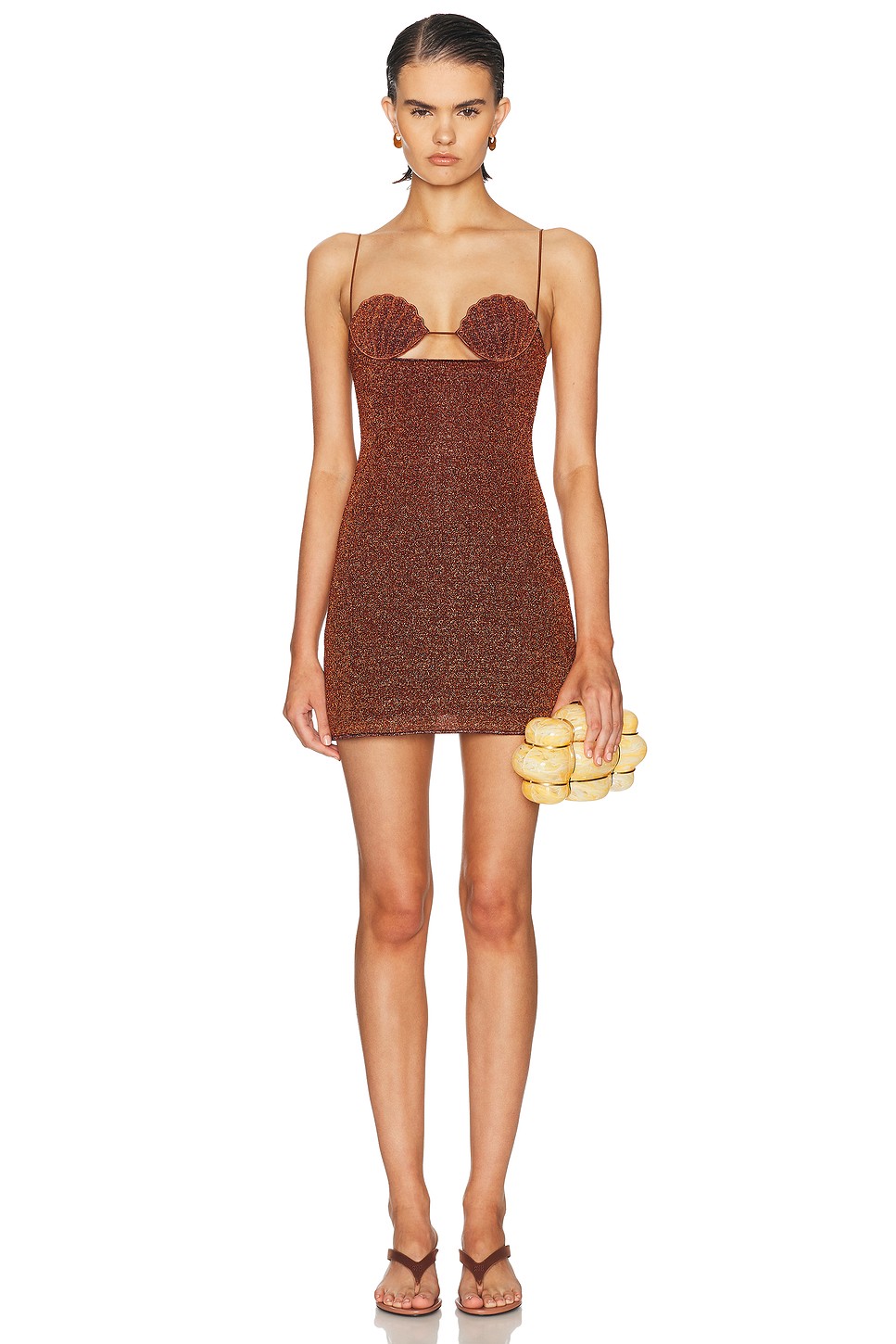
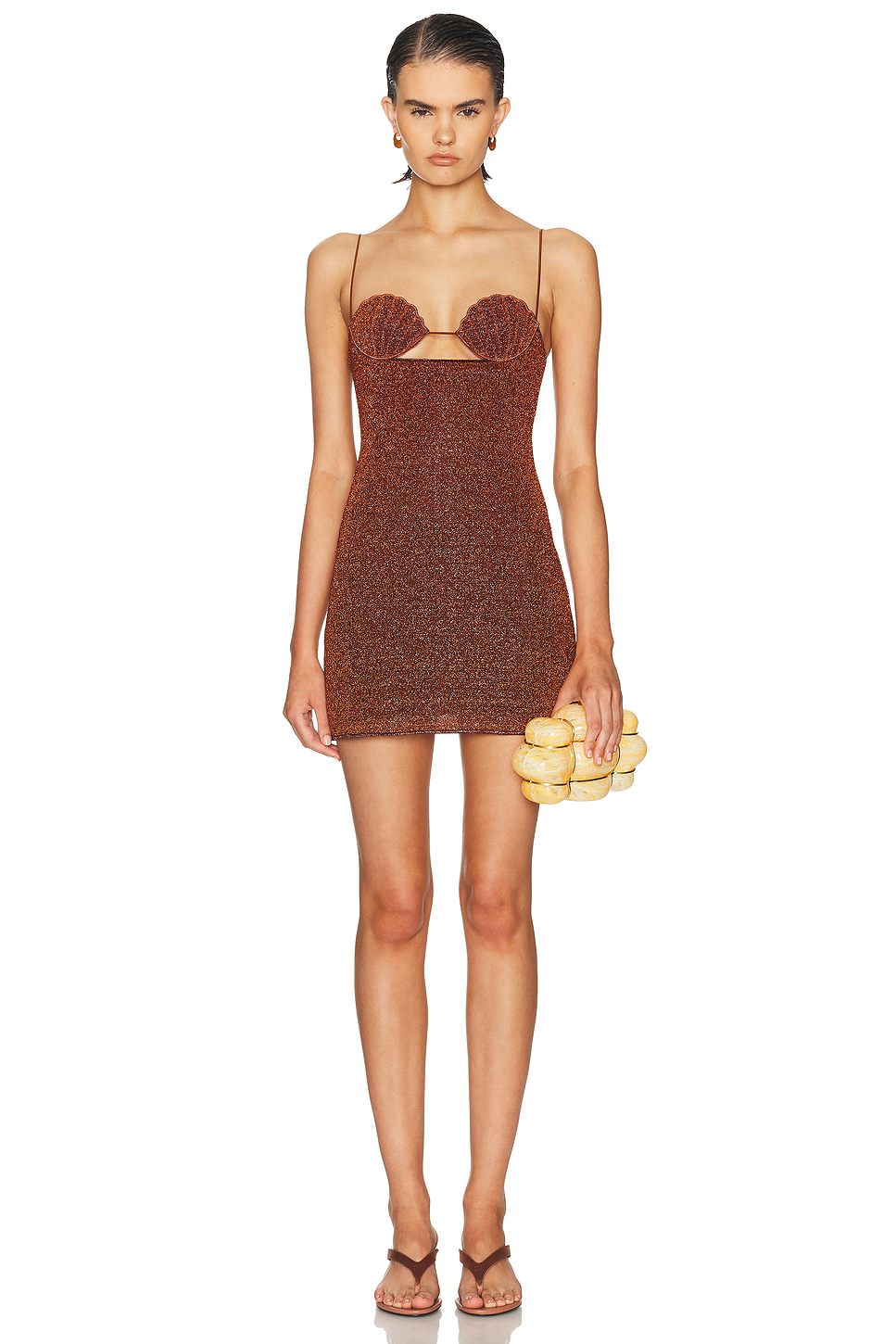
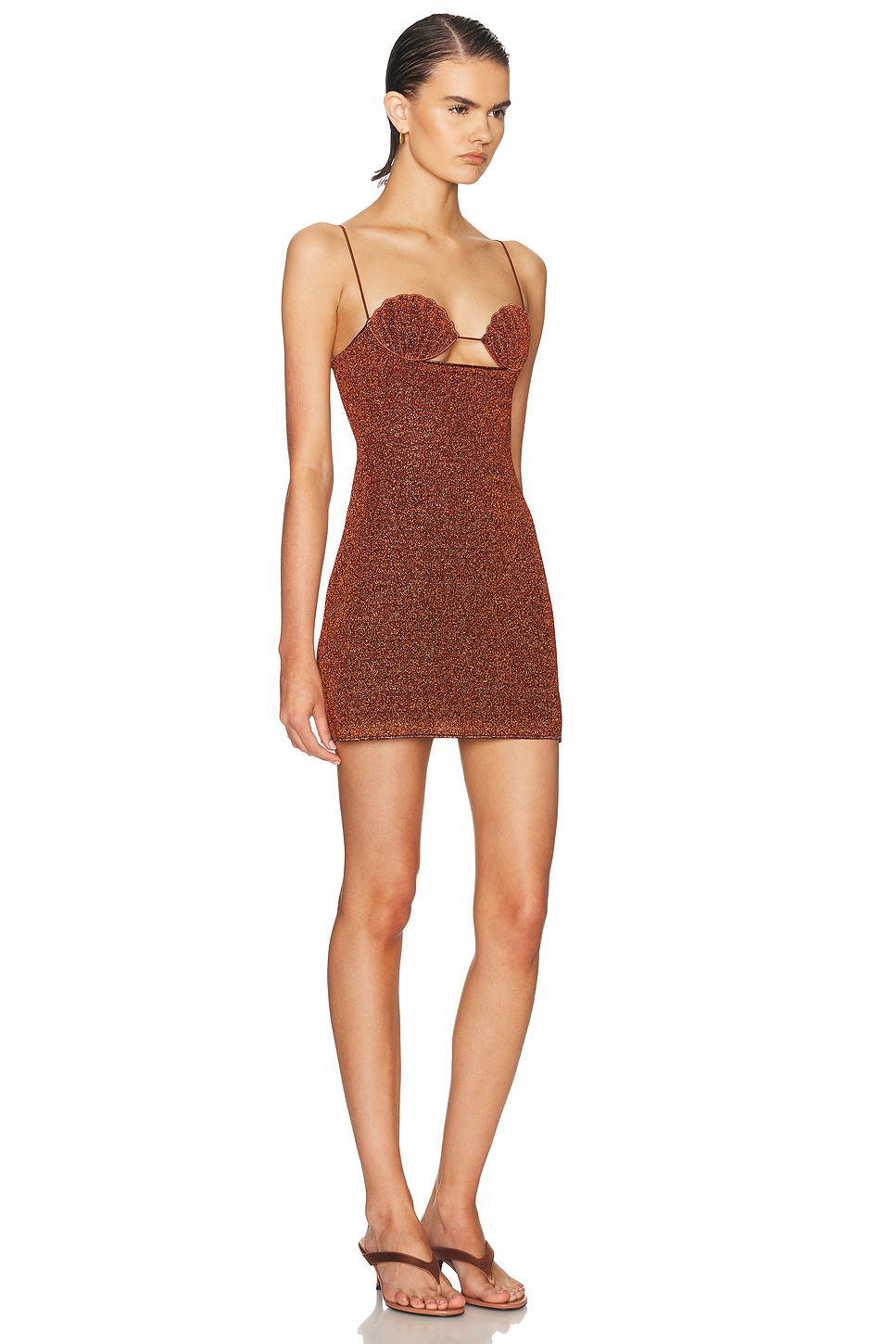
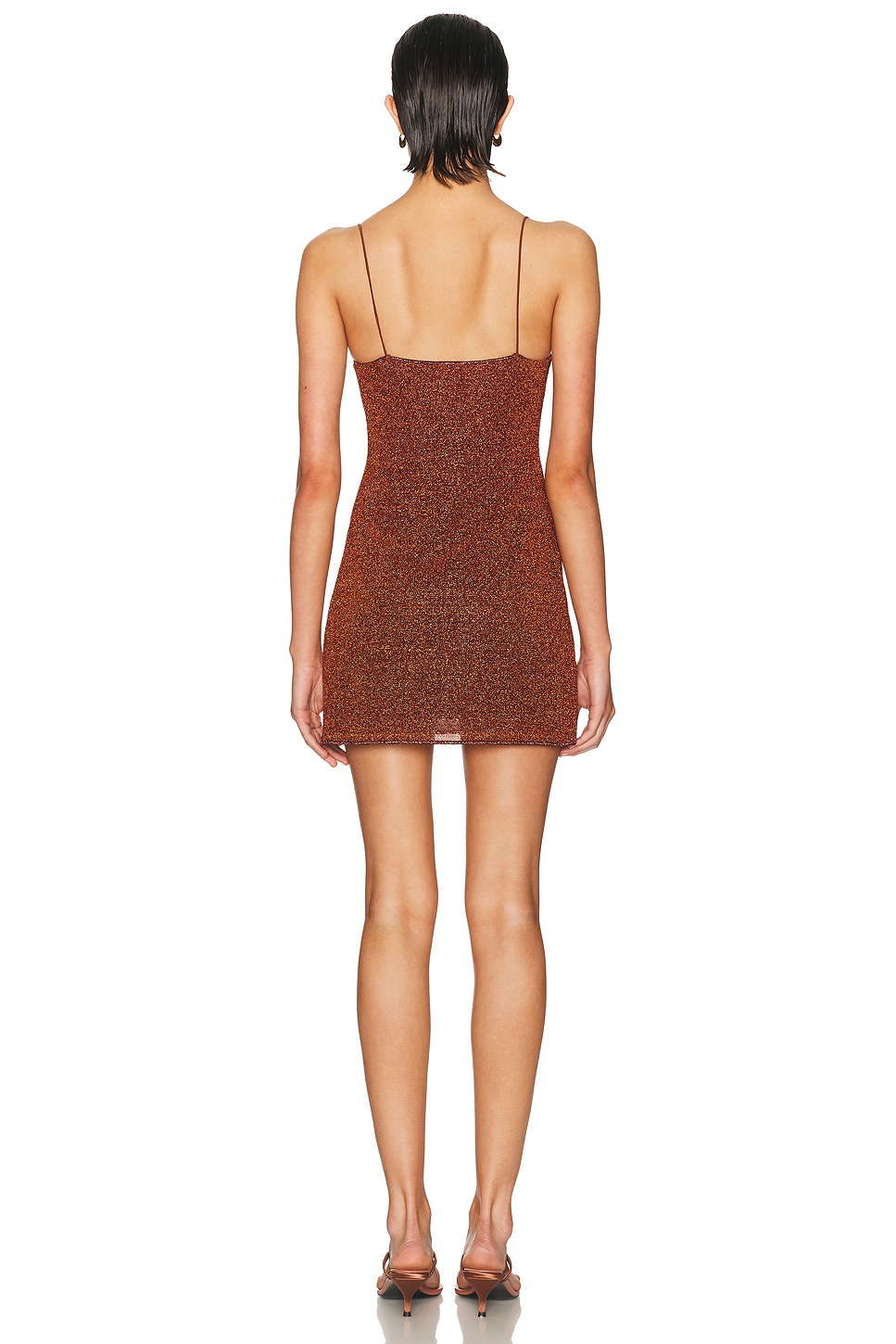
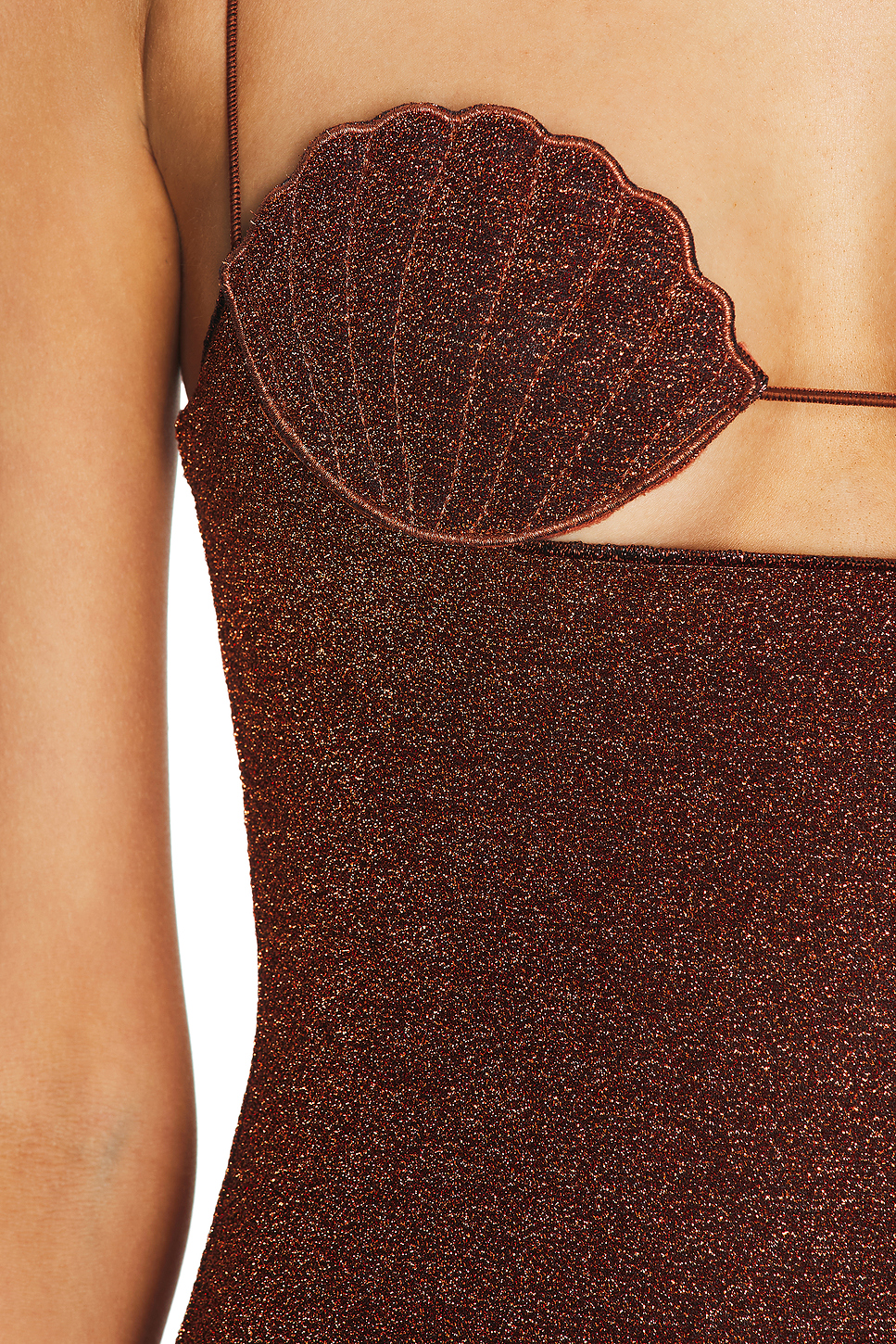
A mini dress listed with a self of 64% polyamide and 36% metallic fibre alongside a lining of 80% polyamide and 20% elastane, hand wash, fully lined, with a pull on construction and padded cups, in a metallic knit, made in Italy, ranked seventy ninth in the retailer's bustier dress list, at 439 dollars. There are no reviews and no fit votes, so there is no score to quote. This is the first metallic fibre encountered here, and at thirty six per cent it is not trim but a principal component, which changes what has to be true of everything around it. Three separate things also combine to explain one of the largest negative ease figures met anywhere, and this is the first time this series has had three at once. The reference is the Lumiere Shell Dress by Oseree in Brown. Dongguan Bafinasa Garments Co., Ltd. develops comparable metallic knit dresses on OEM and ODM terms, from yarn selection and lining matching to retail or FBA ready packing. We publish this as a development reference and build your own version of it, and we do not supply the branded original or reproduce anyone else's label.
Key Features
- Self in 64% polyamide and 36% metallic fibre as stated, the first metallic encountered here. See the note below
- Lining in 80% polyamide and 20% elastane as stated, which behaves quite differently from the self. See the note below
- Both layers given to exact totals, which is unusual enough to be worth crediting
- Padded cups as stated, and this explains the bust figure directly. See the note below
- Pull on construction as stated, with no opening anywhere
- Metallic knit as stated, and hand wash as stated. See the note below
- Fully lined as stated
- Measurements published for size S, with bust 25 in and length 28.5 in. See the note below
Customisable Options
- Fabric: metallic knit to the reference, with metallic construction type specified, since bonded film and wrapped yarn behave differently
- Padding: moulded cups to the reference, offered padded and unpadded since it changes the bust measurement substantially
- Lining: power mesh to the reference, offered in several weights since it does the shaping work here
- Care: hand wash to the reference, plus drying and pressing limits, since metallic fibre is most at risk in both
- Length from micro to knee, colour and lustre development, size set, private label and care labelling
Specifications
| Style | Metallic knit lined mini dress |
| Reference | Oseree, Lumiere Shell Dress, style OSEF-WD51, manufacturer style LJF257, colour Brown |
| Self | 64% polyamide, 36% metallic fibre as stated. See the note below |
| Lining | 80% polyamide, 20% elastane as stated. See the note below |
| Fabric | Metallic knit as stated. See the note below |
| Structure | Padded cups as stated. See the note below |
| Lining Coverage | Fully lined as stated |
| Construction | Pull on as stated. See the note below |
| Care | Hand wash as stated. See the note below, since metallic fibre is most at risk afterwards |
| Sizes Published | S, M and L, three consecutive sizes |
| Measurements Published | S: bust 25 in, waist 26 in, hips 34 in, length 28.5 in. See the note below |
| Chart Note | The bust sits about eight inches under the model, and three stated things together account for it. See the note below |
| Coverage | Only size S has figures. M and L are blank |
| Model | 178 cm, bust 84 cm, waist 62 cm, hips 89 cm, wearing size S |
| Production | Made in Italy as stated |
| Reference Retail | 439 USD, quoted to show the price band this sits in, not as our price |
| Customer Reviews | None on the reference listing, so we quote no score |
| Best Seller Badge | Rank 79 in the retailer's bustier dress list |
| Categories | Filed by the retailer under bodycon dresses and mini dresses, while the badge records it under bustier |
| Occasion | Parties, evenings, occasions, celebrations |
| MOQ | 100 pcs per style per colourway, mixed sizes and colourways accepted |
| Sampling | 7-10 days after tech pack or reference sample confirmation |
| Bulk Lead Time | 20-30 days after sample approval and deposit |
| Service | OEM / ODM / private label, metallic yarn selection, lining matching, retail or FBA ready packing |
Size Chart
| Size | Bust | Waist | Hips | Length | Source | ||||||||||||
|---|---|---|---|---|---|---|---|---|---|---|---|---|---|---|---|---|---|
| S | 25 | in | 26 | in | 34 | in | 28.5 | in / | 72 | cm | As published | ||||||
| S | 33 | in / | 84 | cm | 26 | in / | 66 | cm | 36 | in / | 91 | cm | 72 | cm / | 28.3 | in | Our proposal |
| M | 35 | in / | 89 | cm | 28 | in / | 71 | cm | 38 | in / | 97 | cm | 74 | cm / | 29.1 | in | Our proposal |
| L | 37 | in / | 94 | cm | 30 | in / | 76 | cm | 40 | in / | 102 | cm | 76 | cm / | 29.9 | in | Our proposal |
| XL | 39 | in / | 99 | cm | 32 | in / | 81 | cm | 42 | in / | 107 | cm | 78 | cm / | 30.7 | in | Our proposal |
The published size S gives bust 25 in, waist 26 in, hips 34 in and length 28.5 in against a model at roughly 33, 24 and 35. The bust sits around eight inches under her, which is among the largest shortfalls met anywhere here, and three things stated on this page account for it between them.
Occasions and Styling
Suits parties, evenings, occasions and celebrations. Metallic knit catches light and the moulded cups mean there is nothing further to arrange underneath, so it is a garment to put on rather than to assemble.
Production and Quality Control
There are no reviews and no fit votes on this listing, so we quote no score. This is the first metallic fibre encountered here, and at thirty six per cent it is a principal component rather than trim, which changes what has to be true of everything around it. Three things also combine to explain one of the largest negative ease figures met anywhere, and this is the first time there have been three at once.
Thirty six per cent metallic, and why it is not trim, and that is the first thing. The self is sixty four per cent polyamide and thirty six per cent metallic fibre. To be clear about what that means: metallic fibre is typically a thin strip of aluminium vapour deposited onto a plastic film and cut into slivers, or occasionally a metal filament wrapped around a core yarn, and either way what is being introduced is a material with none of the behaviour of a textile fibre. It does not absorb moisture, it does not have meaningful elasticity, it does not recover from bending in the way a fibre does, and its surface is what carries the effect. Now, thirty six per cent. This series has grown used to treating unusual components as traces, since small percentages like those used for the elastane met throughout are numerous enough to establish a category of their own. Thirty six is not that. This is more than a third of the cloth being something with the characteristics just described, and it means several specific things rather than adding decoration. It means the surface will crease rather than recover, because repeated bending at the same point fatigues a metal coating into microfractures, and once that has happened it cannot be repaired, only hidden, so a crease across this garment is permanent in a way creases elsewhere are not. It means there is little stretch available in the outer cloth, since over a third of it will not extend, and the rate at which any fabric can stretch is governed by its least extensible component rather than by its average. It means care has to account for a metal surface, since coatings of this kind can dull or discolour, and heat concentrates those effects considerably. So the instruction given here, which is hand wash, is correct but incomplete, and the gap is worth naming exactly, since this series has found repeatedly that these listings state washing and stay silent about what follows. What follows here is where metallic is most at risk. Hand washing protects the surface from agitation, but the two things most likely to damage this are neither washing nor agitation: they are wringing, which creates sharp creases at random points and does the fatigue just described in a single action, and heat, whether from pressing directly or from a tumble dryer, since heat both dulls the coating and can soften the plastic carrier beneath it. So the missing sentences concern what not to do afterwards, and this series has found this shape of omission repeatedly, most sharply on a construction met recently where the instruction was adequate for washing and silent about the stage where things actually go wrong. Two sentences would cover it, and neither is exotic.
Twenty per cent against thirty six, and a lining doing opposite work, and that is the second thing. The lining here is eighty per cent polyamide and twenty per cent elastane. Note first that both layers are given to exact totals, since sixty four and thirty six make a hundred and eighty and twenty make a hundred, which this series has come to appreciate given how frequently small amounts go unaccounted for elsewhere. Now compare the two compositions against each other, because they are doing opposite jobs. The outer carries thirty six per cent of something which will not extend at all. The lining carries twenty per cent of something which extends a great deal, and by the threshold established throughout this series, toward one fifth is where elastane begins genuinely compressing rather than merely recovering. So the shaping layer of this garment is the lining, not the cloth anybody sees, and that is worth stating because it is how this kind of garment actually works and rarely how it is described. It is also the inversion of a garment examined within the last two batches, where the stretchy component was the visible one and the structured cloth sat elsewhere, and where the consequence was that a fastening had to be specified against its stiffest inch. Here the consequences run differently, and looking at how is instructive. What has happened is that two layers attached to each other have been built with quite different ideas about how much they give. This series has stressed across many examinations that what matters about layers is how they behave together rather than how either behaves alone, having met pairings at both extremes recently, one sharing nothing and thus having two unrelated failure modes sharing one fate, another from the same family and moving in proportion so nothing strained. This pairing is a third arrangement: two layers made to genuinely disagree about movement, deliberately, so that one holds shape while the other follows the body. Get the balance right and the result is a garment which fits closely without the visible cloth needing to stretch, since the work happens underneath. Get it wrong and the two separate around the edges, which shows as bubbling or rippling across the surface, and is not repairable. The distinction worth carrying is that this is engineered rather than accidental, and thus belongs in the category of things done deliberately rather than merely tolerated.
Padding plus knit plus twenty per cent, three at once, and that is the third thing. The published bust is twenty five inches against a model at approximately thirty three, so about eight inches below her, which is among the largest shortfalls encountered anywhere in this series. This series has been assembling the mechanisms by which a garment fits a body smaller than its own measurements, having built up five across many examinations and added a sixth very recently. This garment has three of them present simultaneously, which has not happened before, and the reason it is worth setting out is that they are not three of a kind. The padded cups account for the bulk of it, and deserve being stated first because they work by a principle none of the others shares. This series noted recently that padding is the sixth mechanism and belongs apart from the other five, since those all work by material moving while this works by nothing moving at all. A moulded cup has risen out of flat before anybody measures anything, because it is three-dimensional, and a bust measurement is taken flat across a garment laid down, so it systematically under-reports what the cup can contain. Around two inches of the difference here is explained by nothing more than how a number was taken. Then knit. Metallic knit is built from loops, and loops open under load, which this series has repeatedly recorded as the commonest explanation of all and the one permitting the largest shortfall, though it is worth noting the qualification that thirty six per cent of this cloth will not extend, so the amount of movement available here is less than knit alone would suggest. Then the lining, which carries twenty per cent elastane at the point where elastane begins to compress, and this is what holds the result in place rather than merely allowing it to happen. The interesting point is not the tally but what it says about reading numbers. Somebody assuming one mechanism was doing all of this would badly misjudge each one's contribution, which this series has said before about cases needing two and is worth restating here now there are three, because the error compounds. Recent negative ease findings have needed elaborate arrangements to explain, one requiring two mechanisms stacked, while this needed three stated things none of which were hidden. The general lesson emerging is now reasonably firm and worth keeping in this form: before reaching for an elaborate explanation of an unaccountable measurement, look for stated elements which either move or distort how numbers get taken, since seven times out of ten these pages have already said what accounts for it. There is a last thing about the categories, small but consistent with what has been observed lately. Three different schemes say three different things about this garment, recording it as bodycon, as mini, and under bustier, and two of those are checkable against the page while one is not. Bodycon is corroborated by the twenty per cent elastane in the lining, since shaping work of that kind is what makes that claim true. Mini sits against twenty eight and a half inches, which is shortest of anything examined here and sits comfortably within whatever this word covers. Bustier is consistent with the padded cups. Every bulk shipment gets a measurement report against your approved chart.
Optional upgrades include adding what must not happen after washing, since wringing creases metallic permanently and heat dulls it, and neither is covered by the instruction given, specifying the metallic construction type, since bonded film and wrapped yarn behave quite differently under exactly those two conditions, publishing measurements for M and L, since one of three repeats the pattern throughout, offering padded and unpadded versions for the same structure, since around two inches of the bust figure is explained by nothing beyond how numbers get taken, balancing lining stretch against outer stretch deliberately rather than inheriting twenty per cent because it was the previous figure, testing that balance rather than assuming it, since two layers built to disagree about movement is engineered rather than accidental, extending the size range beyond three sizes, length options rather than twenty eight and a half inches alone, colour and lustre development tested for how long the surface holds, private label, hangtag and care labelling.
Pre-production sample approval, in-line inspection during cutting and sewing, and a final AQL inspection before packing, with measurement reports and photos shared before shipment.
Send us your tech pack, a photo or a reference garment and we will quote within 24 hours. Contact bafinasa@bafinasa.com or WhatsApp +86 13827222469.