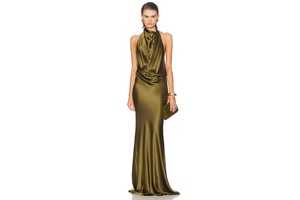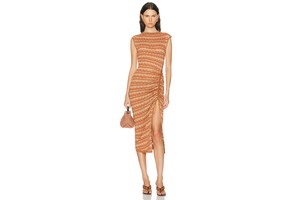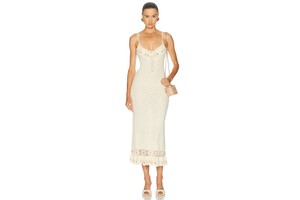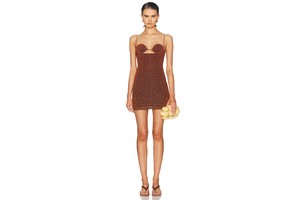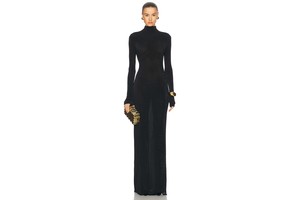
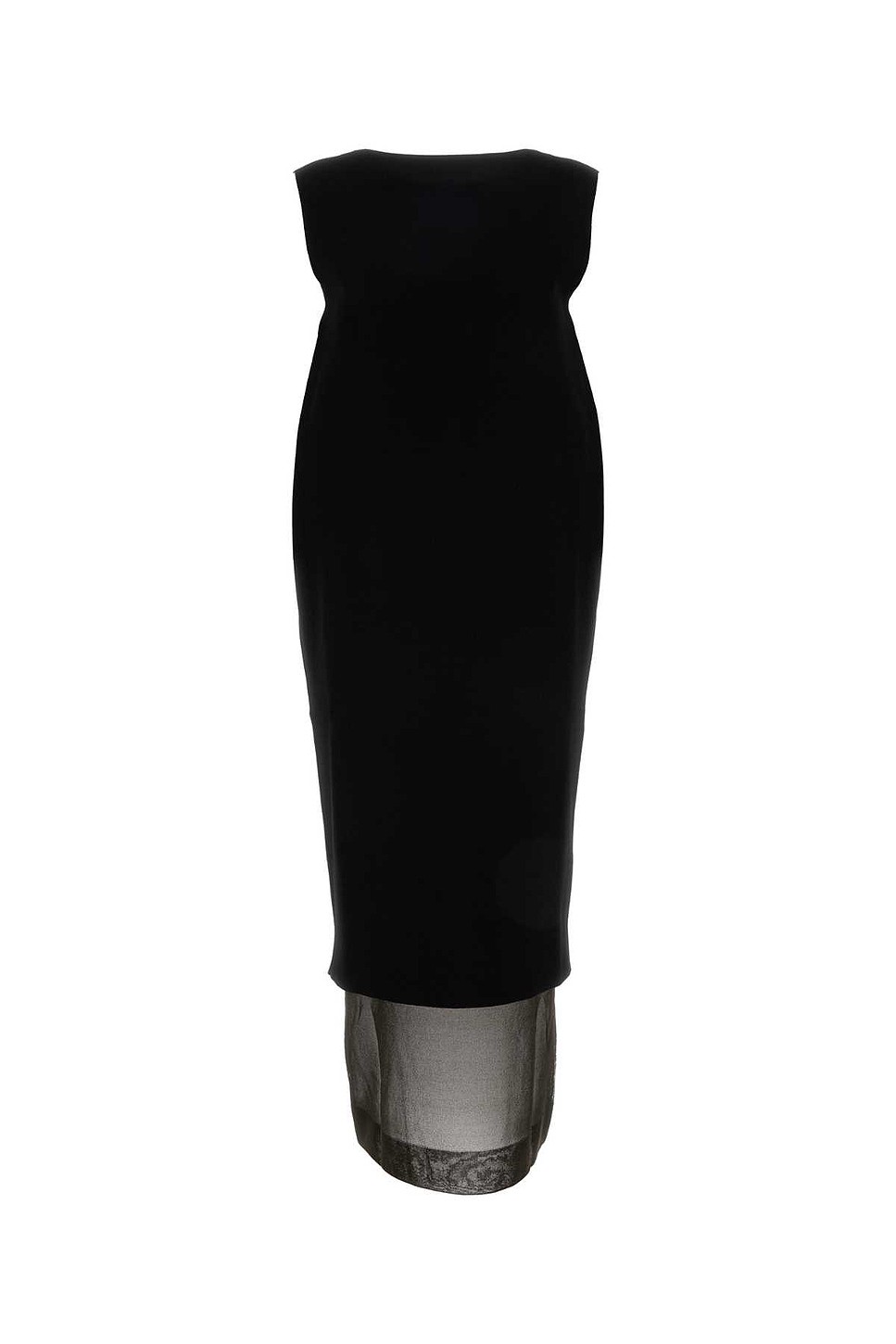
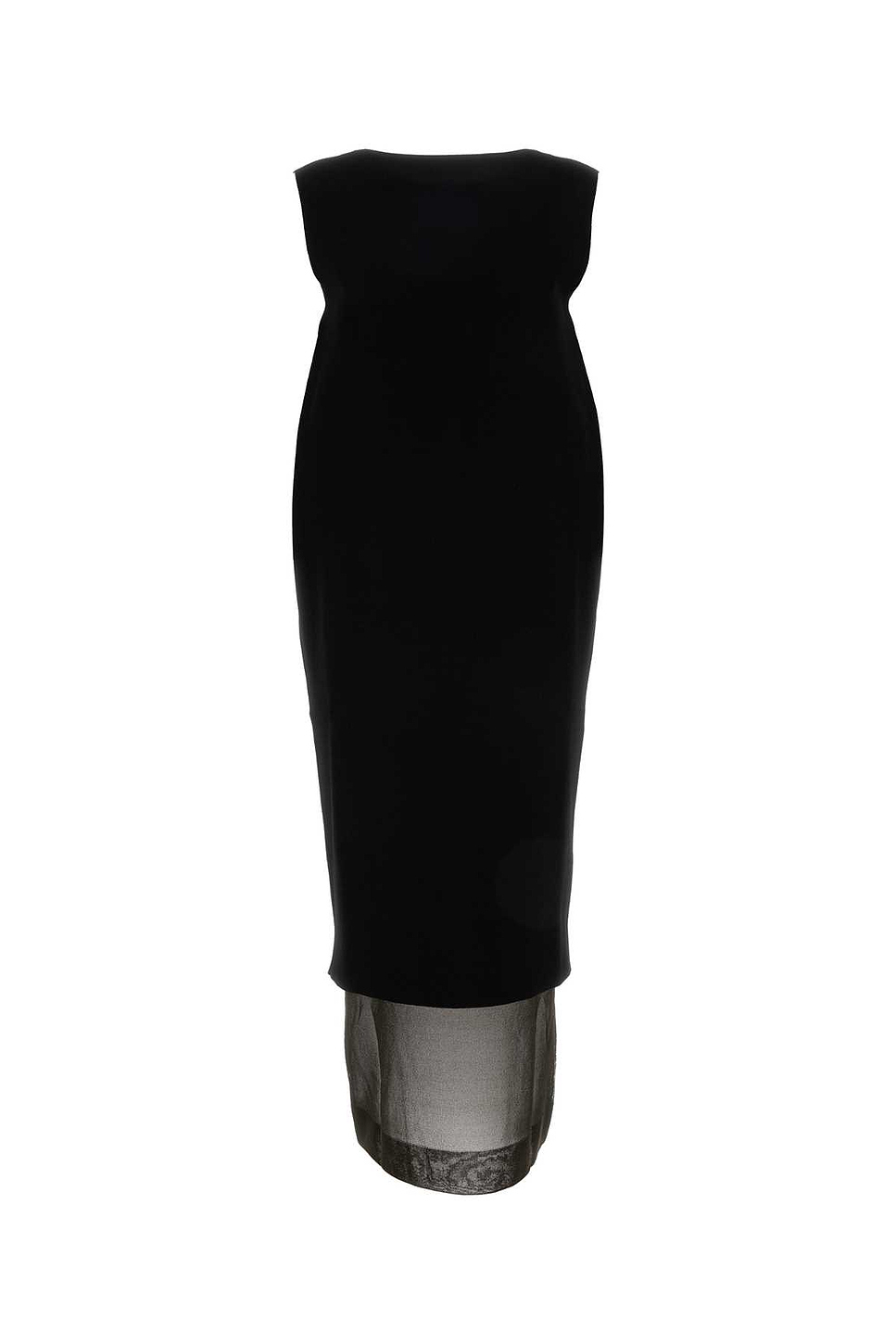
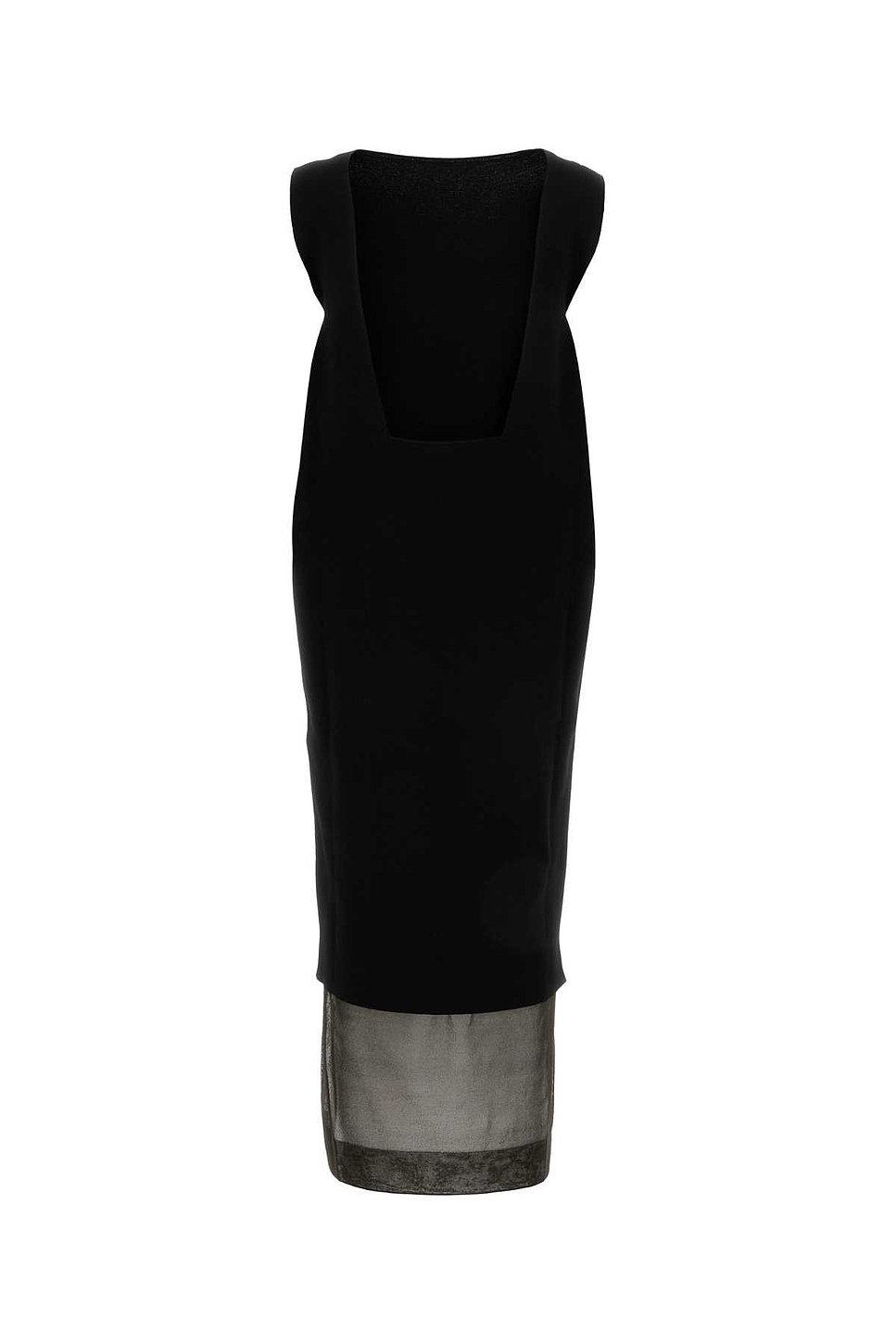
A dress listed with a shell of 83% viscose and 17% polyester, made in Italy, at 2,722 dollars. There are no reviews and no fit votes, so there is no score to quote. This is the emptiest listing this series has examined, and it takes that position from another costing considerably more, which makes comparing the two worthwhile. Only two lines here carry any description at all, and the way the brand field is filled in is something met nowhere else. The reference is the viscose blend dress recorded here under style FEXN-WD973, whose maker is named in the product title, in Black. Dongguan Bafinasa Garments Co., Ltd. develops comparable viscose dresses on OEM and ODM terms, from fabric sourcing to retail or FBA ready packing. We publish this as a development reference and build your own version of it, and we do not supply the branded original or reproduce anyone else's label.
Key Features
- Shell in 83% viscose and 17% polyester as stated, and the percentages do add up. See the note below
- Made in Italy as stated
- Everything else below is absent rather than present, and listing what is missing is the informative part. See the note below
- No care instruction of any kind is given
- No lining statement of any kind is given
- No fabric, no closure, no type described
- No measurements, no model, no fit information
- Two sizes, at a price that has accompanied fuller information elsewhere
Customisable Options
- Fabric: viscose blend dress fabric to the reference, with construction and weight specified rather than omitted
- Lining: we would state whether there is one, since nothing currently says
- Care: we would test rather than inherit, given that viscose and polyester respond differently
- Closure: developed and stated rather than left to be discovered
- Size set: we would extend the range and publish full measurements for every size offered, since two sizes with no chart is currently the whole offering
Specifications
| Style | Viscose blend dress |
| Reference | Style FEXN-WD973, manufacturer style 9879439K439 200, colour Black, made in Italy |
| Shell | 83% viscose, 17% polyester as stated. See the note below |
| Second Layer | Not stated. See the note below |
| Care | Not stated. No instruction of any kind appears on the reference listing |
| Lining | Not stated. Neither lined nor unlined is said |
| Fabric | Not stated. No cloth name is given |
| Closure | Not stated. No method of fastening is described |
| Sizes Published | XS and S, two sizes |
| Measurements Published | None. No figure for any size and no model proportions |
| Production | Made in Italy as stated |
| Reference Retail | 2,722 USD, quoted to show the price band this sits in, not as our price |
| Customer Reviews | None on the reference listing, so we quote no score |
| Best Seller Badge | None. The listing carries no rank |
| Categories | Filed by the retailer under midi dresses only. No second category is given |
| Occasion | Occasions, evenings, formal events, though no detail is offered on how it is suited to them |
| MOQ | 100 pcs per style per colourway, mixed sizes and colourways accepted |
| Sampling | 7-10 days after tech pack or reference sample confirmation |
| Bulk Lead Time | 20-30 days after sample approval and deposit |
| Service | OEM / ODM / private label, viscose blend sourcing, retail or FBA ready packing |
Size Chart
| Size | Bust | Waist | Hips | Length | Source | ||||||||||||
|---|---|---|---|---|---|---|---|---|---|---|---|---|---|---|---|---|---|
| XS | 31 | in / | 79 | cm | 24 | in / | 61 | cm | 34 | in / | 86 | cm | 122 | cm / | 48 | in | Our proposal |
| S | 33 | in / | 84 | cm | 26 | in / | 66 | cm | 36 | in / | 91 | cm | 124 | cm / | 48.8 | in | Our proposal |
| M | 35 | in / | 89 | cm | 28 | in / | 71 | cm | 38 | in / | 97 | cm | 126 | cm / | 49.6 | in | Our proposal |
| L | 37 | in / | 94 | cm | 30 | in / | 76 | cm | 40 | in / | 102 | cm | 128 | cm / | 50.4 | in | Our proposal |
The reference listing publishes no size chart and gives no model proportions, despite offering sizes. Any customer wanting to know how this falls or how it measures has nothing to work from.
Occasions and Styling
Reads as an occasion or evening piece given the fibre blend and the price band, though nothing on the reference listing describes it or says what it suits, so any judgement here rests on the composition alone.
Production and Quality Control
There are no reviews and no fit votes on this listing, so we quote no score. This is the emptiest listing examined in this series, and it takes that position from another costing nearly a thousand dollars more, which makes the pair worth comparing.
The emptiest page yet, and taking the title from one costing more is instructive, and that is the first thing. Set out plainly what is here. There are four lines of product detail, of which two are stock numbers. That leaves two that describe anything at all: the composition and the country of manufacture. Everything else is absent. There is no care instruction, none whatever, not even one of the weaker ones met repeatedly elsewhere. Nothing says whether it is lined or not, which particular absence matters more than it sounds because there is a garment examined recently in this series on which partial lining followed necessarily from the design and told the reader something real, whereas here the field simply does not exist. No cloth is named, so neither weave nor weight is available. No method of closure is described. There are no measurements for either size and not even model proportions to reason from, which is worse than the much more common arrangement of one measured size. There are two photographs and two sizes, XS and S, and no second sales category. Now hold that against what displaced. This series met a garment costing several hundred dollars more which gave composition, country, both stock numbers, two photographs and one measured size, and described that at the time as the emptiest encountered. This one matches it on every count and then removes the size chart as well, while costing nearly a thousand less. So the relationship this series has been tracking across hundreds of listings, that these pages say less as price rises, does not hold even as a tendency when two garments are compared directly, since here the cheaper of the two says strictly less. The more accurate description of what has been observed is that disclosure varies enormously and independently of price, which is consistent with everything concluded here about what sets these pages. It has been argued throughout that much of what appears on a listing is set by a process rather than by anything about the garment, since the same phrasing recurs word for word across unrelated makers and the same omissions recur with equal reliability. This page is consistent with that, though admittedly it is also consistent with nobody having got round to it. The practical difference between those two explanations is large, since one is fixable in one place and the other is not, and nothing visible here distinguishes them.
Eighty three and seventeen, and how that combination behaves, and that is the second thing. The shell is given as eighty three per cent viscose and seventeen per cent polyester, and the first thing worth noting is that unlike several combinations met recently these add up, which is worth crediting because it has often not been true and it is the sort of thing easily checked. Viscose has been described in detail throughout this series. It is regenerated cellulose, it loses around half its strength when wet, it shrinks, and it creases badly as it dries, and none of those can be undone afterwards. So even on its own it argues for caution, and this series has examined many garments where viscose was the single reason a strict instruction was correct. Polyester is a synthetic polymer, dimensionally stable, barely absorbing moisture, and quick to dry, so it is closer to the opposite in behaviour. Now, the rule this series uses here was established some batches ago: where two fibres sit with one clearly dominant there tends to be one dominant failure mode, so at roughly three to one everything turned on the first fibre and the pairing could be described economically. This is nearly five to one, so there is a clear dominant partner and the failure mode here is viscose's, which means this cloth should be treated as though it were largely viscose despite nearly a fifth of it being something else. There is an important qualification though, which came up on a garment recently where the proportions were close enough for both to matter, and which applies here in reverse. Adding a stable fibre to an unstable one does not make the combination behave like an average of the two. What tends to happen is that the parts respond differently and the differences show up somewhere, most commonly as the two shrinking by different amounts, which produces distortion rather than simple shrinkage. Seventeen per cent is enough for that to be possible and not enough for anyone to guess how it resolved in any particular cloth. So the reasonable reading is that this needs care because of the dominant fibre, and additionally that its behaviour cannot be predicted from composition alone. None of that is said anywhere here, and there is no instruction of any kind, so the customer is left with a blend she cannot reason about and no guidance to replace reasoning with.
The brand field, and a name in an unexpected place, and that is the third thing. There is something here met nowhere else in this series. Elsewhere the maker field names the designer, and the product carries whatever name that designer chose. Here the maker field carries the retailer's own in house label, while the designer's name appears inside the product title, which reads much less like a product name than like something assembled from whatever fields were available. This series has spent a great deal of space on how fields get filled in on these pages, having traced how certain phrases recur verbatim across unrelated makers and how omissions reproduce as reliably as content does, and having concluded from that pattern that a great deal here is applied to garments rather than written about them. This listing adds a small piece of supporting detail, in that a product name appearing to have been assembled from other fields rather than bestowed is easier to account for by that account than by a designer having chosen it. It is one instance and one instance establishes little, so this belongs as something observed rather than something concluded. What can be said more firmly concerns how the absence interacts with everything else here, and this is where it stops being a curiosity. A structured import process carrying over whatever was available would explain why the fields describing this garment are empty while the fields identifying it are complete, since the two stock numbers are present and correct and the identifying fields work, exactly while the descriptive ones do not. That pattern has recurred throughout this whole examination, this being the ninth time the word shell alone appeared with the second layer never following, so for anyone looking at these pages the useful habit is distrusting the assumption that empty fields mark things about a garment. They more often mark things about a record. None of which tells a customer anything about this dress, which remains the point. Seven hundred dollars less than the emptiest page previously met, with two sizes and nothing to describe either. Every bulk shipment gets a measurement report against your approved chart.
Optional upgrades include adding a care instruction, since with eighty three per cent viscose there is a clear dominant failure mode and no reason to leave the question open, testing rather than inheriting that instruction given how blends can distort rather than simply shrink, stating whether there is a lining since nothing currently says, naming the cloth by construction and weight rather than leaving both absent, describing the closure since how a garment goes on frequently explains its measurements, publishing measurements for XS and S plus model proportions, since none at all is currently offered, extending the size range beyond two sizes, giving the second category the reference lacks, confirming whether the shell has a second layer and naming it if so, colour development, private label, hangtag and care labelling.
Pre-production sample approval, in-line inspection during cutting and sewing, and a final AQL inspection before packing, with measurement reports and photos shared before shipment.
Send us your tech pack, a photo or a reference garment and we will quote within 24 hours. Contact bafinasa@bafinasa.com or WhatsApp +86 13827222469.