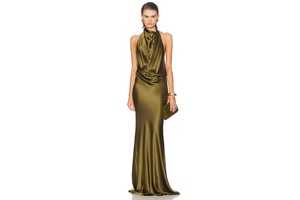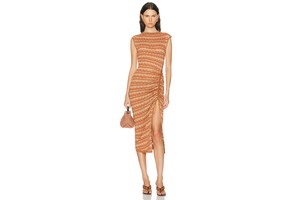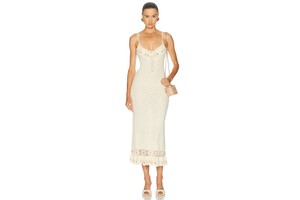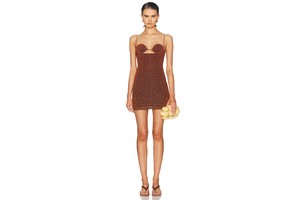
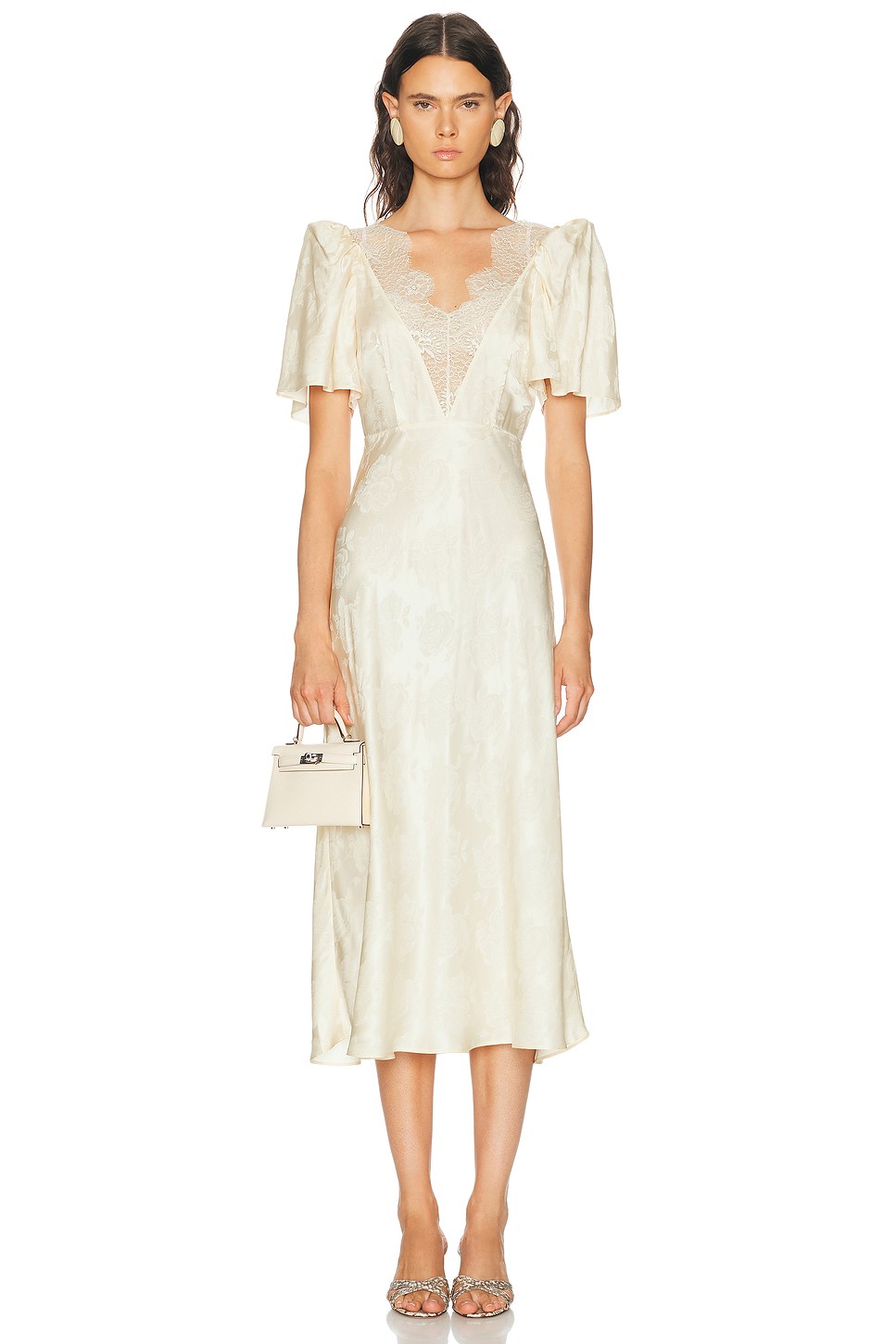
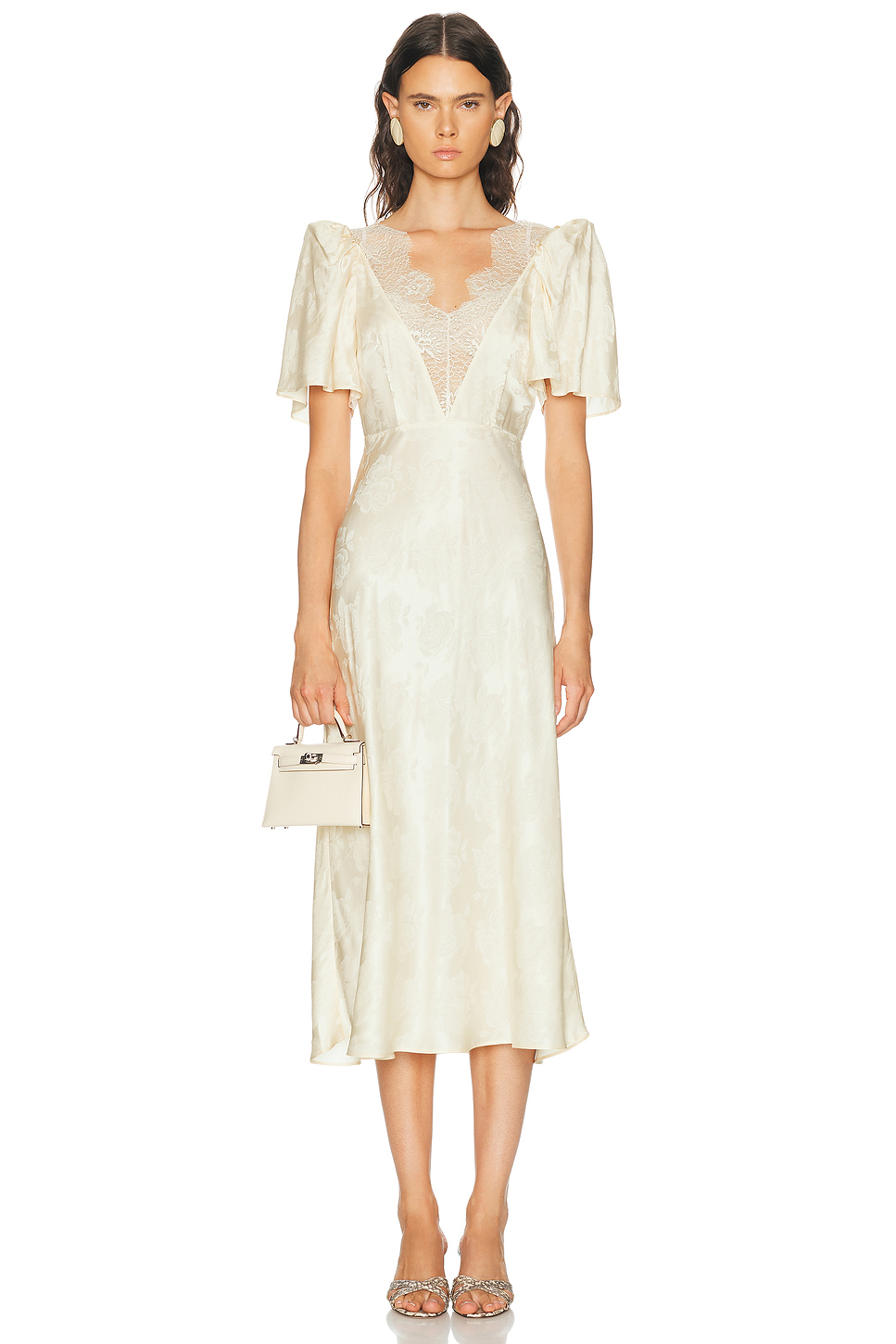
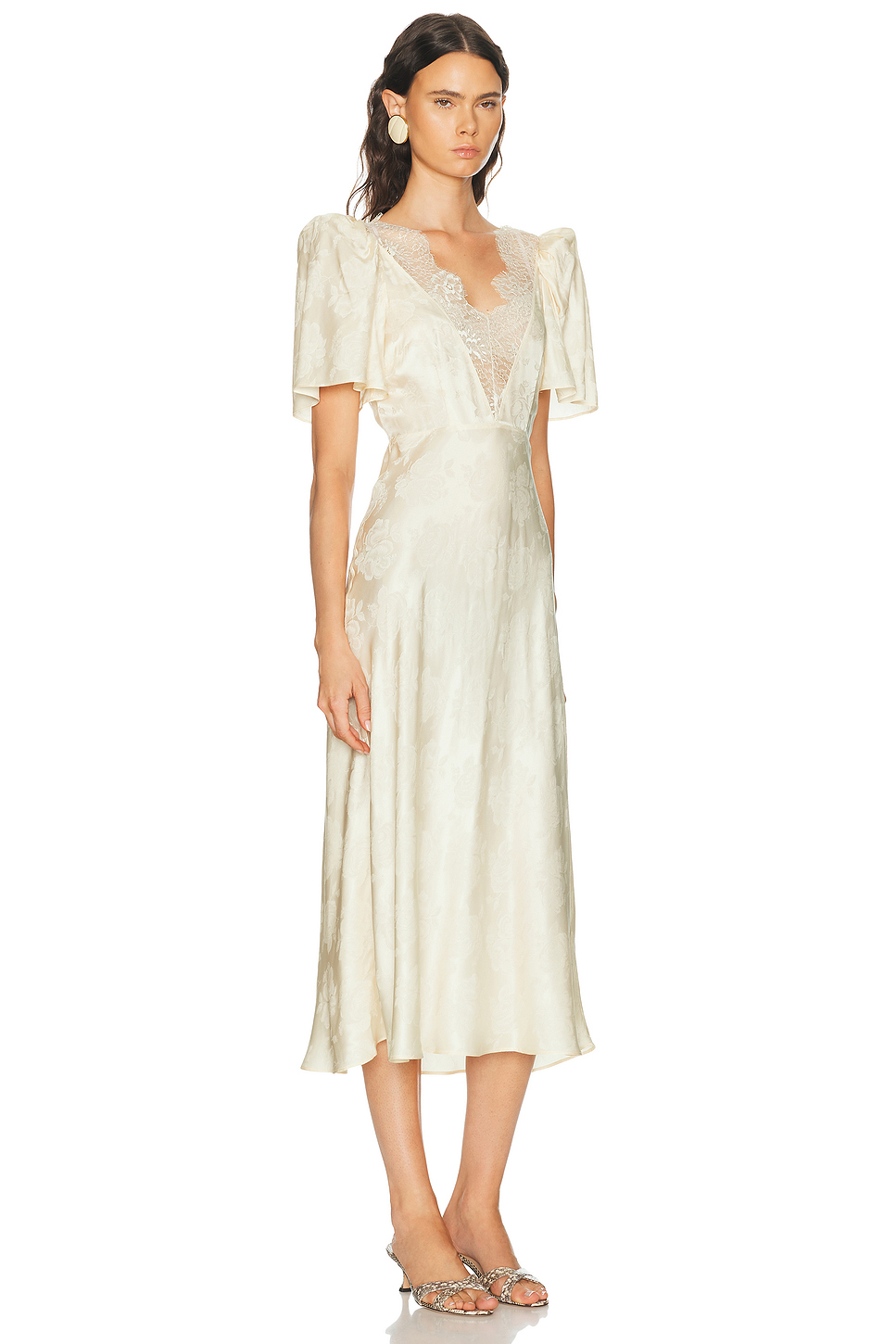
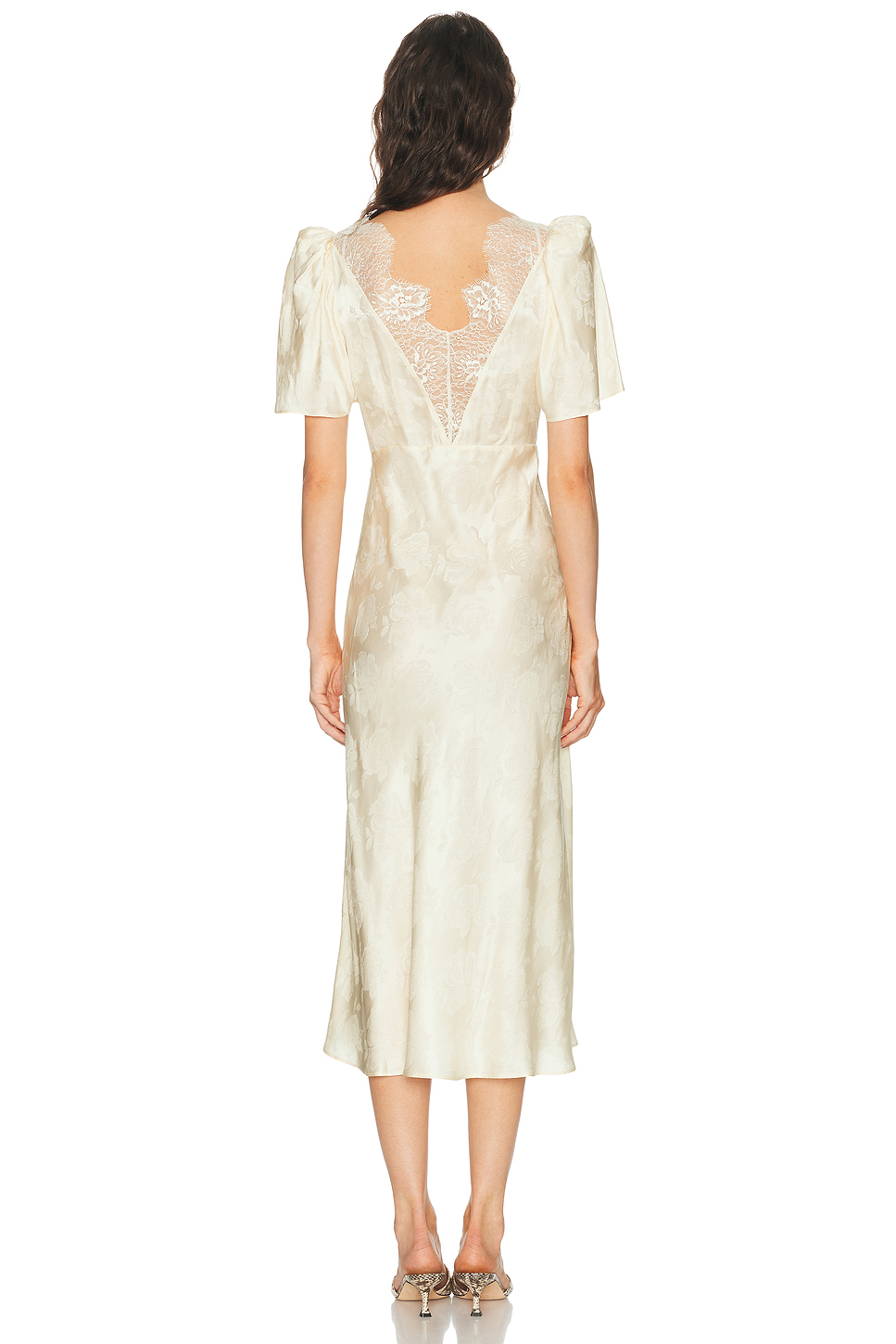
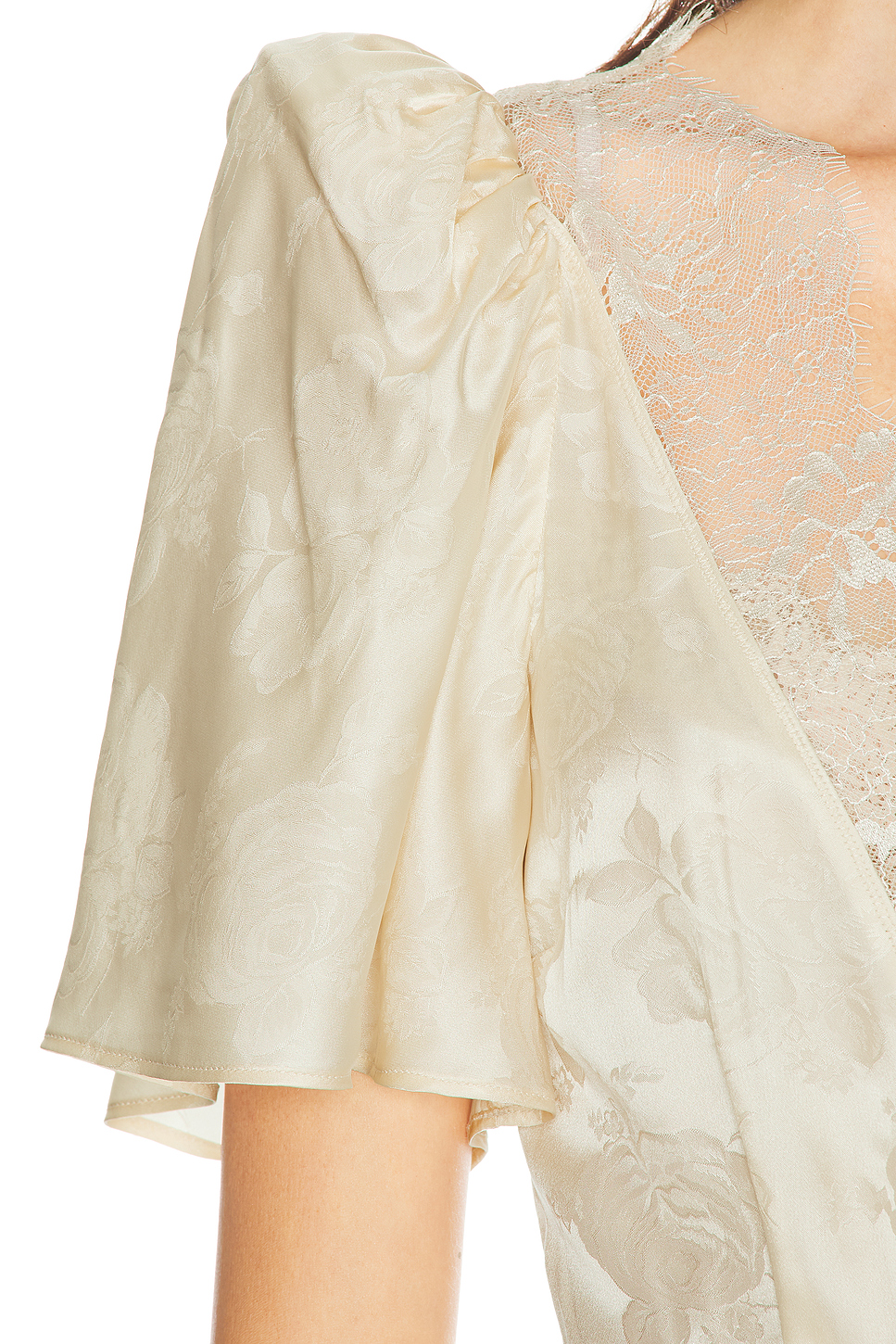
A midi dress listed with a self of 58% silk and 42% viscose alongside a trim of 100% nylon, dry clean only, unlined, in a lightweight satin with lace trim and a hidden zip at the side, made in China, ranked twentieth in the retailer's short sleeve dress list, at 610 dollars. This listing carries one customer review averaging 1.0 out of 5, and that single review turns out to confirm something this series argues from product words alone. Counting what there is to be careful about on this page produces more candidates than any previous garment here, and that is not the criticism it resembles. The reference is the Philo Dress by Ronny Kobo in Marble. Dongguan Bafinasa Garments Co., Ltd. develops comparable lace trimmed dresses on OEM and ODM terms, from fabric sourcing and lace trim to retail or FBA ready packing. We publish this as a development reference and build your own version of it, and we do not supply the branded original or reproduce anyone else's label.
Key Features
- Self in 58% silk and 42% viscose as stated, and a trim in 100% nylon as stated. See the note below
- Dry clean only as stated, and there are more reasons here than on any garment examined before. See the note below
- Lightweight satin as stated, the third satin in this series and completing a comparison worth making
- Lace trim as stated, and this is the first time its fibre has been given. See the note below
- Unlined as stated
- Hidden zip at the side as stated
- Made in China as stated
- Short sleeves, as the retailer records it
Customisable Options
- Fabric: silk viscose satin to the reference, with weight specified rather than only lightweight
- Trim: nylon lace to the reference, with lace type and attachment method stated rather than inherited
- Composition: we would confirm whether the two self fibres are blended or plied rather than assume it
- Construction: we would either match all three components for care compatibility or keep dry clean only permanently
- Weight options since that decides most of the questions raised here, size set, colour development, private label and care labelling
Specifications
| Style | Silk blend lace trim midi dress |
| Reference | Ronny Kobo, Philo Dress, style RONR-WD848, manufacturer style 4784651JQD, colour Marble |
| Self | 58% silk, 42% viscose as stated. See the note below |
| Trim | 100% nylon as stated. See the note below, since this is unusual |
| Fabric | Lightweight satin as stated. See the note below |
| Lining | Unlined as stated |
| Care | Dry clean only as stated. See the note below, since there is a great deal here to protect |
| Closure | Hidden zip at the side as stated |
| Trim Detail | Lace trim as stated |
| Sizes Published | XS, S, M and L |
| Measurements Published | None. No figure for any size |
| Chart Note | The listing gives no size chart, only the model's proportions |
| Model | 175 cm, bust 77 cm, waist 60 cm, hips 85 cm, wearing size S |
| Customer Reviews | 1 review at 1.0 out of 5, reading that the material felt too thin for the price. See the note below |
| Fit Votes | 2 ratings, split evenly between true to size and runs large, too few to read |
| Production | Made in China as stated |
| Reference Retail | 610 USD, quoted to show the price band this sits in, not as our price |
| Best Seller Badge | Rank 20 in the retailer's short sleeve dress list |
| Categories | Filed by the retailer under short sleeve dresses and midi dresses |
| Occasion | Occasions, parties, weddings, evenings |
| MOQ | 100 pcs per style per colourway, mixed sizes and colourways accepted |
| Sampling | 7-10 days after tech pack or reference sample confirmation |
| Bulk Lead Time | 20-30 days after sample approval and deposit |
| Service | OEM / ODM / private label, silk blend sourcing, lace trim matching, retail or FBA ready packing |
Size Chart
| Size | Bust | Waist | Hips | Length | Source | ||||||||||||
|---|---|---|---|---|---|---|---|---|---|---|---|---|---|---|---|---|---|
| XS | 31 | in / | 79 | cm | 24 | in / | 61 | cm | 34 | in / | 86 | cm | 122 | cm / | 48 | in | Our proposal |
| S | 33 | in / | 84 | cm | 26 | in / | 66 | cm | 36 | in / | 91 | cm | 124 | cm / | 48.8 | in | Our proposal |
| M | 35 | in / | 89 | cm | 28 | in / | 71 | cm | 38 | in / | 97 | cm | 126 | cm / | 49.6 | in | Our proposal |
| L | 37 | in / | 94 | cm | 30 | in / | 76 | cm | 40 | in / | 102 | cm | 128 | cm / | 50.4 | in | Our proposal |
The reference listing publishes no size chart, giving only the model's proportions across four offered sizes. What substitute evidence exists here comes from buyers rather than from the page.
Occasions and Styling
Suits occasions, parties, weddings and evenings. Lace trim and satin together read as occasion wear, though this one is lightweight and unlined, and what goes underneath is worth deciding deliberately rather than leaving.
Production and Quality Control
This listing carries one review at 1.0 out of 5, too few to generalise from, though what it says lines up with what the page's own words predict. Counting what there is to be careful about here gives more candidates than any garment examined so far, and that is worth drawing out rather than merely listing.
Six reasons to keep water away, and the most a single page has given, and that is the first thing. Start with what is stated. The self is fifty eight per cent silk and forty two per cent viscose. This series has dealt with both at length. Silk spots permanently wherever water sits and dries, so the marks appear where the water was rather than where anything was spilled, and once there they do not come out. Viscose loses around half its strength when wet, shrinks, and creases badly as it dries. What is unusual here is the proportion. This series established a rule some batches ago that when two fibres are combined with one clearly dominant, there tends to be one dominant failure mode, described on a garment pairing acetate with viscose at roughly three to one where everything then turned on the acetate. Here nothing dominates, since fifty eight and forty two are close enough that both fibres contribute substantially, and unlike most combinations each of these has a failure mode that matters on its own. So both risks are live simultaneously, and there is no single thing to avoid. Then there is the trim, a hundred per cent nylon, and this is separate from the self in fibre and in construction. Nylon is a synthetic polyamide, dimensionally stable and quick to dry, so it behaves nothing like silk or viscose in water. Put against them it will not respond the same way, and this series has stressed repeatedly that layers and components belong together precisely so they stay in proportion when anything happens. Next is the satin itself. Satin puts its yarns floating across several others before going under one, which creates the smooth lustrous surface, and those floats are simultaneously the most exposed part of any weave, being raised and free along most of their length, so they are what anything abrading meets first. Then the word lightweight, which this series established recently is the single most load bearing adjective in these descriptions, since a weave name tells you how yarns are arranged and only quantity decides most practical questions. And finally the lace trim, which is an open thread structure rather than cloth, and this series argued recently that those are held in shape by their own geometry rather than by warp and weft locked together, so agitation lets them catch on themselves and once distorted they do not recover. Six candidates, and each would justify the strict instruction alone. Now, it is worth being explicit that this is not the complaint it superficially resembles. Six is not a criticism of anything, because finding six requires a page that states its components, its trim, its weave and its weight. A page carrying none of those gives nothing to count and looks tidier while being less useful. So this garment is toward the informative end examined here, and the honest limitation is simply that the listing does not say which of the six it had in mind. Knowing to keep water away differs from knowing which part needs it, and a customer cannot be careful in the right places without the second.
The third satin, and a complete comparison across three garments, and that is the second thing. Satin has now appeared three times in this series, and putting all three together gives something worth keeping. One was mid-weight, unlined, rayon throughout, and given the permissive instruction. One was mid-weight, fully lined, silk rich, and given the strictest instruction. This is lightweight, unlined, silk blended with viscose, and given the strictest instruction. So two of three agree on the strict answer and one did not, and looking at what separates them is instructive. The odd one out carried the permissive wording on rayon, which loses half its strength wet, exposed further by the satin floats, unlined so nothing helped it hold shape. This series objected to it then and that objection stands unchanged. The interesting comparison is between the other two, since both say dry clean only while differing substantially: one fully lined and mid-weight, this one unlined and lightweight with two fragile fibres and a lace trim. Different answers to the same design problem, since one solved it by adding a layer and this one solved it by keeping water away entirely. Neither is wrong, and noticing that both routes exist is more useful than ranking them. There is also something specific to this page worth recording because it is new. This is the first time in this series that a lace trim has had its fibre named. lace has been reasoned about several times from the structure alone, most pointedly on a page giving no fibre whatever, where the conclusion was that the range of correct treatments ran from machine washable through to dry clean only depending on which fibre was involved, so without it there was no way to narrow anything. Here nylon is stated, which is the commonest lace fibre and one of the more robust ones, being light and strong. That genuinely narrows things, and it also means the lace is not the weakest link on this garment, since the self and the trim combined are considerably more demanding than the trim alone. A page that had simply said lace trim would have left all of that open.
One review, and what it happens to confirm, and that is the third thing. This listing carries a single review at 1.0 out of 5, which is the lowest score encountered here, though one review from one buyer establishes very little and this series will not treat it as a finding. What makes it worth mentioning is the particular thing it says. The buyer writes that the material is so thin and felt so cheap for such an expensive dress. Now set that against the page, which states lightweight and unlined. This series has argued repeatedly, and restated it while examining two poplin garments together recently, that weight words are doing more work than weave names, and that going without a lining removes the thing which would otherwise have settled whether thin becomes a problem. A buyer describing cloth as thin is reporting exactly what lightweight plus unlined predicts. It is one person, so it confirms nothing, and it is selected from among people who chose to write, and both of those qualifications matter. But this series recently examined a garment with nineteen reviews and used it to check whether the reasoning used throughout holds up against what buyers actually say, so the same standard applies in the other direction and the agreement is worth recording rather than ignoring. There are two other points about this listing worth noting, and neither concerns review content. The size chart is entirely absent, with only the model's proportions given across four offered sizes, and this is now the second garment in quick succession to offer sizes with no measurements at all, which is worse than the much more common arrangement of one size measured out of four. And there were two fit ratings, split evenly, which is too few to read anything into and is mentioned only because it exists. For this price, four sizes offered and not one of them measured remains difficult to account for, particularly given that this page is otherwise among the more informative ones here. Every bulk shipment gets a measurement report against your approved chart.
Optional upgrades include saying which of the six candidates the instruction protects, since knowing to avoid water differs from knowing which part needs it and nobody can be careful in the right places without that, publishing measurements for the four sizes offered, since none at all is worse than the common one out of four, confirming whether the two self fibres are blended or plied rather than leaving it to be assumed, specifying weight rather than only lightweight, since that one word decides most practical questions here and another buyer noticed the consequence, keeping the named trim fibre since naming it narrowed things considerably, offering a lining option given what combining this with nothing behind it predicts, developing lace attachment method rather than inheriting it, verifying all three components respond alike or saying plainly that they do not, extending the size range toward XXS and XL if the sales data supports it, colour development tested per shade given what happens when this is combined with what sits behind it, private label, hangtag and care labelling.
Pre-production sample approval, in-line inspection during cutting and sewing, and a final AQL inspection before packing, with measurement reports and photos shared before shipment.
Send us your tech pack, a photo or a reference garment and we will quote within 24 hours. Contact bafinasa@bafinasa.com or WhatsApp +86 13827222469.