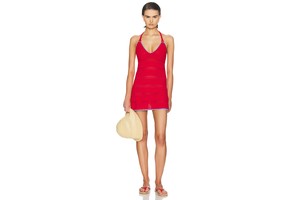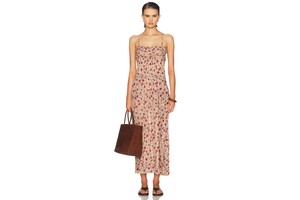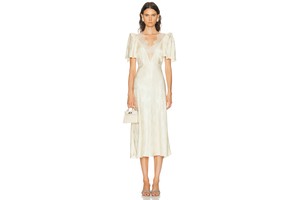
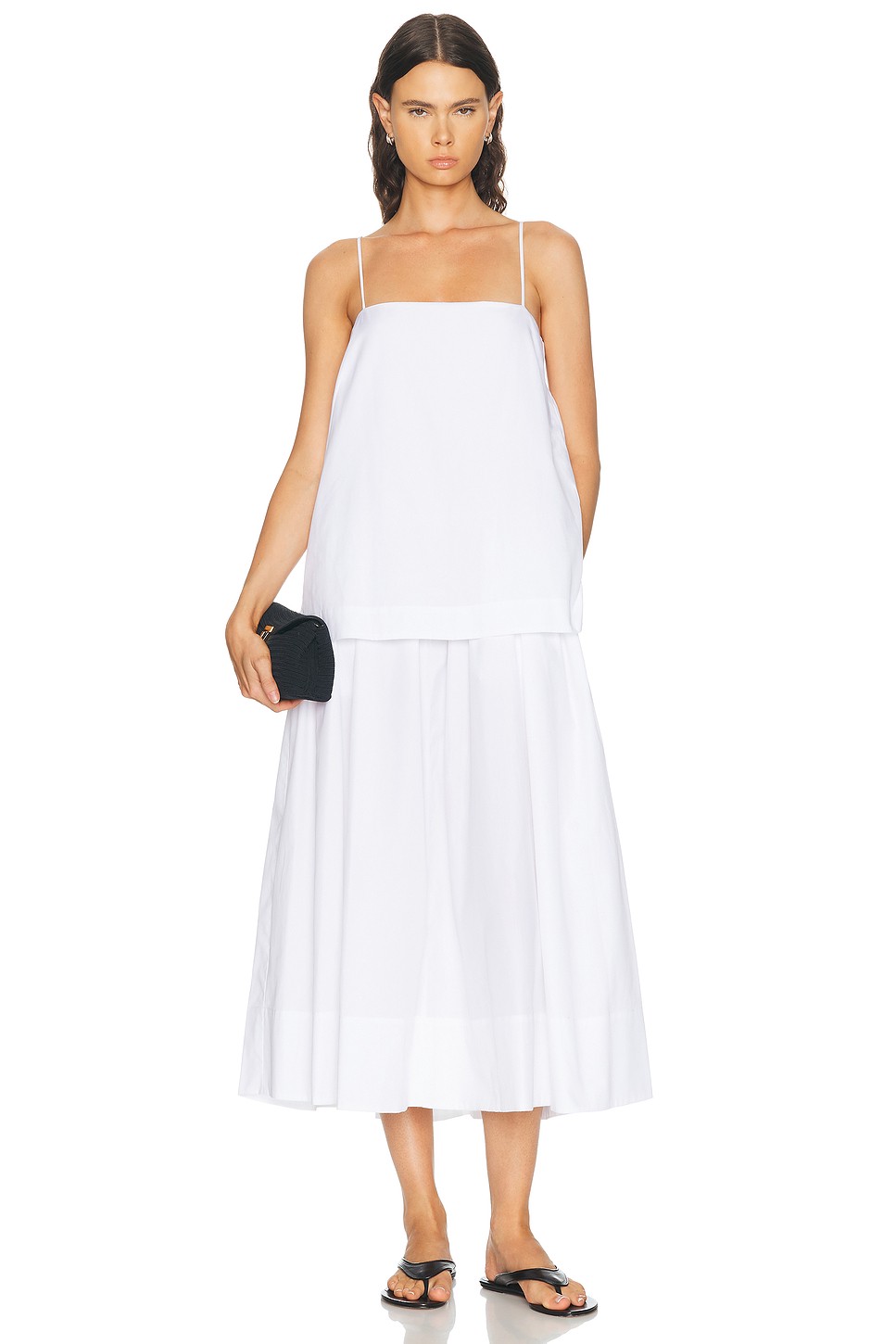
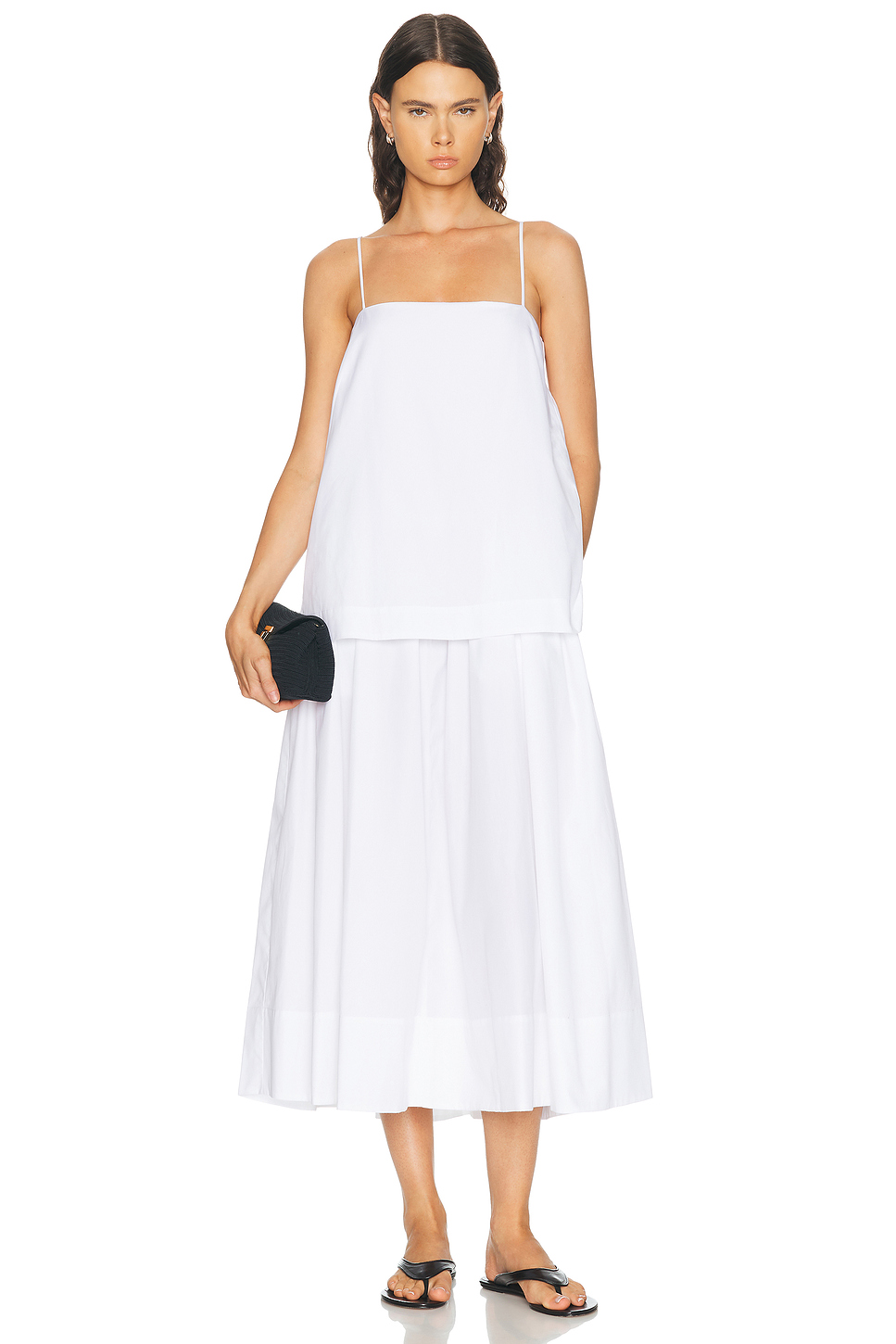
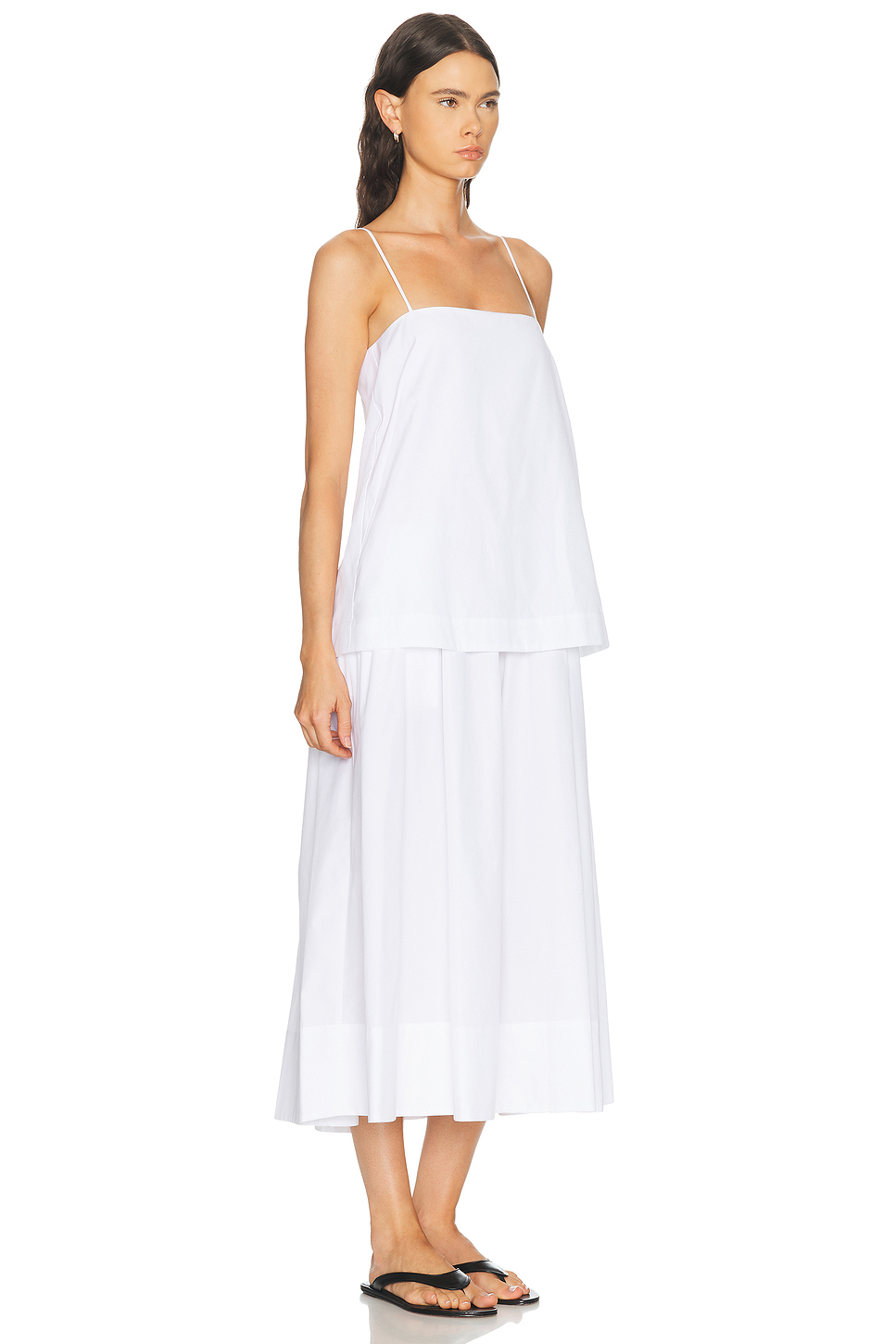
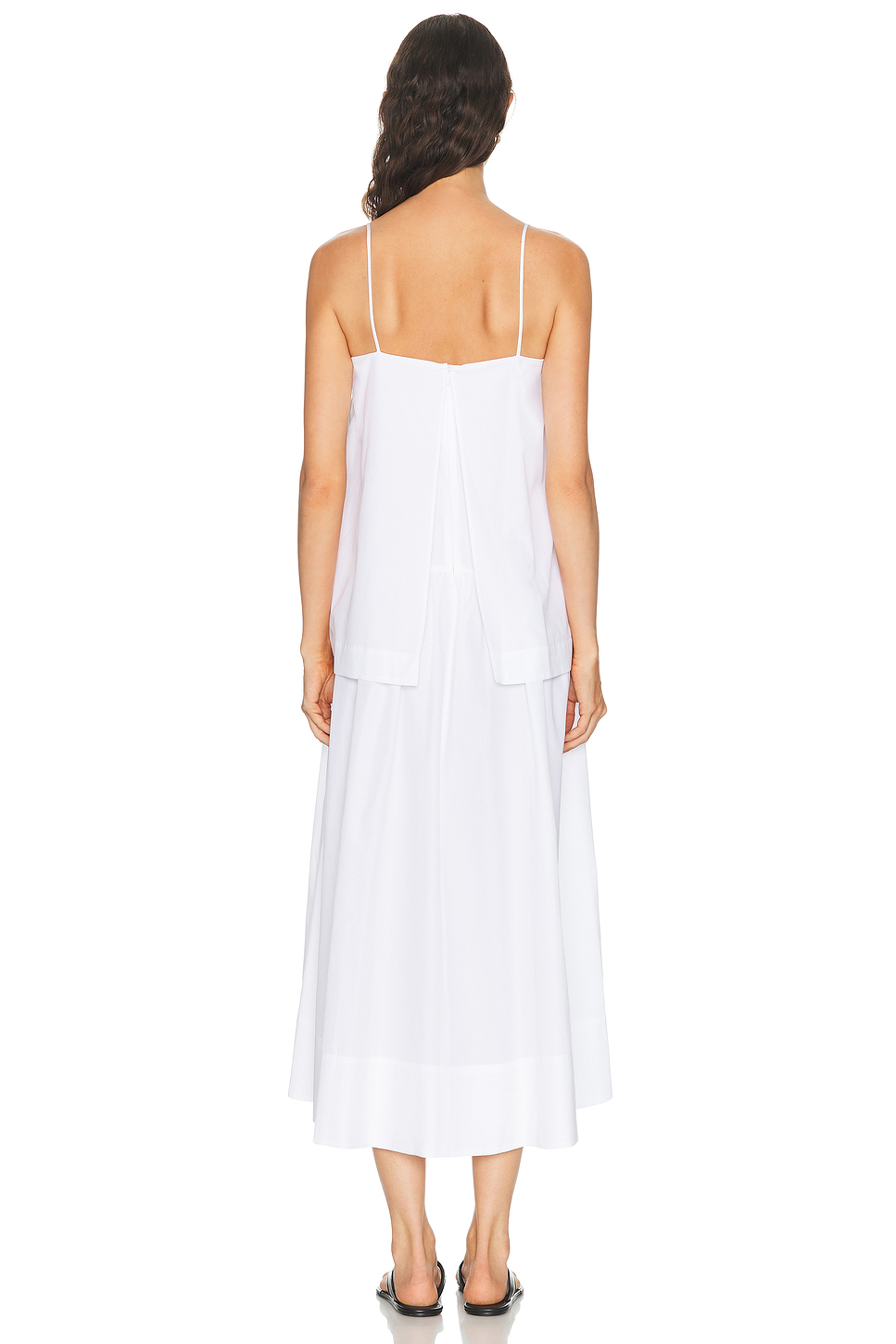

A maxi dress listed in 100% organic cotton, machine washable, unlined, in a mid-weight poplin, with a hidden zip at the back and pockets in the side seams, made in Portugal, ranked seventeenth in the retailer's white dress list, at 520 dollars. There are no reviews and no fit votes, so there is no score to quote. There is another poplin dress in this same batch described as lightweight where this one is described as mid-weight, and putting the two together settles a question this series has been qualifying for some time. The size run is also the longest consecutive numerical run encountered here. The reference is the Cotton Strap Dress by House of Dagmar in White. Dongguan Bafinasa Garments Co., Ltd. develops comparable cotton maxi dresses on OEM and ODM terms, from fabric sourcing to retail or FBA ready packing. We publish this as a development reference and build your own version of it, and we do not supply the branded original or reproduce anyone else's label.
Key Features
- 100% organic cotton as stated, and the second organic claim met here. See the note below
- Machine washable as stated, which is the correct answer for this fibre and worth saying plainly
- Mid-weight poplin as stated, and another dress in this batch is described as lightweight. See the note below
- Unlined as stated, so what happens about opacity is settled rather than left open
- Hidden zip at the back as stated
- Side seam pockets as stated
- Sizes 32 to 40 published, the longest consecutive numerical run met here. See the note below
- Measurements published for one size, including length 51 in and bust 31 in
Customisable Options
- Fabric: cotton poplin to the reference, with the weight specified since that is what settles the opacity question
- Organic cotton available on request with documentation, though we note it does not alter any technical decision
- Lining: offered either way, since even a mid-weight white poplin leaves some customers wanting more
- Care: machine washable, and we would add what temperature and drying method suits it
- Length from knee to ankle, poplin weight, strap width, lining options, size set, private label and care labelling
Specifications
| Style | Cotton poplin strap maxi dress |
| Reference | House of Dagmar, Cotton Strap Dress, style HGMF-WD9, manufacturer style 261F707, colour White |
| Composition | 100% organic cotton as stated. See the note below on what organic does and does not tell you |
| Fabric | Mid-weight poplin as stated. See the note below, since this batch allows a direct comparison |
| Lining | Unlined as stated, which settles the question rather than leaving it open |
| Care | Machine washable as stated, which is the correct answer for cotton |
| Closure | Hidden zip at the back as stated |
| Pockets | Side seam pockets as stated |
| Sizes Published | 32, 34, 36, 38 and 40, five consecutive numerical sizes |
| Measurements Published | 36: bust 31 in, waist 28 in, hips 50 in, length 51 in. See the note below |
| Chart Note | The bust sits about three inches under the model while the hips sit far above. See the note below |
| Coverage | Only size 36 has figures. Sizes 32, 34, 38 and 40 are blank |
| Model | 182 cm, bust 86 cm, waist 58 cm, hips 91 cm, wearing size 36 |
| Production | Made in Portugal as stated |
| Reference Retail | 520 USD, quoted to show the price band this sits in, not as our price |
| Customer Reviews | None on the reference listing, so we quote no score |
| Best Seller Badge | Rank 17 in the retailer's white dress list. Note the category is colour rather than length |
| Categories | Filed by the retailer under maxi dresses and sleeveless dresses |
| Occasion | Summer, holidays, warm weather, daytime occasions |
| MOQ | 100 pcs per style per colourway, mixed sizes and colourways accepted |
| Sampling | 7-10 days after tech pack or reference sample confirmation |
| Bulk Lead Time | 20-30 days after sample approval and deposit |
| Service | OEM / ODM / private label, cotton poplin sourcing, strap maxi construction, retail or FBA ready packing |
Size Chart
| Size | Bust | Waist | Hips | Length | Source | ||||||||||||
|---|---|---|---|---|---|---|---|---|---|---|---|---|---|---|---|---|---|
| 36 | 31 | in | 28 | in | 50 | in | 51 | in / | 130 | cm | As published | ||||||
| 32 | 31 | in / | 79 | cm | 24 | in / | 61 | cm | 34 | in / | 86 | cm | 130 | cm / | 51.2 | in | Our proposal |
| 34 | 33 | in / | 84 | cm | 26 | in / | 66 | cm | 36 | in / | 91 | cm | 132 | cm / | 52 | in | Our proposal |
| 36 | 35 | in / | 89 | cm | 28 | in / | 71 | cm | 38 | in / | 97 | cm | 134 | cm / | 52.8 | in | Our proposal |
| 38 | 37 | in / | 94 | cm | 30 | in / | 76 | cm | 40 | in / | 102 | cm | 136 | cm / | 53.5 | in | Our proposal |
The published size 36 gives bust 31 in, waist 28 in, hips 50 in and length 51 in against a model at roughly 34, 24 and 34. The bust sits about three inches under her while the hips sit far above.
Occasions and Styling
Suits summer, holidays, warm weather and daytime occasions. A white cotton poplin maxi is about as straightforward as summer clothing gets, and machine washable cotton means it stays that way.
Production and Quality Control
There are no reviews and no fit votes on this listing, so we quote no score. There is another poplin in this batch described as lightweight where this is mid-weight, and the pair settles a question this series has been qualifying for some time. The size run is also the longest consecutive numerical run encountered.
Lightweight against mid-weight, and now the word poplin alone can be read properly, and that is the first thing. There is another dress in this same batch made of cotton poplin, in a pale colour, stated to be unlined, and described as lightweight. This one is cotton poplin in white, stated to be unlined, and described as mid-weight. Nothing else distinguishes them on this question, so the pair is unusually clean. The reason this matters is that this series has been leaning on poplin as a reassurance for some time without being able to test it. The observation made several times was that poplin is a plain weave with fine warp yarns packed closely against heavier weft yarns, giving a dense cloth, and that higher density transmits less light than a looser weave of the same fibre and weight. That was noted first on white cotton shirts, where it was genuinely helpful, since those pages said nothing else that bore on the question at all. But every time it was offered there was an unstated condition in it, which is that density depends on weight, and a poplin can be made light enough that the weave structure is doing much less than its reputation suggests. Now there is a direct comparison available, and it says the condition was real. Both garments are cotton poplin, both pale, both unlined, and one states lightweight while this one states mid-weight. So the answer to whether poplin alone reassures is no, and the answer to what would is the weight, and this series can now say that rather than hedging it as it has had to until now. This is worth stating as a general rule because it applies well beyond these two garments: a weave name tells you how yarns are arranged, and a weight tells you how much material is there, and quantity of material is what most of these questions actually turn on. There is something specific to add about this garment too, since white is involved, and this series has said before that white reflects rather than absorbs and therefore shows what is under it more readily than any other colour, which is why several examinations have returned to pale garments specifically. So this is the case combining the most difficult colour with no lining at all, and what protects it is entirely the mid-weight and nothing else. It is worth recording that plainly, because it is as far as this is knowable, and it puts the customer in a reasonable position: she knows there is nothing behind it and she knows it is not flimsy, which together are enough to make a decision. There is one further thing that generalises, and it connects to how these questions have been answered elsewhere across this series. Transparency has now been addressed in three distinct ways by the better pages examined: stated outright in a sentence, solved by adding a lining, or described by giving enough qualities to reason with. This page takes the third route, which is less decisive than the other two but considerably better than the silence seen most often, since being told something is mid-weight and unlined lets a customer reach a conclusion rather than needing a photograph taken under lighting arranged to flatter it.
Machine washable on cotton, and this is the correct answer but it is rarer than it should be, and that is the second thing. Cotton is the most washable fibre examined in this entire series. It takes water without complaint, it is stronger wet than dry, and unlike wool it does not felt, unlike viscose it does not lose half its strength, and unlike silk it does not spot permanently. So machine washable here is not generous or surprising, it is simply right, and the interesting thing is how rarely this series has been able to say that. Most pages met have either carried no instruction at all or have carried a strict one, and the strict ones have often been justified by some component other than the fibre, which is a genuine principle established early here and used constantly since: an instruction is set by whatever is most fragile rather than by whatever there is most of. Recently two plentiful candidates were examined on one cotton garment with boning and hardware and lace trim, where four separate things each justified its instruction. This garment has none of those. It has no lining to behave differently, no declared trim, no elastane at all, and its only hardware is a zip, which fares considerably better in water than hook and eye components do, being enclosed rather than exposed. So nothing here argues against washing it, and the page says machine washable, and that is what should happen and rarely does. It is worth noting that the second appearance within this batch of something described as organic belongs alongside this, because the two are connected. This is one of two garments examined here carrying that claim, and what was noted on the other applies equally: organic cotton is certified at the level of how the crop was grown, so it speaks about farming practice and not about the fibre produced. Every technical conclusion above holds identically whether or not the cotton is organic. What that means practically is that this is the second page in this series carrying a word that changes no technical judgement whatsoever, which is interesting precisely because every other word examined has either been decisive or concealed something decisive. Saying so is not dismissing the claim, since there are good reasons somebody might want it, but keeping the two registers separate stops a purchase decision made for one reason being mistaken for evidence about another.
Five consecutive sizes, and the bust three inches under while the hips sit sixteen above, and that is the third thing. Sizes thirty two through forty are five consecutive numerical sizes, which is the longest consecutive run encountered in this series, where most have offered two and several have offered four. This series established some batches ago how to read these runs, and the reasoning applies clearly here. Two adjacent sizes prove nothing, since clearing stock leaves two adjacent sizes quite readily. Three or more in sequence is different in kind, because any process removing sizes at random rarely leaves several in a row. Five is therefore unambiguous, and it means somebody decided to offer this range deliberately. Now there is a second observation about pricing that sits oddly against something said recently and is worth flagging rather than smoothing over. A garment examined very recently, costing several thousand dollars, offered a single size, and this series read that as a stockroom artefact rather than a design decision, on the strength of several accompanying signs. Here is a garment at a fraction of that price offering five sizes in sequence. So across these pages the number of sizes does not track the price at all, which is consistent with everything observed about these listings: much of what appears is set by process rather than by anything about the garment. There is no clever conclusion to draw, merely that nothing about size counts here reflects positioning. On the measurements themselves, the published size thirty six gives a bust of thirty one inches, a waist of twenty eight and hips of fifty, against a model at roughly thirty four, twenty four and thirty four. The bust sits about three inches under her while the hips sit sixteen above. This series established a rule for that exact shape some time ago: when the bust sits below the body while adjacent measurements sit at or above it, ask first whether the garment is strapless, halter or sleeveless, since each removes or weakens the landmarks a bust figure depends on. This is filed as sleeveless and named as a strap dress, so the rule engages immediately. What makes this interesting is that there is no elastane in the composition at all, so compression cannot be the explanation, and there is no knit and no shirring either. So the available answers are narrower than usual here, and the likeliest is that the top of this garment is genuinely cut close and held by the straps rather than by any stretch. It is also worth noting that the waist at twenty eight inches is only four above her twenty four, so despite being a loose sleeveless shape this is closer through the middle than the hip measurement of fifty suggests, and reading one figure without the others would give a misleading picture. Every bulk shipment gets a measurement report against your approved chart.
Optional upgrades include stating the poplin weight numerically rather than only as mid-weight, since that is the specific piece doing work here, offering a lining option even on a mid-weight white, since this is the hardest combination to judge, publishing measurements for sizes 32, 34, 38 and 40, since one out of five follows the pattern seen throughout this series, adding what temperature and drying method suit machine washing, since cotton shrinks most when warmth and water meet, keeping organic cotton available with documentation and separate from any technical claim, longer and shorter lengths, strap width options, private label, hangtag and care labelling.
Pre-production sample approval, in-line inspection during cutting and sewing, and a final AQL inspection before packing, with measurement reports and photos shared before shipment.
Send us your tech pack, a photo or a reference garment and we will quote within 24 hours. Contact bafinasa@bafinasa.com or WhatsApp +86 13827222469.