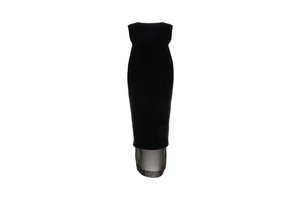
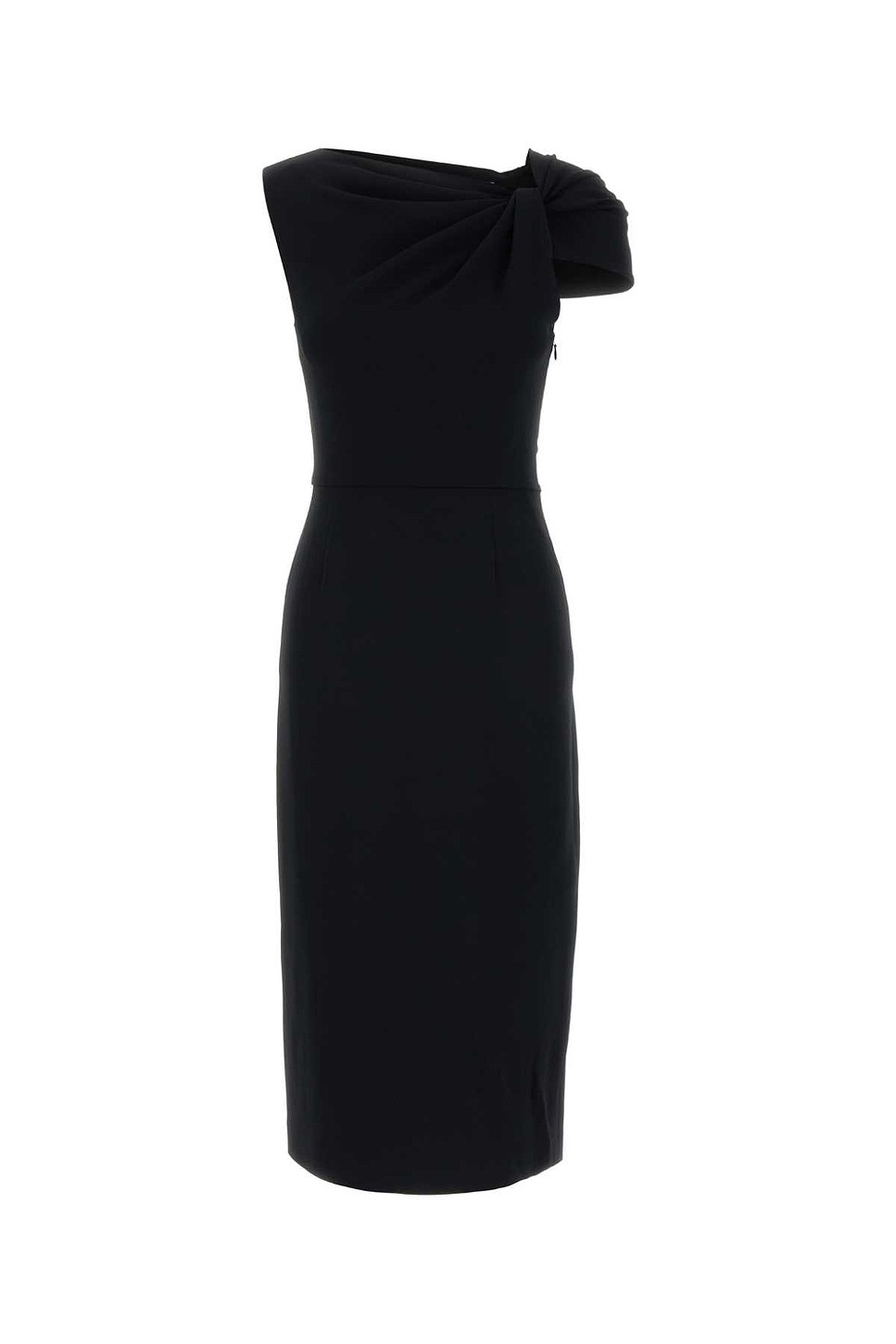
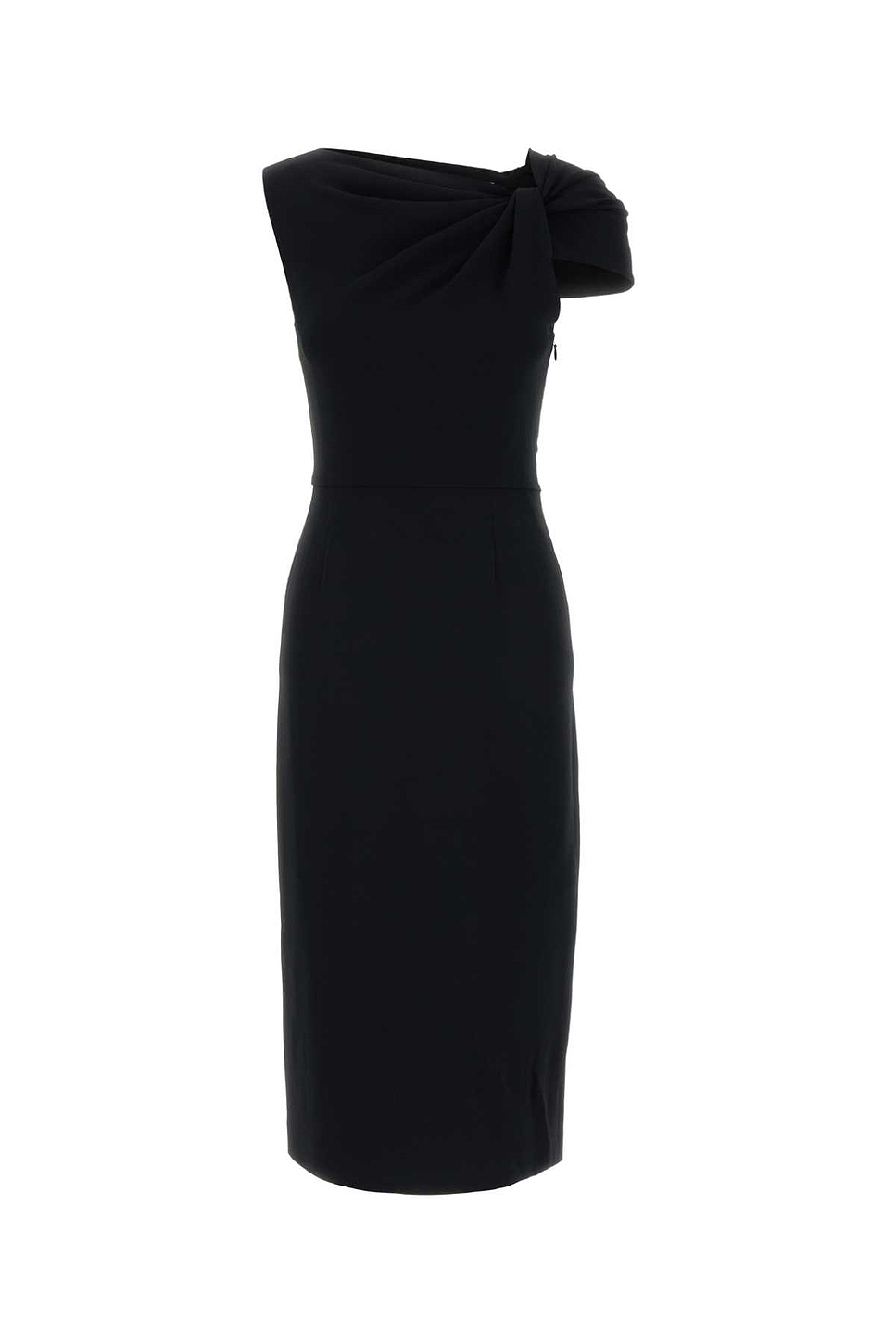
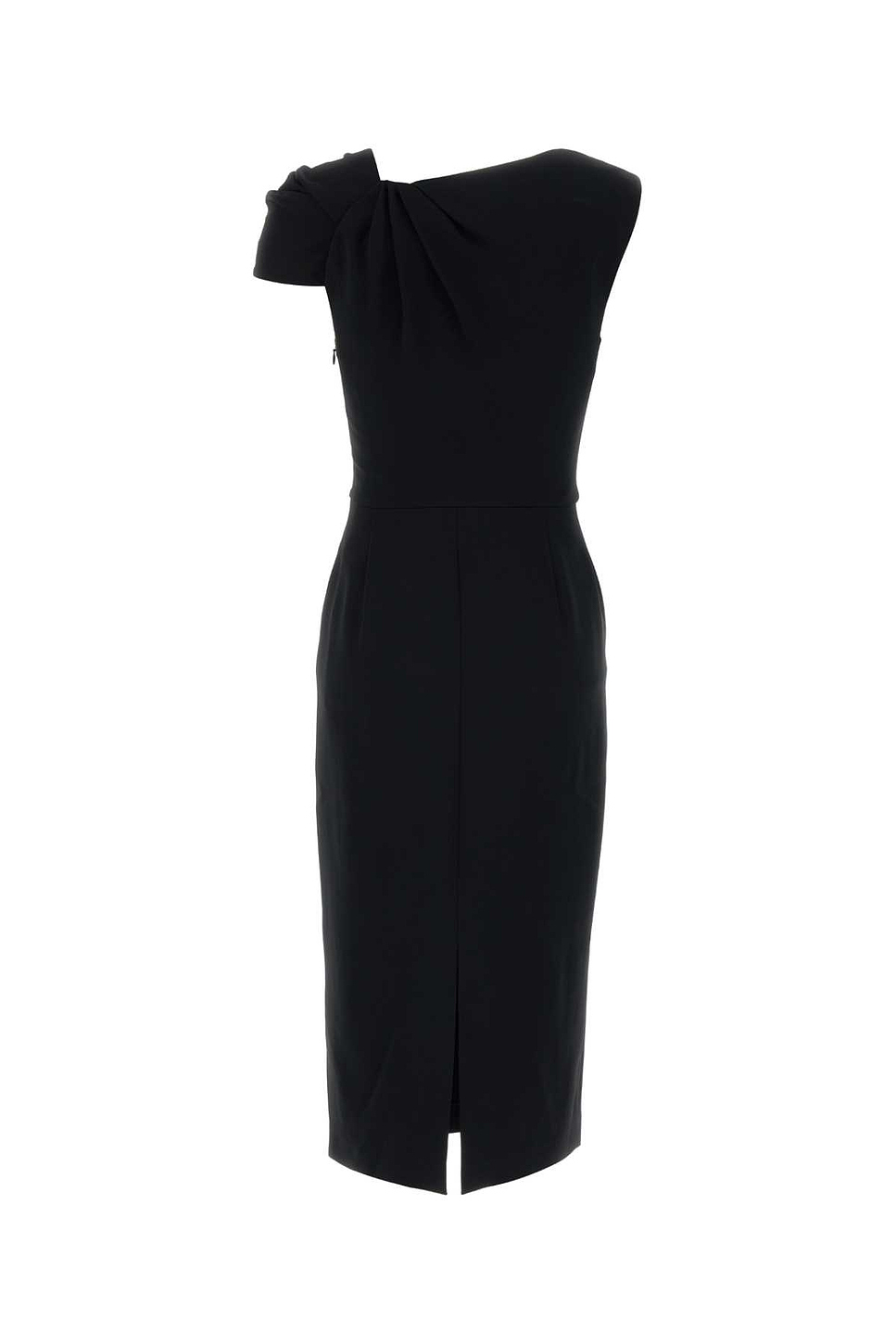
A black stretch cady dress listed with a shell of 65% viscose, 32% acetate and 2% elastane, made in Italy, filed by the retailer under midi dresses, at 2,191 dollars. There are no reviews and no fit votes, so there is no score to quote. The product information amounts to the composition, the country and two stock numbers, with two photographs and sizes 36 and 38. There are three points of interest on an otherwise bare page, and they are unrelated to each other. The figures do not sum to one hundred, the word stretch in the name is justified by the smallest component present, and the price exactly matches another garment from this same maker examined recently. The reference is the Givenchy black stretch cady dress in Black. Dongguan Bafinasa Garments Co., Ltd. develops comparable cady dresses on OEM and ODM terms, from fabric sourcing to retail or FBA ready packing. We publish this as a development reference and build your own version of it, and we do not supply the branded original or reproduce anyone else's label.
Key Features
- Shell: 65% viscose, 32% acetate, 2% elastane as stated. See the note below on the sum
- Stretch cady named in the product title, with two per cent elastane behind it. See the note below
- Three fibre families present at once, which has not happened before here. See the note below
- Black, which reduces one question without removing it
- Made in Italy as stated
- Two sizes published: 36 and 38
- The price matches another garment from this same maker. See the note below
- No care instruction stated anywhere on the listing
Customisable Options
- Fabric: viscose acetate cady to the reference, and we would account for the whole composition rather than ninety nine per cent of it
- Weave: cady, which is a matte crepe faced cloth, with twist and weight set from a tested sample
- Elastane: around two per cent to the reference for recovery, or higher if the garment should compress
- Care: we would add dry clean only, since both cellulose components here fail in water
- Length from knee to ankle, cady weight, size set, colour development, private label and care labelling
Specifications
| Style | Viscose acetate stretch cady dress |
| Reference | Givenchy, black stretch cady dress, style FEXN-WD1378, manufacturer style BW22MV164K 001, colour Black |
| Shell | 65% viscose, 32% acetate, 2% elastane as stated. See the note below on what these sum to |
| Sum Note | The stated figures total 99%, leaving one point unaccounted for. See the note below |
| Second Layer | Not stated, though the composition is given as a shell |
| Fabric | Cady, named in the product title, with stretch alongside it. See the note below |
| Care | None stated on the listing, which both cellulose components here need. See the note below |
| Sizes Published | 36 and 38, two adjacent sizes |
| Measurements | None published. No size chart and no model body figures on this listing |
| Photographs | Two |
| Production | Made in Italy as stated |
| Reference Retail | 2,191 USD, and note that this exactly matches another garment from this maker |
| Customer Reviews | None on the reference listing, so we quote no score |
| Best Seller Badge | None. The listing carries no rank |
| Categories | Filed by the retailer under midi dresses, with no second category |
| Occasion | Occasions, evening events, formal daytime |
| MOQ | 100 pcs per style per colourway, mixed sizes and colourways accepted |
| Sampling | 7-10 days after tech pack or reference sample confirmation |
| Bulk Lead Time | 20-30 days after sample approval and deposit |
| Service | OEM / ODM / private label, viscose and acetate sourcing, retail or FBA ready packing |
Size Chart
| Size | Bust | Waist | Hips | Length | Source | ||||||||||||
|---|---|---|---|---|---|---|---|---|---|---|---|---|---|---|---|---|---|
| 36 | 31 | in / | 79 | cm | 24 | in / | 61 | cm | 34 | in / | 86 | cm | 128 | cm / | 50.4 | in | Our proposal |
| 38 | 33 | in / | 84 | cm | 26 | in / | 66 | cm | 36 | in / | 91 | cm | 130 | cm / | 51.2 | in | Our proposal |
| 40 | 35 | in / | 89 | cm | 28 | in / | 71 | cm | 38 | in / | 97 | cm | 132 | cm / | 52 | in | Our proposal |
| 42 | 37 | in / | 94 | cm | 30 | in / | 76 | cm | 40 | in / | 102 | cm | 134 | cm / | 52.8 | in | Our proposal |
This listing offers two sizes, 36 and 38, and publishes no size chart, no measurements and no model body figures. There is nothing on the page from which a customer could judge the fit, and no length figure to compare against the retailer's own midi filing.
Occasions and Styling
Suits occasions, evening events and formal daytime. A black cady dress is a conventional choice for these, and it is worth knowing that both of its cellulose components dislike water, which decides what happens after the occasion as well as during it.
Production and Quality Control
There are no reviews and no fit votes on this listing, so we quote no score. Three unrelated things are interesting on an otherwise bare page: the figures do not sum to one hundred, the word stretch rests on the smallest component present, and the price exactly matches another garment from this same maker.
The figures sum to ninety nine, and this has happened before, and that is the first thing. Sixty five plus thirty two plus two is ninety nine, so one per cent of this garment is unaccounted for. This series has met this before and each time the same reasoning has applied, which is worth restating rather than assuming. A composition is given in percentages of weight, and garments are made of more than their cloth. There is sewing thread, there may be fusible interfacing behind a placket or a facing, there may be elastic elsewhere in the structure, and there may be applied trim. Any of those can account for a residual fraction, and at one per cent the likeliest explanation is exactly that sort of thing rather than anything mysterious. What makes it worth raising each time is not suspicion but the fact that a page presenting a composition is implicitly claiming completeness, and here the claim is arithmetically short. This has practical consequences rather than being a quibble. This series has repeatedly examined instructions being set by whatever component is most fragile rather than by the predominant fibre, established early on a cotton twill needing dry cleaning because of its applied decoration. If the unaccounted remainder is thread, it matters little. If it is interfacing, it may matter a good deal, since fusible interfacing is held to cloth with adhesive and responds to heat and water differently from everything around it, and this series has noted before how much trouble a hidden layer causes when it moves differently from the layers either side of it. Nobody can tell which from this page, and it is better to say so than to guess. There is a second and larger point about this particular composition, though, and it deserves separating from the arithmetic. These three components represent three different fibre families at once, which has not happened anywhere else in this series. Viscose is regenerated cellulose. Acetate is chemically modified cellulose. Elastane is a synthetic elastomer. So there is a plant derived fibre processed one way, the same raw material chemically altered a different way again, and then a wholly synthetic component, and getting all three to behave as one cloth through dyeing, finishing, washing and wearing is a genuine piece of work. Interestingly, two of those three have very recently been described here as a recurring pair, since acetate and viscose have now appeared together several times from unrelated makers, and an explanation was offered then for why. Their shared cellulose origin means they hang, dye and take finish in broadly similar ways while neither behaves like a synthetic, with acetate bringing lustre and a dense drape and viscose bringing softness, better moisture handling and lower cost. This garment adds elastane to that pairing, and what elastane adds is different in kind from what either brings, since it contributes no surface, no drape and no colour but alters how the cloth recovers after moving. So the interesting thing about this composition is that two of its three parts are there for how it looks and moves, and the third is there for a completely separate reason.
Stretch justified by the smallest component, and that is exactly what was expected, and that is the second thing. The product name calls this a stretch cady dress, and there is two per cent elastane in the composition. This series has built up a way of reading those numbers over many garments and it is worth applying it here because this is a clean illustration of why the distinction was drawn. Below roughly five per cent, elastane is a recovery additive: the cloth returns to shape better than it otherwise would, seams recover, and the garment holds its line through a wearing, but nothing about it compresses a body. Around a fifth is a different proposition entirely, since at that level the cloth genuinely pulls inward and a fit can rest on it, and this series has compared two constructions recently precisely to show that the same stated feature can be doing very different work depending on what surrounds it. So there are two things a customer might expect from the word stretch, and only one is offered here. This fabric will give with movement and come back, which makes it comfortable and helps it keep its shape. It will not pull anybody in, and it will not let one size serve several. Saying that is useful rather than pedantic, because the gap between the promise implied by the word and what two per cent delivers is exactly where disappointment lives, and it is worth adding that none of this is dishonest, since stretch describes giving and recovering accurately enough. It is simply that stretch means smaller than many buyers expect. Now, cady itself deserves a word, since it is doing something specific and the name is doing real work. Cady, sometimes spelled cadi, is a cloth with a slightly matte crepe face, heavier and more opaque than a plain crepe of the same fibre, traditionally used for garments that need to hold a shape. So alongside what the elastane does there is a structural fact about the cloth itself: this is chosen to hold shape rather than to float, and saying that distinguishes it from the crepe examined elsewhere here, where the interest was in how hard twisted yarns already under strain respond when water arrives. There is one further observation about the way this information is arranged which belongs here because it has now happened often enough to note as a pattern. The word cady appears in the product title rather than in a field, and this series has catalogued that displacement across many garments, beginning with a French title carrying the word for knit so only French readers could find the construction, continuing through twill, poplin several times, jersey, broderie anglaise and voile. What distinguishes those cases from this one is that this page has a composition field but no fabric field, whereas those named their fibres even where they hid their constructions. Here there is genuinely nowhere else for it to go, and it is worth noting that this is the common shape rather than an exception: the fabric is often described only in the name because there is no field for it.
Same price as another garment from this maker, and what that does and does not mean, and that is the third thing. This garment costs 2,191 dollars, and so did another garment from this same maker examined recently. This series has spent a great deal of space comparing prices, and almost always the comparisons have been between garment types rather than between identical figures, so seeing the same number twice from one maker is new and worth handling carefully. What can safely be said is narrow but real. Identical pricing across two styles from one maker is a pricing structure rather than a coincidence, since garments do not arrive at identical round figures by accident, and the likeliest reading is that this maker prices by category, so anything in this class carries the same figure. There is nothing wrong with that and nothing unusual, and it is worth being clear that this observation is about how prices are set rather than about either garment. What cannot be said is that they are the same garment, or comparable in quality, or even similar in cost to make, since none of that follows from two similar numbers. Now, the strongest point to make about this page is not any of the three things above but the combination of all of them against what is actually published. There is a genuinely interesting cloth here, with three fibre families working together and a construction chosen deliberately to hold shape, and none of that is described anywhere except in one word in the product title. The page offers the percentages, the country and two stock numbers, with two photographs and sizes thirty six and thirty eight. There is no second layer named despite the composition being introduced as a shell, and no care instruction at all on a cloth containing both viscose and acetate. This series has been precise about why that matters: viscose loses around half its strength when wet and is liable to shrink and crease badly as it dries, while acetate stiffens and dulls and it marks, those marks being a change in how the surface reflects light rather than dirt and therefore impossible to clean off. Neither failure can be undone, and several other makers making this same pairing have been noted here very recently, with only one of them so far telling anybody what to do about it. Every bulk shipment gets a measurement report against your approved chart.
Optional upgrades include adding dry clean only, since both cellulose components fail in water and neither failure can be put right, accounting for the missing one per cent and saying what it is, since an unaccounted fraction could be thread or could be interfacing and those are very different, either matching the second layer to the shell or keeping that instruction permanently, explaining that two per cent elastane recovers rather than compresses, since stretch in a name promises more than that to many buyers, moving cady into a fabric field with its weight stated, since it is chosen to hold shape and that is worth saying, offering measurements and model figures so the two sizes can be acted on, more than two sizes since two adjacent figures cannot be distinguished from clearing leftovers, publishing the length so the retailer's own midi filing can be checked, alternative ratios tested for drape and recovery, private label, hangtag and care labelling.
Pre-production sample approval, in-line inspection during cutting and sewing, and a final AQL inspection before packing, with measurement reports and photos shared before shipment.
Send us your tech pack, a photo or a reference garment and we will quote within 24 hours. Contact bafinasa@bafinasa.com or WhatsApp +86 13827222469.