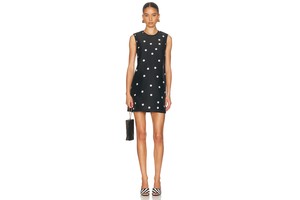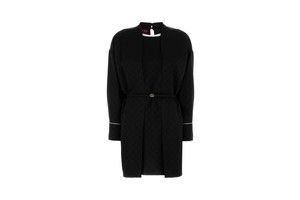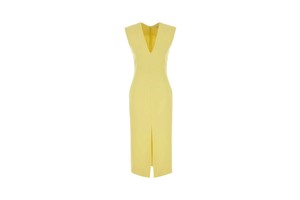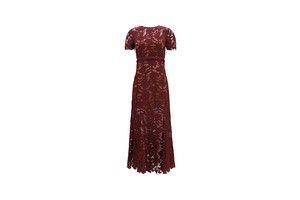
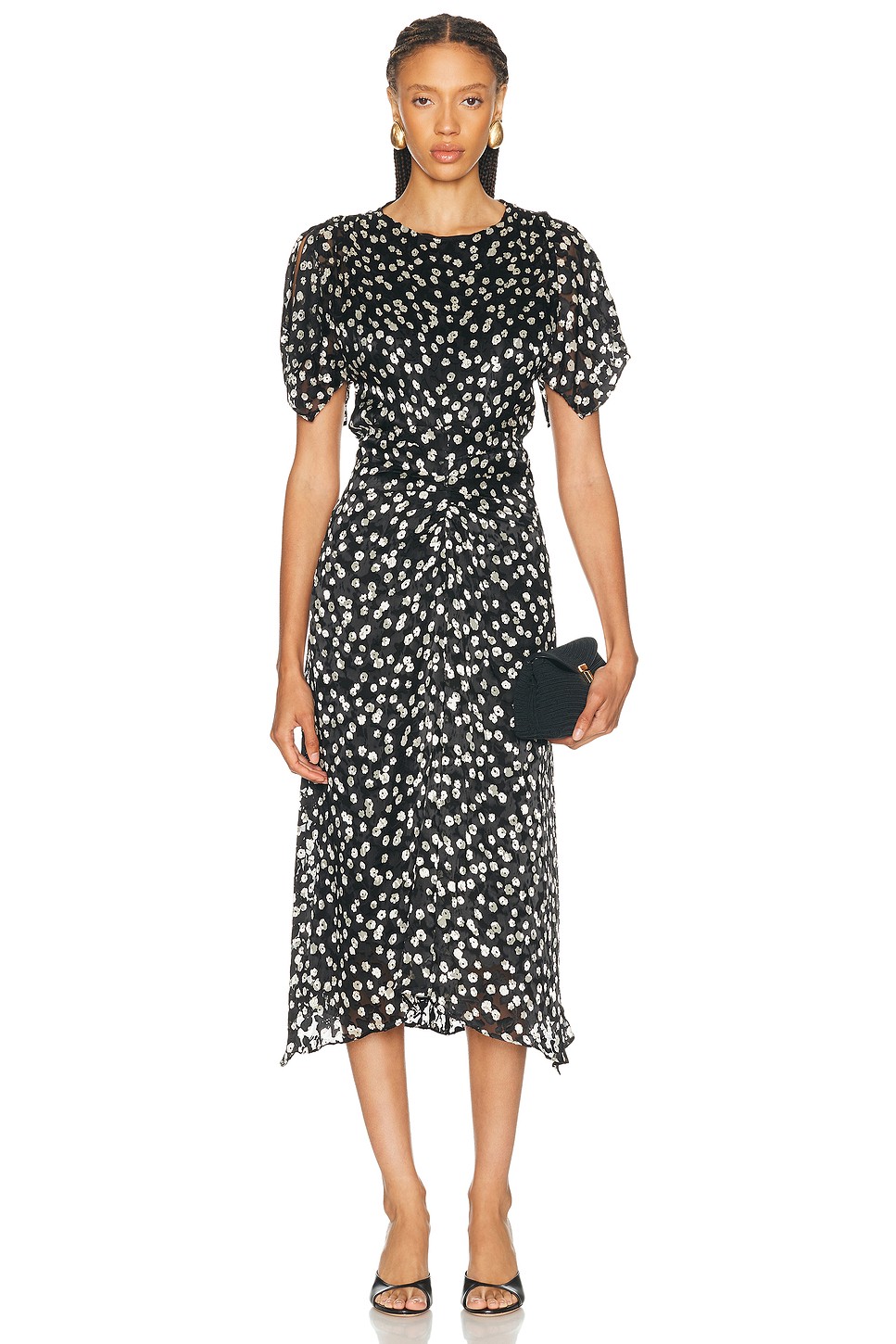
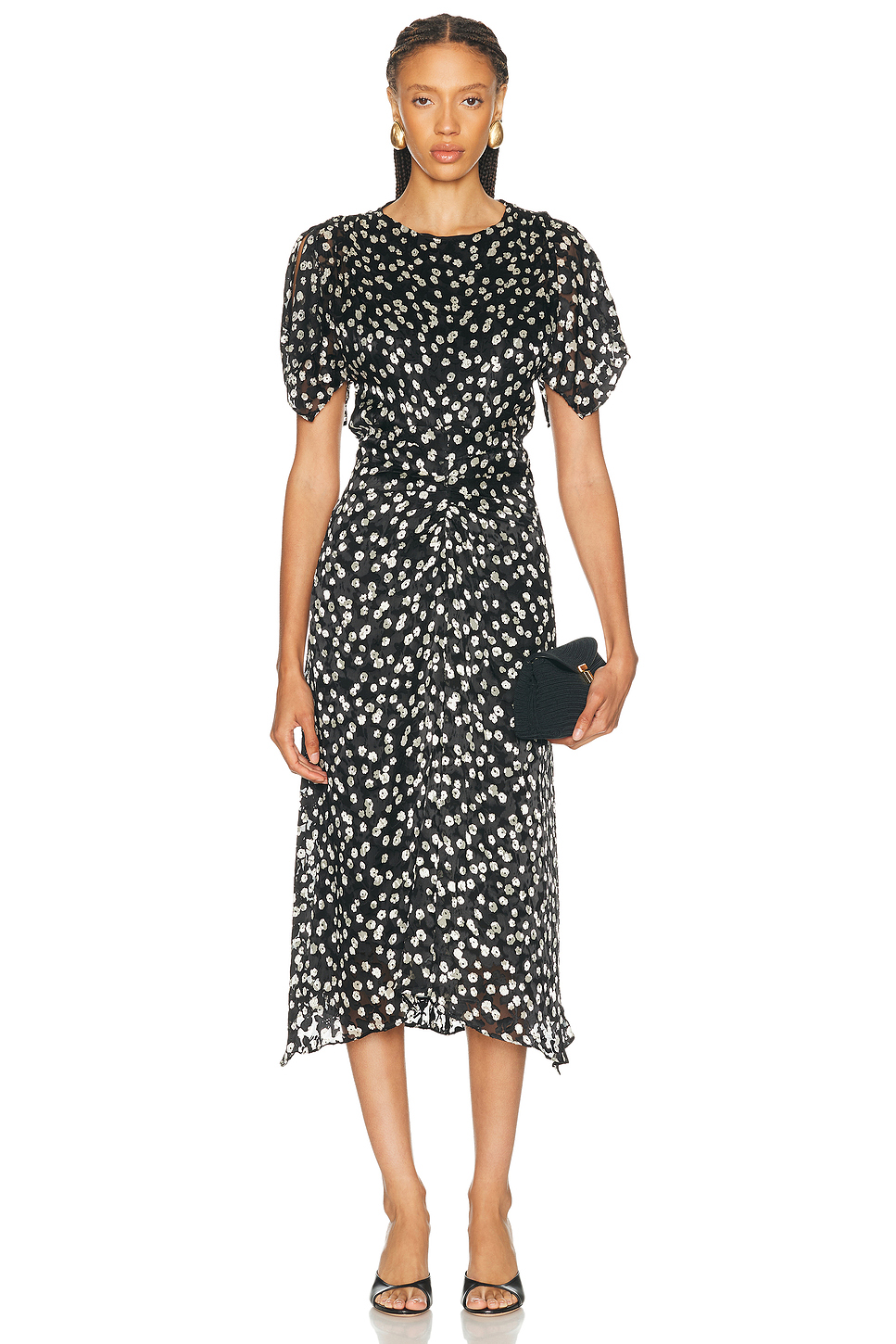
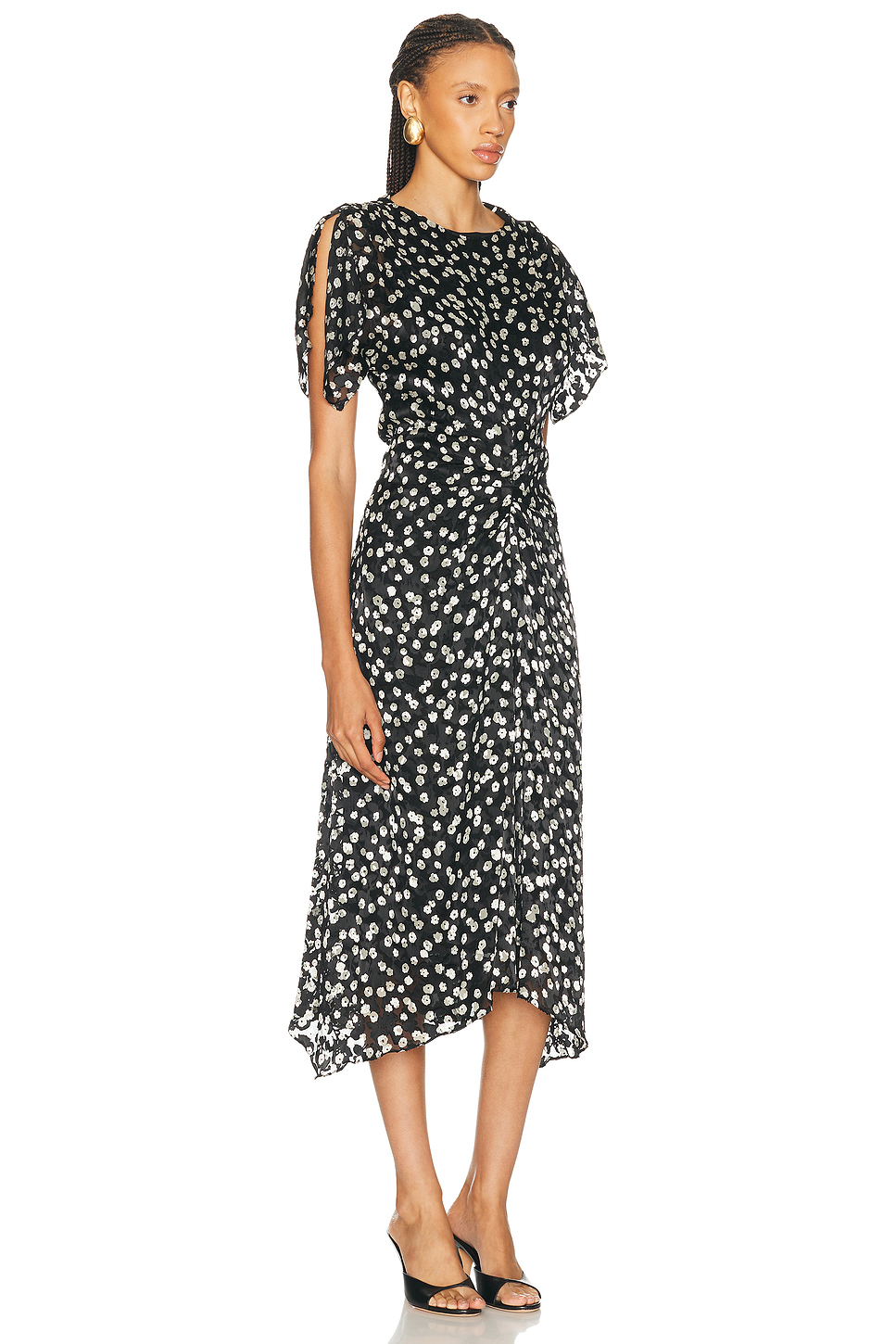
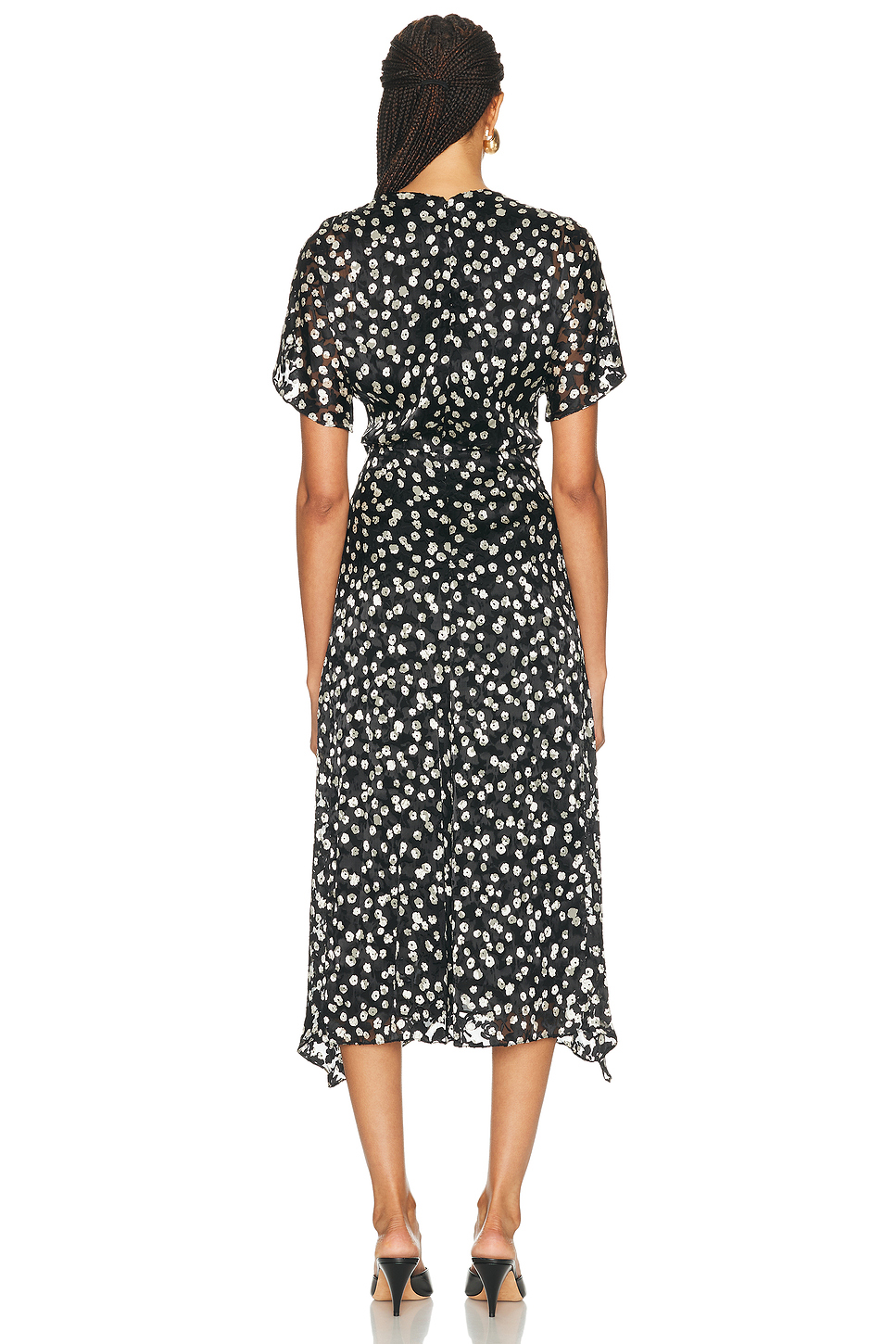
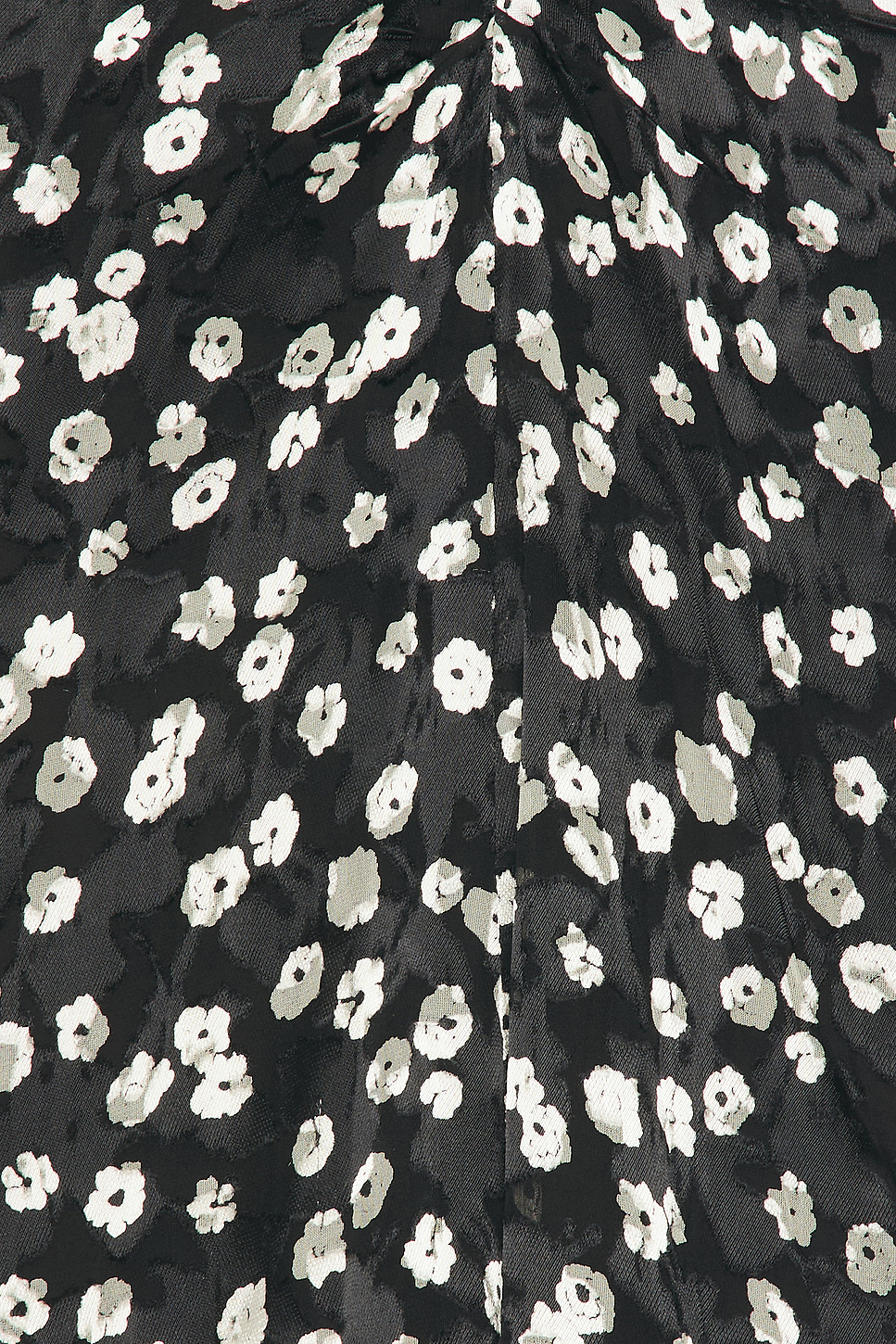
A dress listed with a self fabric of 55% viscose and 45% silk and a lining of 100% silk, closed with a hidden zip at the back, in a lightweight silk fabric, dry clean only, made in India, ranked fifty eighth in the retailer's floral dress list, at 1,390 dollars. There are no reviews and no fit votes, so there is no score to quote. Every fibre mentioned on this page fails in water, and none of them moderates any of the others, which puts this at the top of a ladder this series has been climbing. There is also a lining here worth thinking about, because it is the most demanding fibre on the page and it sits on the inside. One word in the fabric description also carries two possible meanings, and the two lead somewhere quite different. The reference is the Herva Dress by Isabel Marant in Black and Ecru. Dongguan Bafinasa Garments Co., Ltd. develops comparable occasion dresses on OEM and ODM terms, from fabric sourcing to retail or FBA ready packing. We publish this as a development reference and build your own version of it, and we do not supply the branded original or reproduce anyone else's label.
Key Features
- Self: 55% viscose, 45% silk as stated
- Lining: 100% silk as stated, which puts the most demanding fibre on the inside. See the note below
- Lightweight silk fabric as stated
- Short sleeve, with a sleeve length of 7 in published
- Hidden zip at the back as stated
- Dry clean only as stated, which is exactly right here
- Printed, in Black and Ecru
- Made in India as stated
Customisable Options
- Fabric: viscose silk blend as the reference, with the ratio and weight set from a tested sample
- Lining: silk as the reference, though we would discuss alternatives for the reason set out below
- Care: dry clean only, kept without alteration, since every fibre here demands it
- Print: developed to your artwork, with strike offs before bulk
- Length from knee to ankle, printing method, sleeve length, size set, colour development, private label and care labelling
Specifications
| Style | Viscose silk midi with silk lining |
| Reference | Isabel Marant, Herva Dress, style ISAB-WD342, manufacturer style RO1180FA-D3J14I, colour Black and Ecru |
| Self | 55% viscose, 45% silk as stated. See the note below |
| Lining | 100% silk as stated. See the note below |
| Fabric | Lightweight silk fabric as stated, following the composition. See the note below on how that word can be read |
| Closure | Hidden zip at the back as stated |
| Sleeves | Short, with a sleeve length of 7 in published |
| Care | Dry clean only as stated, which is the correct instruction here |
| Sizes Published | 34, 36, 38, 40, which is a European numeric range |
| Measurements Published | 36: bust 32 in, waist 28 in, hips 35 in, length 50 in, sleeve 7 in |
| Chart Note | Every circumference sits a little above the model, and there is no elastane stated. See the note below |
| Coverage | Only the worn size has numbers. The other three sizes are blank |
| Model | 178 cm, wearing size 36, bust 79 cm, waist 62 cm, hips 86 cm |
| Production | Made in India as stated |
| Reference Retail | 1,390 USD, quoted to show the price band this sits in, not as our price |
| Customer Reviews | None on the reference listing, so we quote no score |
| Best Seller Badge | Rank 58 in the retailer's floral dress list, which is a low position |
| Categories | Filed by the retailer under midi dresses and short sleeve dresses |
| Occasion | Formal daytime, events, weddings, occasions |
| MOQ | 100 pcs per style per colourway, mixed sizes and colourways accepted |
| Sampling | 7-10 days after tech pack or reference sample confirmation |
| Bulk Lead Time | 20-30 days after sample approval and deposit |
| Service | OEM / ODM / private label, silk and viscose sourcing, print development, retail or FBA ready packing |
Size Chart
| Size | Bust | Waist | Hips | Length | Source | ||||||||||||
|---|---|---|---|---|---|---|---|---|---|---|---|---|---|---|---|---|---|
| 36 | 32 | in | 28 | in | 35 | in | 50 | in / | 127 | cm | As published | ||||||
| 34 | 31 | in / | 79 | cm | 24 | in / | 61 | cm | 34 | in / | 86 | cm | 125 | cm / | 49.2 | in | Our proposal |
| 36 | 33 | in / | 84 | cm | 26 | in / | 66 | cm | 36 | in / | 91 | cm | 127 | cm / | 50 | in | Our proposal |
| 38 | 35 | in / | 89 | cm | 28 | in / | 71 | cm | 38 | in / | 97 | cm | 129 | cm / | 50.8 | in | Our proposal |
| 40 | 37 | in / | 94 | cm | 30 | in / | 76 | cm | 40 | in / | 102 | cm | 131 | cm / | 51.6 | in | Our proposal |
The published size 36 gives a 32 inch bust, a 28 inch waist, a 35 inch hip, a 50 inch length and a 7 inch sleeve against a model at roughly 31, 24 and 34. Every circumference sits a little above her body, and none of them by much, and the reason that reading is reassuring rather than puzzling is set out below.
Occasions and Styling
Suits formal daytime, events, weddings and occasions. A printed silk blend midi in black and ecru is an occasion piece, and 50 inches is about 127 centimetres, which on a model at 178 cm falls around the ankle, so it is worth knowing before ordering.
Production and Quality Control
There are no reviews and no fit votes on this listing, so there is no score to quote. Every fibre on this page is damaged by water and none of them rescues the others, the lining is the most demanding of the three and it sits inside, and one word in the fabric line can be read two ways.
Every fibre here fails in water, and there is nothing to lean on, and it is worth placing against the other cases, and that is the first thing. The self fabric is viscose and silk, and the lining is silk. So there is no cotton, no polyester, no linen, no fibre anywhere on this page that tolerates being washed, and this is unusual enough to be worth being precise about, because most blends contain at least one robust fibre. This series has assembled something like a ladder of how badly a garment can respond to water. Its lowest rung was a cotton twill with applique, cotton being among the most washable fibres, where dry clean only was correct not because of the cloth but because of the trim, and the principle drawn out there was that a care instruction is set by the most fragile component rather than by the predominant fibre. Higher up sat a viscose and linen blend, where linen is stronger wet than dry and so partly reinforces the viscose majority without making the blend washable. Higher again came a wool mini over a polyester lining with no care instruction at all. And most recently we found a shell of acetate and viscose with no third fibre anywhere in it, the two of which fail differently, and said that listing sat at the top. This one belongs beside it, and arguably beyond it, and the reason is the addition made here: silk. Viscose loses around half its strength when wet, which is why every viscose garment this series has assessed needed the strictest wording rather than a softer one, and the clearest demonstration came from two garments of nearly identical composition where one said dry cleanable and the other dry clean only, of which only the second was right. Silk fails in yet another way. It is a protein fibre, marked permanently by water in ordinary conditions, dulled by alkali, and sensitive to heat, and its water marks are not stains to be lifted but changes in how a surface reflects light. Put the two together and most methods damage something. So there is no handling this garment is indifferent to. The listing says dry clean only, which is correct, and it is worth saying plainly that this is the rare listing where the instruction is doing exactly the right amount of work: it closes off every route by which any of these fibres could be harmed.
The lining is 100% silk, which puts the most demanding fibre on the inside, and yet it is also the right choice here, and that is the second thing. A garment lined in its own shell fibre is the rule this series has stated repeatedly, because two layers of the same fibre shrink by the same amount and stay in relation to each other after washing, while layers that shrink differently pucker the shell along every seam or bubble loose inside it. By that rule, a viscose and silk shell wants a viscose and silk lining, and silk alone does not meet it. So it is worth understanding what the maker is buying, because it is a deliberate trade. Silk next to the skin is slippery, cool, and comfortable in a way nothing else quite matches, and a printed dress benefits from that slip, since the skirt moves instead of clinging. Silk also costs more per metre than almost any lining alternative, and it is more demanding to handle in cutting and sewing, since it frays, creases and shifts under a needle. But the reason it is defensible here is the same reason this rule can be set aside: the instruction removes the condition that makes the rule bite. Shrinkage differences only matter if the garment gets wet. Nothing here gets wet. So a lining that would be a liability on a washable garment is harmless on a dry clean only one, and the maker has bought comfort with it. It is worth stating the implication, because it is easy to miss: the care instruction is not merely protecting the fibres, it is what makes this lining permissible at all, and that connection is invisible on the page. There is a practical consequence for whoever develops this: if a customer later asks for a washable version, the lining has to change with it, and not to silk. There is one further note on the shell itself, which is that the warp and the weft belong to different families, cellulosic in one direction and protein in the other if the blend is arranged that way, and blending across families makes dyeing more complex, since a dye that takes well to one may not take to the other.
One word here carries two meanings, and they lead to different garments, and the whole chart is internally consistent, and that is the third thing. The fabric is described as a lightweight silk fabric, and that phrase has two readings worth separating, because the difference between them is not academic. Read one way it means a cloth woven from silk, which is what the composition states and what the measurements are consistent with. Read another way it means velvet, that is, a cloth with a pile standing up from its surface. Velvet changes everything downstream: a pile has a direction, so every piece must be cut the same way up or the panels will not match, it cannot be pressed flat without crushing it, it needs special handling at the ironing board, and it wears at pressure points. Those are not refinements, they are whole additional stages in production. This series has noted before that fabric names sometimes carry information that never reaches the specification, having found the construction named only inside a French product title, so the possibility cannot be dismissed. Here the reading matters less than usual, because the composition settles it: a cloth that is 55% viscose and 45% silk is a substantial part man made cellulosic, and while velvet can certainly be made from viscose, nothing else on this page suggests a pile, and the presence of a printed design points away from it, since printing onto velvet is a specialist operation. So the first reading is much the more likely, and the point of raising it is only that a single word should not be doing that much work. On the measurements, the bust is 32 inches against a model at roughly 31, the waist 28 against 24 and the hip 35 against 34. So each circumference sits slightly above her, which is exactly what a garment with no elastane consulted anywhere in it should do, since ease is how a woven garment is worn at all. The pattern being consistent rather than contradictory is the useful signal: this series has found several charts where one circumference sat below the body while the ones beside it sat above, and there is no elastane here to produce compression, so a chart running uniformly slightly positive is the one that makes sense. Nothing is hidden in it. Every bulk shipment gets a measurement report against your approved chart.
Optional upgrades include keeping dry clean only without softening it, since it is what permits the silk lining, the silk lining either kept with that instruction or changed if washability is ever requested, a lining fibre matched to the shell if the instruction changes, the fabric word made unambiguous so it cannot be read as a pile, measurements published for every size rather than one, the length published in centimetres against the model's height given that 127 cm is longer than midi suggests, alternative blend ratios, alternative printing methods, alternative linings, alternative lengths, extended sizing, colour development and private label, hangtag and care labelling.
Pre-production sample approval, in-line inspection during cutting and sewing, and a final AQL inspection before packing, with measurement reports and photos shared before shipment.
Send us your tech pack, a photo or a reference garment and we will quote within 24 hours. Contact bafinasa@bafinasa.com or WhatsApp +86 13827222469.