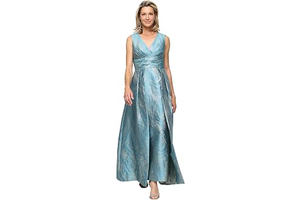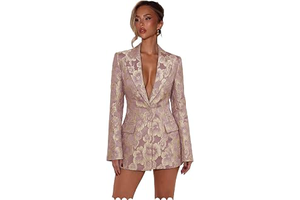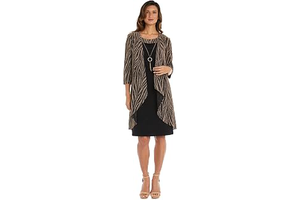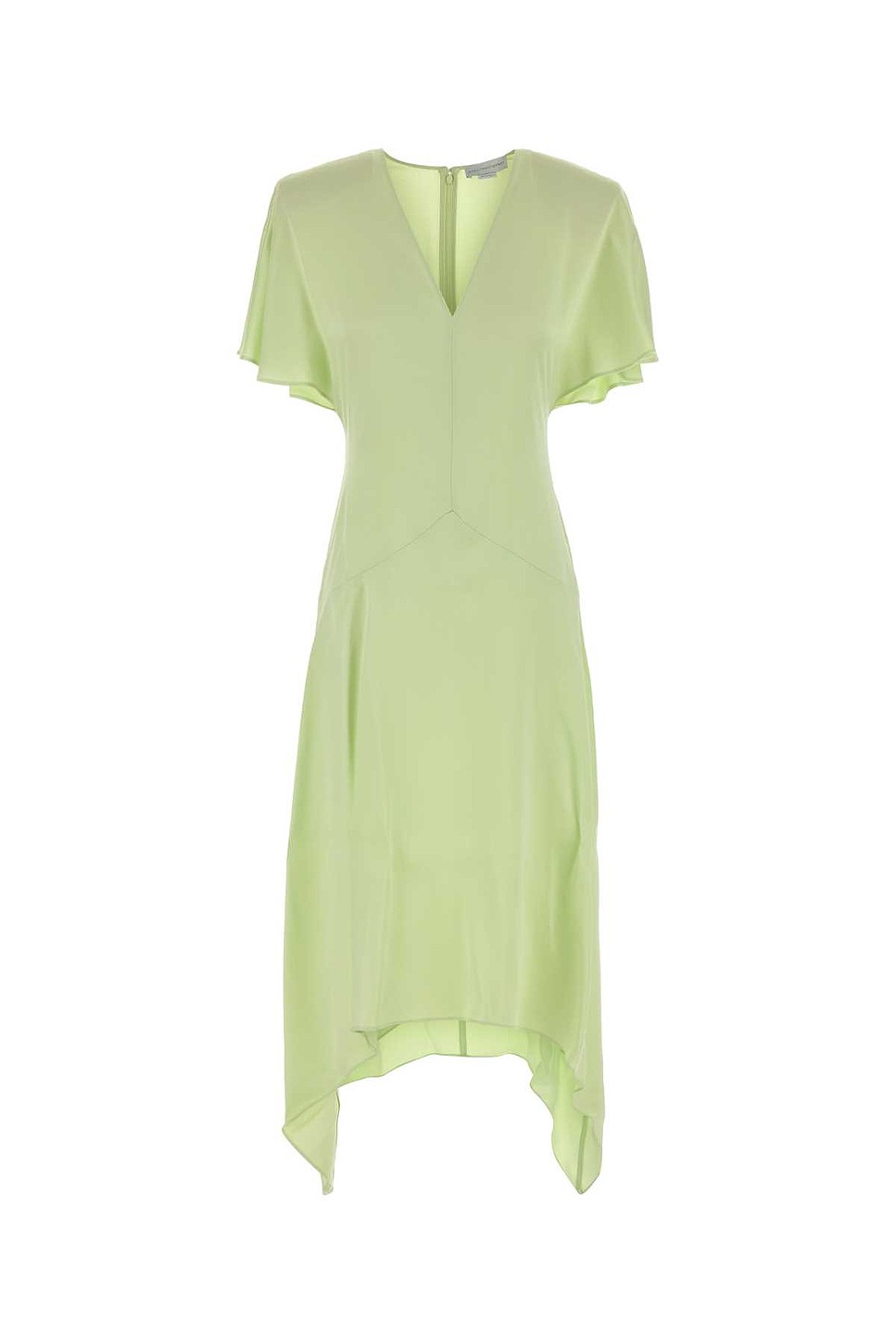
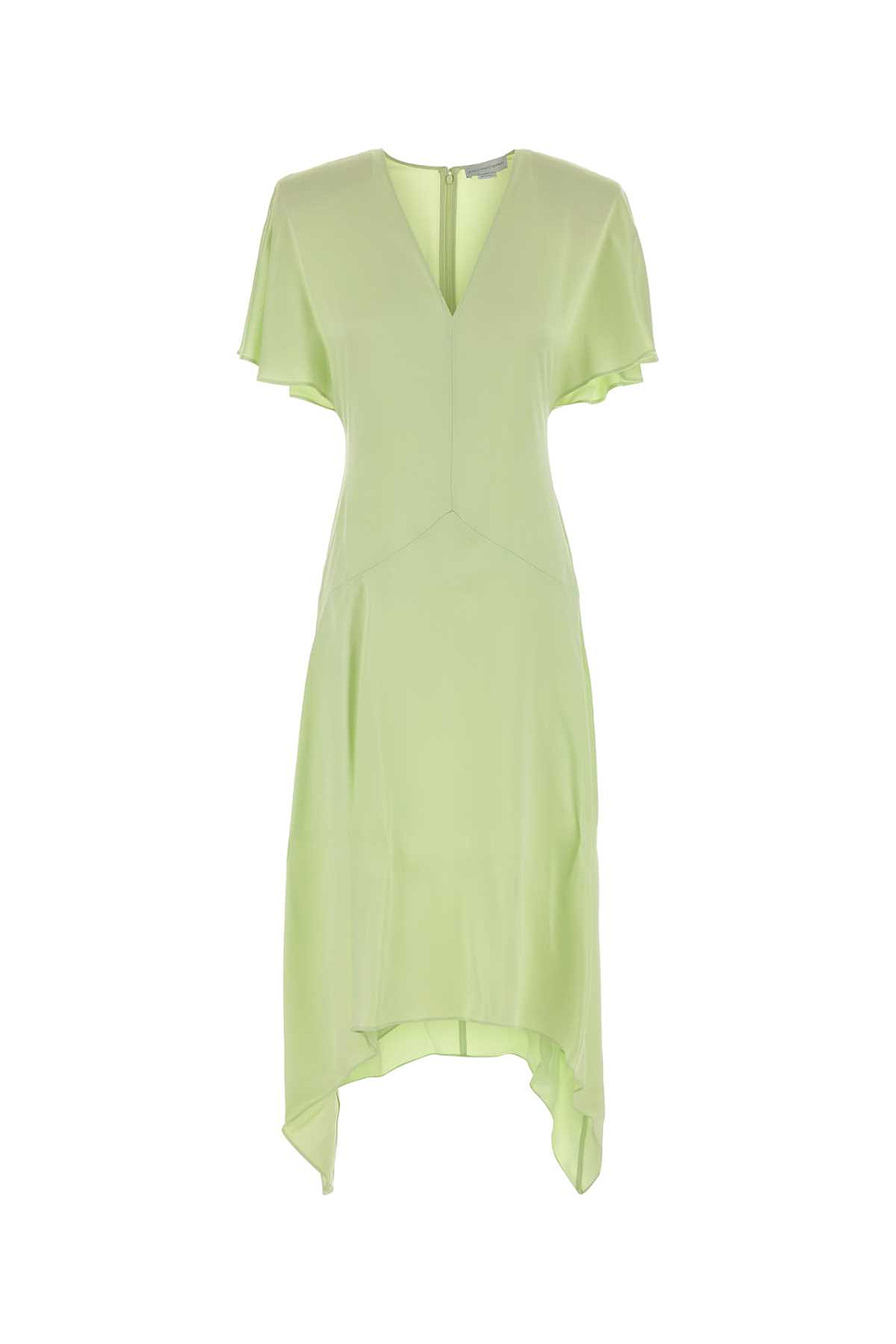
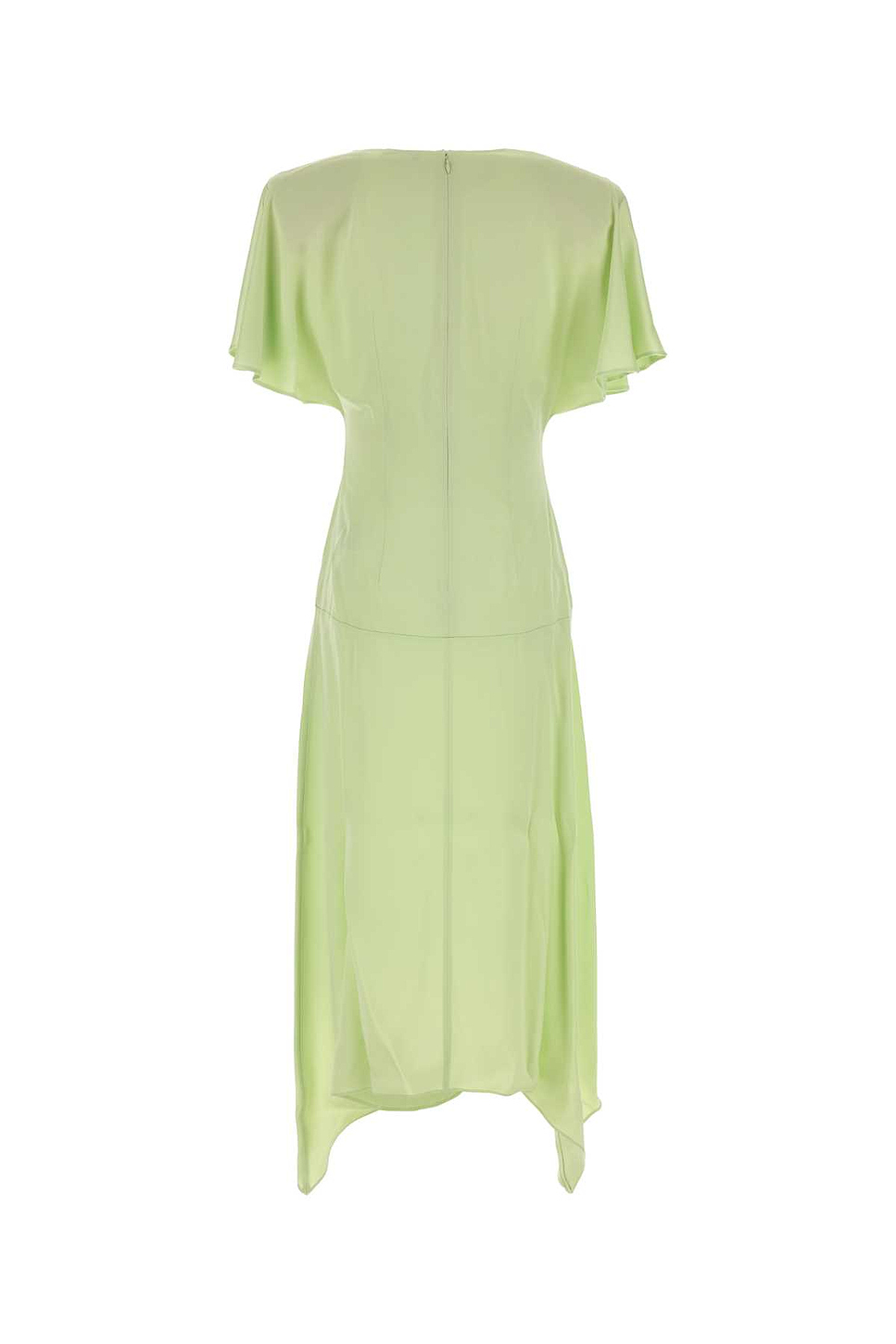
A dress listed with a shell of 74% acetate and 26% viscose, made in Italy, at 1,142 dollars. There are no reviews, no fit votes and no size chart, and the listing carries two photographs. The whole product information is four lines: the shell composition, the country, and two stock numbers. There is no care instruction, no closure, no lining, no length and no measurements. There are no reviews and no fit votes, so there is no score to quote. This is the second time this series has found two fibres that both fail in water and nothing in the composition to moderate them, and it is worth setting out against the other cases, because there is a ladder here and this sits at the top of it. There is also one word in the composition that has now appeared three times and always for the same reason. The reference is the Stella McCartney pastel green satin dress in Green. Dongguan Bafinasa Garments Co., Ltd. develops comparable satin dresses on OEM and ODM terms, from fabric sourcing to retail or FBA ready packing. We publish this as a development reference and build your own version of it, and we do not supply the branded original or reproduce anyone else's label.
Key Features
- Shell: 74% acetate, 26% viscose as stated
- Satin construction as stated in the product name
- Made in Italy as stated
- One size published: 40
- Filed by the retailer under mini dresses
- No care instruction stated on the listing
- No size chart published on the listing
- Two photographs on the listing
Customisable Options
- Fabric: acetate viscose satin as the reference, with the weight and lustre set from a tested sample
- Care: we would state dry clean only, since the listing gives none and both fibres demand it. See the note below
- Second layer: we would establish what the shell wording implies. See the note below
- Opacity: we would test and state it, since the colour is pale and the weave is satin
- Length from mini to midi, size set, colour development, private label and care labelling
Specifications
| Style | Acetate viscose satin dress |
| Reference | Stella McCartney, pastel green satin dress, style FEXN-WD1932, manufacturer style 6A06973FU302 3055, colour Green |
| Shell | 74% acetate, 26% viscose as stated. See the note below |
| Second Layer | Not stated, though the composition is given as shell, which implies one. See the note below |
| Fabric | Satin as stated in the product name rather than in a specification |
| Care | None stated on the listing, which is the most serious gap on it |
| Closure | None stated on the listing |
| Sizes Published | 40, which is a single size. See the note below |
| Measurements | None published. No size chart and no model measurements on this listing |
| Photographs | Two |
| Production | Made in Italy as stated |
| Reference Retail | 1,142 USD, quoted to show the price band this sits in, not as our price |
| Customer Reviews | None on the reference listing, so we quote no score |
| Best Seller Badge | None. The listing carries no rank |
| Categories | Filed by the retailer under mini dresses, with no second category |
| Occasion | Evenings, events, formal daytime |
| MOQ | 100 pcs per style per colourway, mixed sizes and colourways accepted |
| Sampling | 7-10 days after tech pack or reference sample confirmation |
| Bulk Lead Time | 20-30 days after sample approval and deposit |
| Service | OEM / ODM / private label, acetate and viscose sourcing, satin development, retail or FBA ready packing |
Size Chart
| Size | Bust | Waist | Hips | Length | Source | ||||||||||||
|---|---|---|---|---|---|---|---|---|---|---|---|---|---|---|---|---|---|
| 40 | 31 | in / | 79 | cm | 24 | in / | 61 | cm | 34 | in / | 86 | cm | 86 | cm / | 33.9 | in | Our proposal |
| 42 | 33 | in / | 84 | cm | 26 | in / | 66 | cm | 36 | in / | 91 | cm | 88 | cm / | 34.6 | in | Our proposal |
| 44 | 35 | in / | 89 | cm | 28 | in / | 71 | cm | 38 | in / | 97 | cm | 90 | cm / | 35.4 | in | Our proposal |
| 46 | 37 | in / | 94 | cm | 30 | in / | 76 | cm | 40 | in / | 102 | cm | 92 | cm / | 36.2 | in | Our proposal |
This listing publishes no size chart and no model measurements, and offers a single size. There is nothing on the page from which a customer could judge the fit or the length, and since the retailer's own classification is contradicted by nothing measurable, even how long the garment is cannot be checked.
Occasions and Styling
Suits evenings, events and formal daytime. A pale green acetate satin is an occasion fabric rather than a day one, and it is worth saying that a lustrous surface and a pale colour together make opacity harder to judge from a photograph than almost any other combination.
Production and Quality Control
There are no reviews and no fit votes on this listing, so there is no score to quote. There is not one fibre here that tolerates water, which puts this at the top of a ladder this series has been climbing, a word in the composition that has now appeared three times for the same reason, and a single size.
Both fibres here fail in water and neither rescues the other, and it is worth placing against the other cases, and that is the first thing. This series has built up what amounts to a ladder of how badly a garment can respond to being washed. The bottom rung is a cotton twill with applique, cotton being among the most washable fibres there is, where the instruction said dry clean only not because of the cloth but because of the trim, and we drew out the principle there that a care instruction is set by the most fragile component and not by the predominant fibre. Higher up sits a viscose and linen blend, where linen is stronger wet than dry and therefore partly reinforces the viscose majority without making it washable, since a blend behaves according to the fibre that predominates. Higher again is a Diesel mini with 43% wool over a polyester lining, where the two layers would shrink by completely different amounts, and we said there that the missing care instruction was not an inconvenience but a switch deciding whether both faults went live at once. Then there is a Christopher Esber crepe whose own instruction, dry clean recommended, was too weak to protect a lace and crepe combination of unknown fibre. What distinguishes this listing is that there is no moderating fibre anywhere in it. Acetate and viscose together account for one hundred per cent. And both of them are damaged by water, though differently. Viscose loses around half its strength when wet, which is why every viscose garment this series has assessed needed dry clean only rather than a weaker wording, the clearest demonstration being two garments of nearly identical composition where one said dry cleanable and the other dry clean only, and only the second was right. Acetate fails another way: water makes it go stiff, loses its lustre and can leave water marks that do not come out, because the marks are a change in how the surface reflects light rather than a stain. On a satin that is decisive, since lustre is the whole point of the cloth, coming from long floats of yarn lying flat and reflecting light in one direction. So there is nothing here to lean on, and this listing publishes no care instruction at all. This series has argued consistently that no instruction is worse than a weak one, because a weak instruction at least tells the customer something whereas silence invites her to decide for herself, and on a garment that reads as a simple pale dress she will very likely decide to wash it.
The word shell has now appeared three times, and every time it has meant the same thing, and that is the second thing. The composition is given as shell: 74% acetate, 26% viscose. Shell is a relative word: it only carries meaning if there is something else to be the shell of, and a garment made of one layer would be described as the fabric rather than as the shell. So its presence implies a second layer whose composition has not been given. This is the third occurrence of exactly this shape in this series and worth listing, because the recurrence makes it something a reader can watch for. It appeared as shell: 65% viscose, 35% linen on a Tory Burch mini, and as principal material: 100% viscose on a Jacquemus dress, which we noted was additionally self contradictory, since a principal material that is already one hundred per cent leaves no room for anything secondary. In each case the wording was chosen by somebody who knew there were two layers, and in each case the other layer was never described. Here it matters more than usual, and the reason connects to the previous point: the rule this series has stated repeatedly is that a lining should be in the same fibre as the cloth it lines, because two layers of the same fibre shrink by the same amount and stay in relation to each other, while two layers that shrink at different rates will pucker the shell along every seam or bubble loose inside it. If there is a lining here and it is polyester, then the shell it serves fails in water in one way and it fails another way, and the two would separate at the first wash. If the lining is also acetate, then the two are compatible and the only constraint is the fibre itself. So a single word decides which of those is true, and there is no way to tell from the page. It is worth adding one observation of a different kind: all three of these listings are carried under a retailer buyer store brand field rather than under the maker's own, and all three lack a care instruction. We have noted before that listings of this kind tend to carry less information than ones carrying the maker's name, and these three together are the clearest instance yet.
One size and one length claim, with nothing to check either against, and that is the third thing. The listing offers a single size, 40, and publishes no measurements of any kind, and the retailer files it under mini dresses. This series has met this pattern before and it is worth restating the reading, because it is counter intuitive. Where a size run is short but consecutive, a narrow range is a design decision and something on the garment has to make it work, which has usually been stretch or a generous cut. Where a run has a size missing from its middle, that is not a range at all but remaining stock, as on a knit dress published in 34 and 38 with no 36. A single size is neither of those, and the honest reading is that it tells the customer nothing about how the garment was designed and everything about what happens to be left. It is the second single size listing we have found, which is enough to say the situation is not rare. The length is the more consequential gap, because there is one claim and no way to check it. We looked recently at a Bananhot dress called a mini whose published length was 133 centimetres, and noted that because the number was there the contradiction became harmless: once the figure is published the wrong word stops mattering. Here the reverse holds. There is a classification and no measurement, and nothing on the page lets a customer determine whether the classification is right, and unlike that other garment there is not even a model height to reason from. On the information density generally, this is the third listing in this series costing over a thousand dollars whose entire content is four lines, and the observation this series has returned to is that how much a page tells you has nothing to do with what the garment costs. Every bulk shipment gets a measurement report against your approved chart.
Optional upgrades include dry clean only stated and tested, since both fibres demand it, the second layer identified and its fibre matched to the shell, opacity tested and stated given the pale colour and the lustrous surface, a size chart and model measurements published, the length published in centimetres against the model's height, more than one size offered, alternative acetate and viscose ratios, alternative satin constructions, alternative lengths, extended sizing, colour development and private label, hangtag and care labelling.
Pre-production sample approval, in-line inspection during cutting and sewing, and a final AQL inspection before packing, with measurement reports and photos shared before shipment.
Send us your tech pack, a photo or a reference garment and we will quote within 24 hours. Contact bafinasa@bafinasa.com or WhatsApp +86 13827222469.